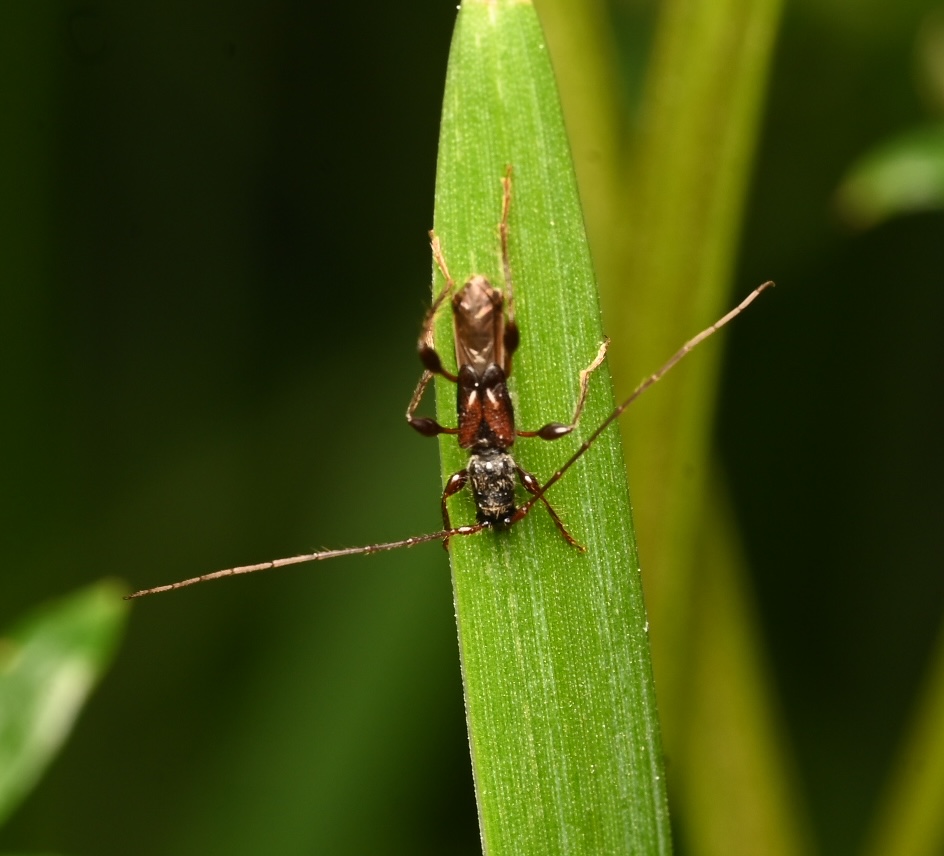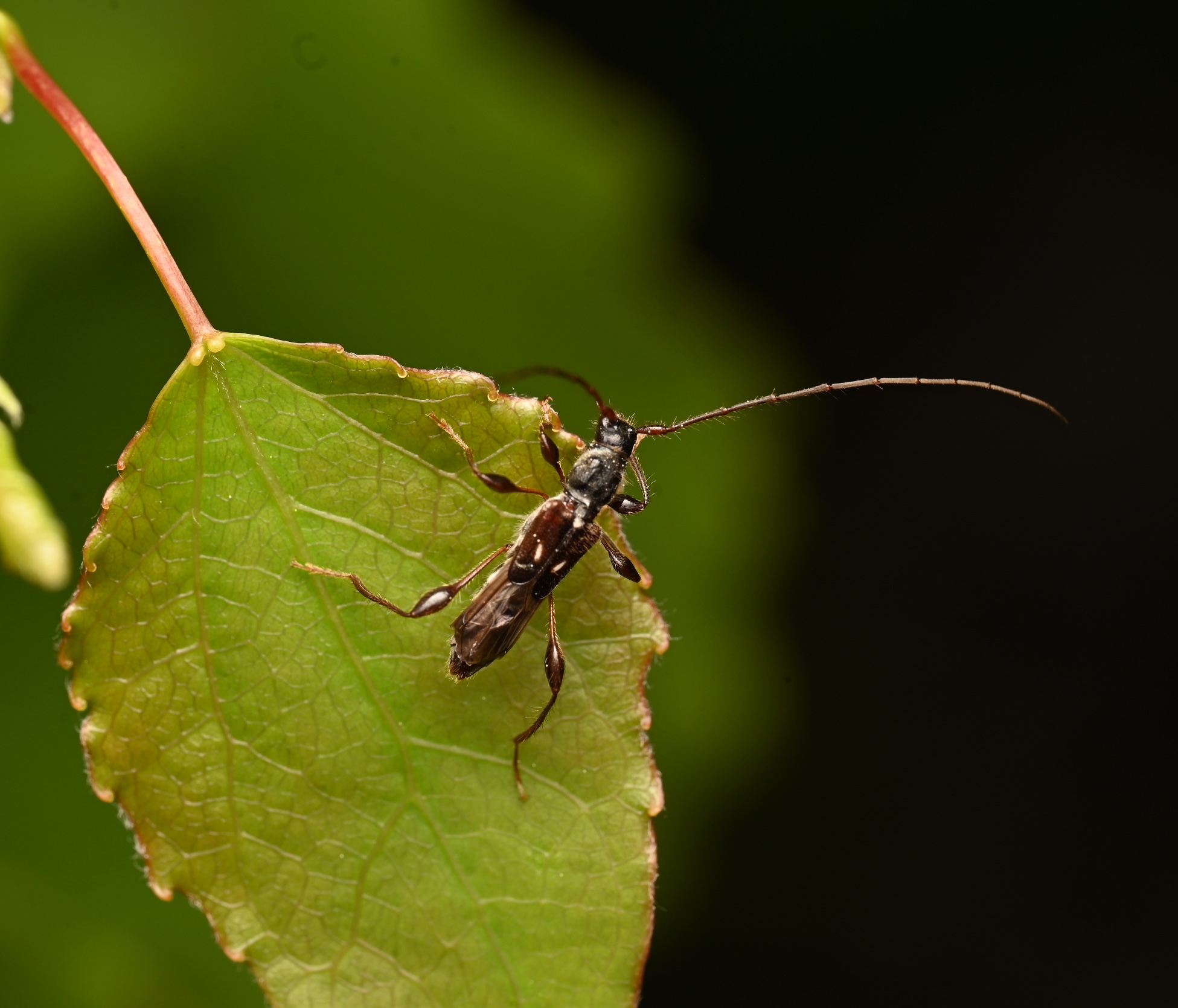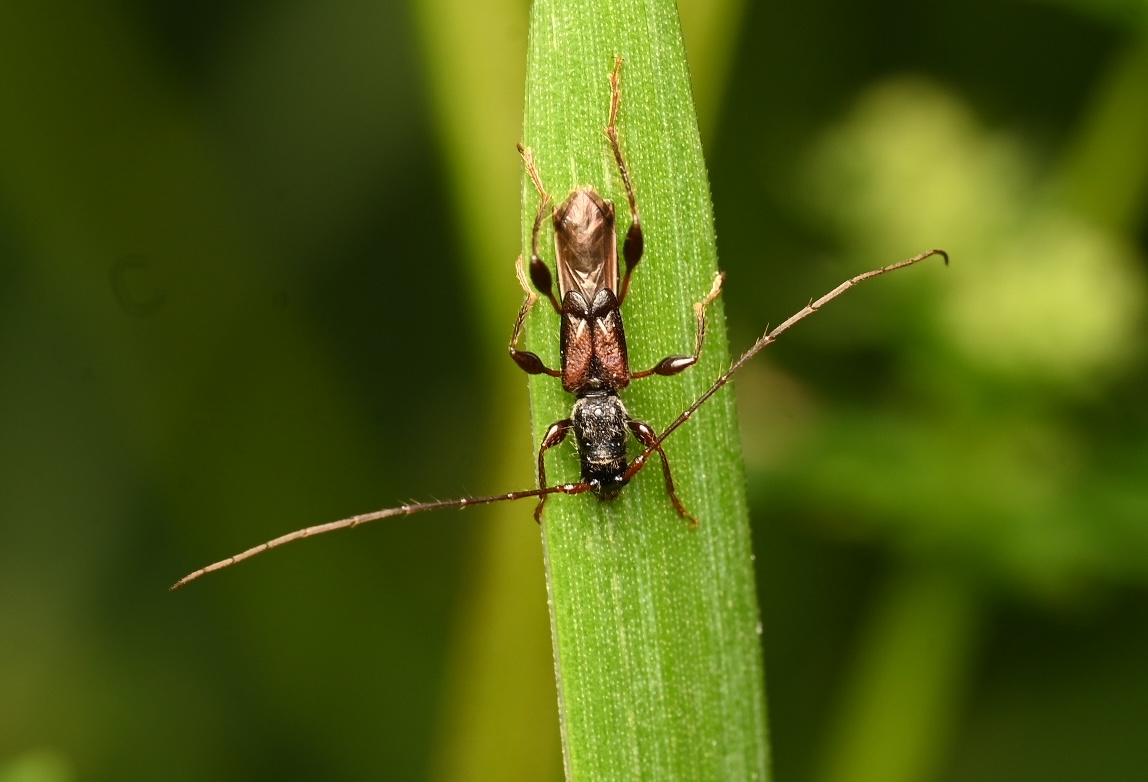
Meet the spruce shortwing beetle (Molorchus minor), a fascinating Palaearctic longhorn beetle (family: Cerambycidae) famous for its dramatically stunted, shortened wing covers (elytra) and an unusual overwintering strategy. Unlike most beetles that keep their delicate hindwings neatly tucked away beneath rigid armor, M. minor sports exceptionally short elytra. This leaves the vast majority of its long, functional, membranous flight wings conspicuously exposed—giving it a somewhat awkward, wasp-like appearance. Their life cycle begins beneath the bark of dying or fallen conifers like spruce, pine, and fir, where the larvae pupate in hook-shaped chambers a few centimeters deep. Because they strictly target already compromised, uprooted, or felled timber, they pose absolutely no threat to healthy, living forests. Interestingly, while the adults hatch in late summer, they choose not to emerge right away. Instead, they patiently sit tight and wait out the freezing winter inside those exact pupal chambers, finally chewing their way out the following spring. Spotting them is a massive challenge. I was incredibly lucky to cross paths with this species twice during a bicycle tour across Sweden, and both times I had only a few frantic seconds to lock focus before my camera’s flash lamp startled them into the air.