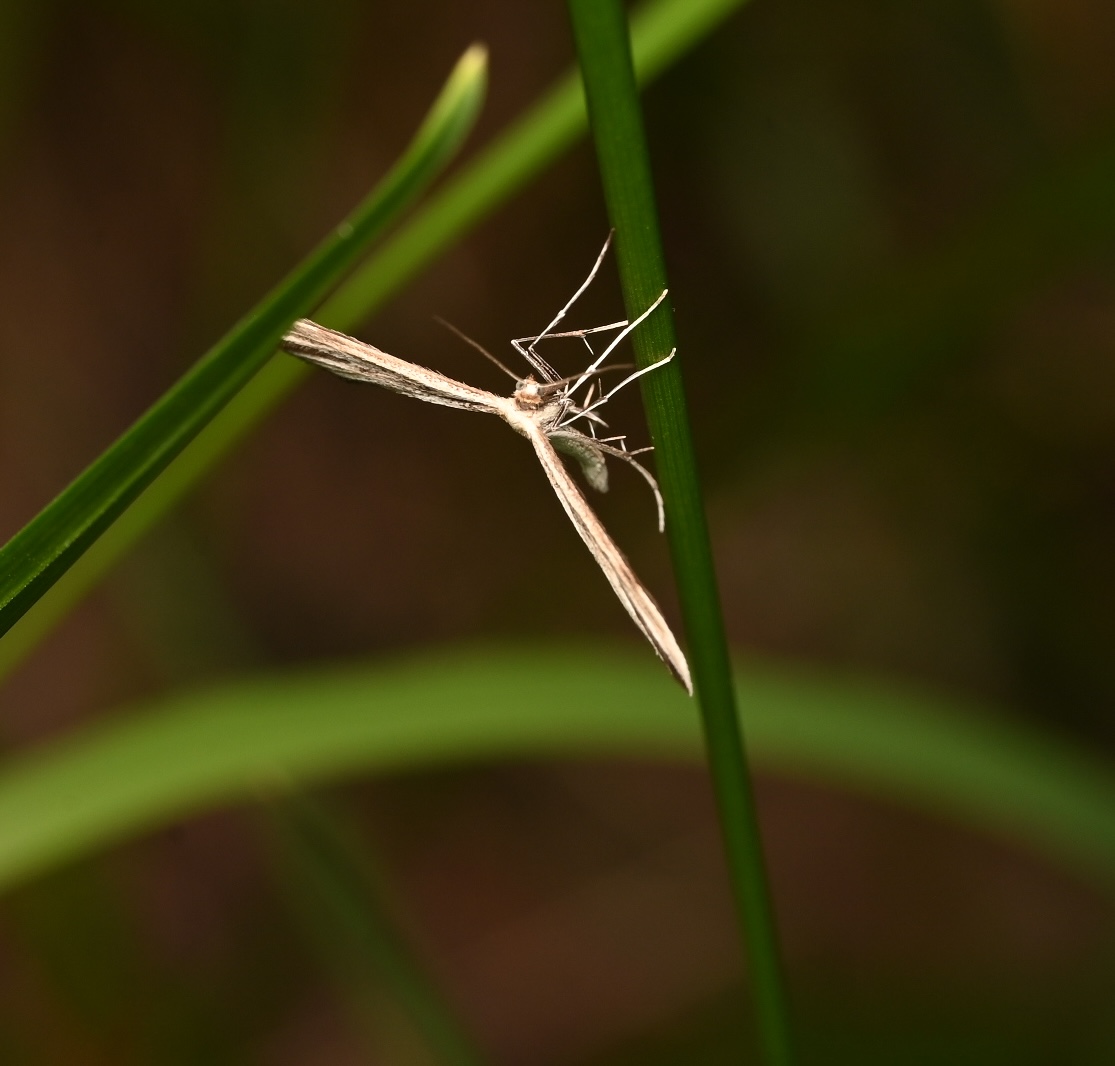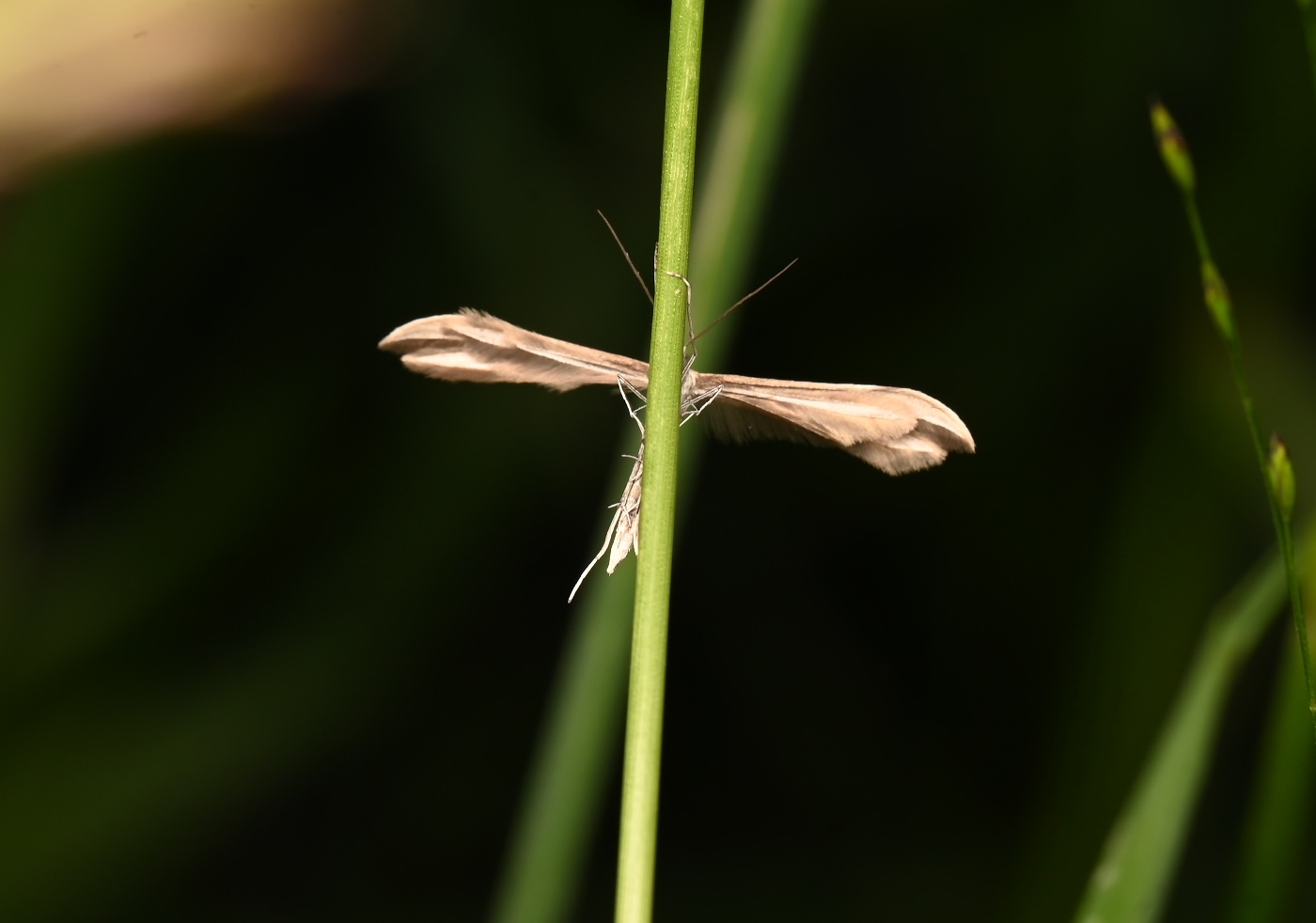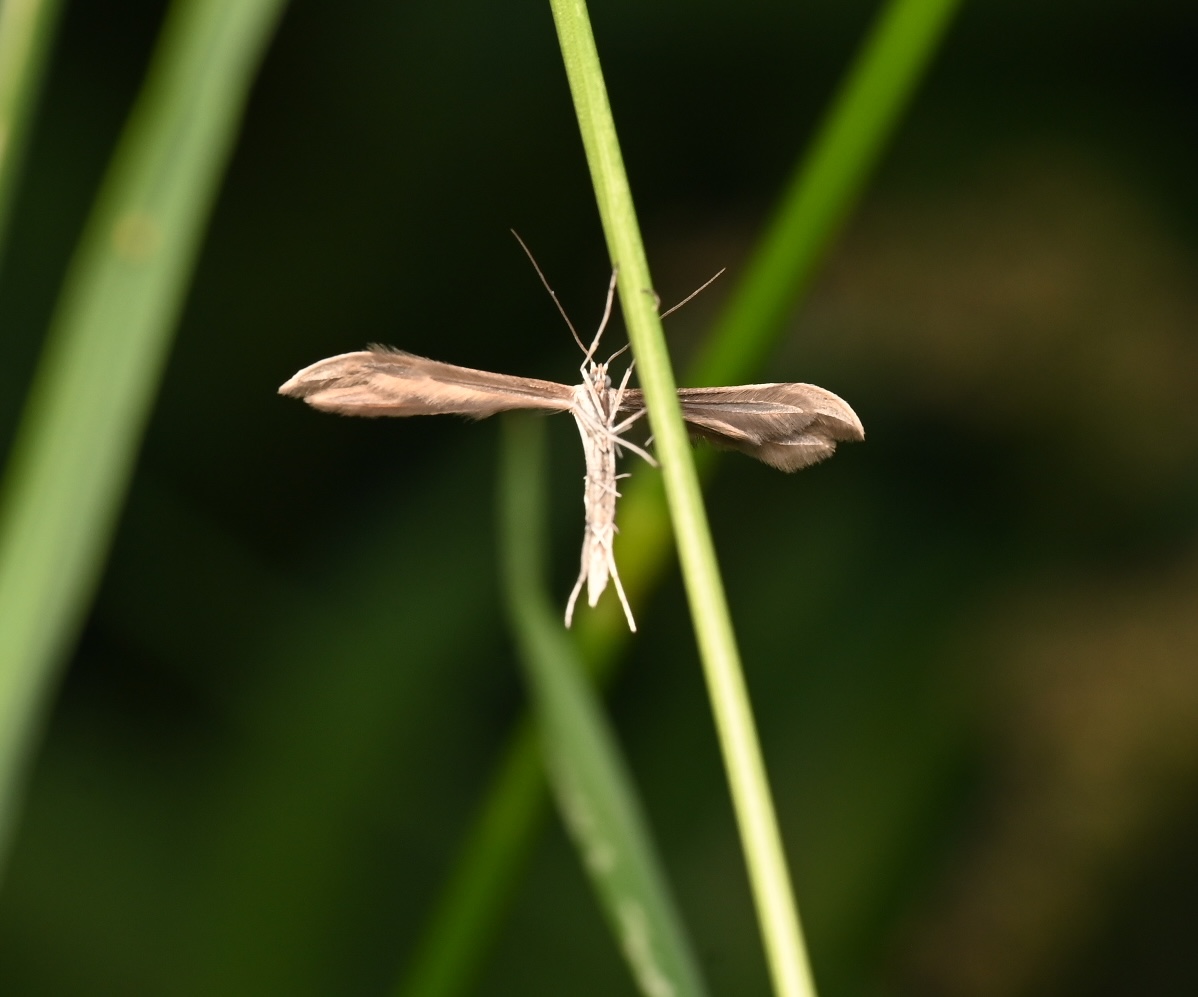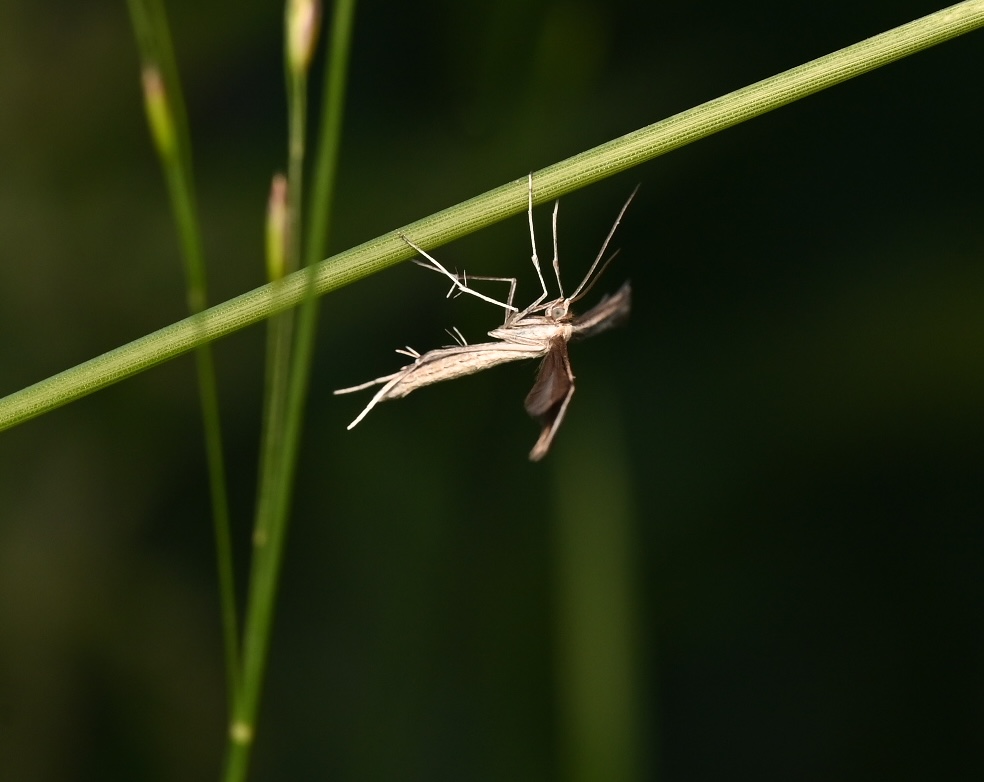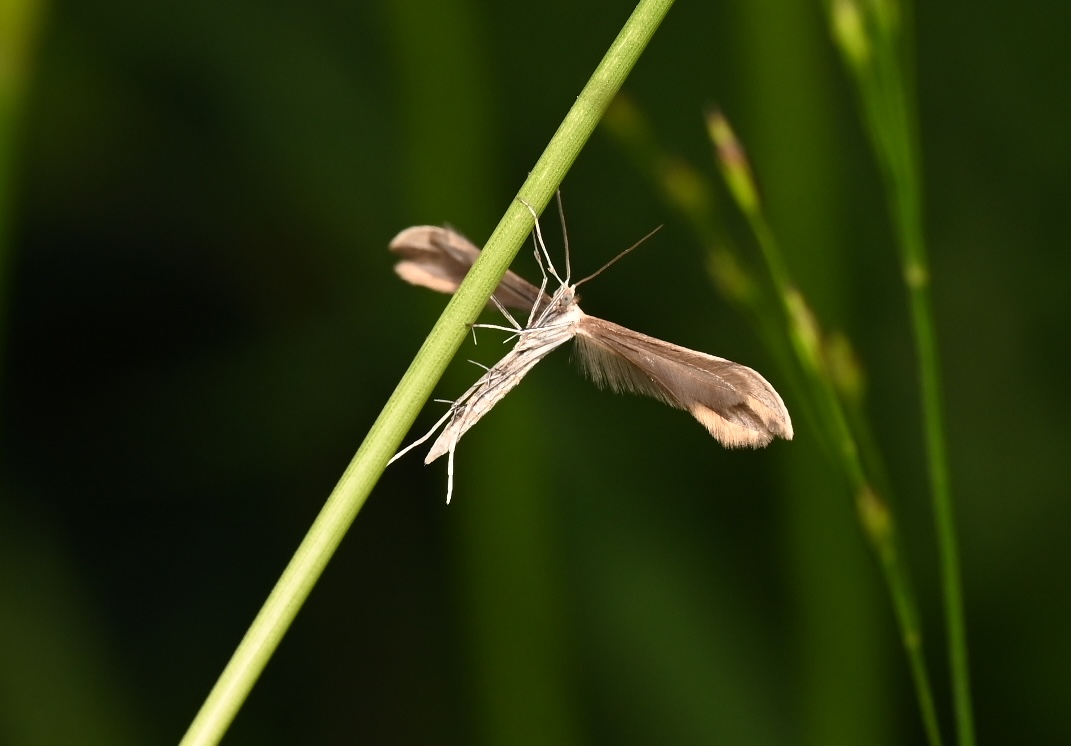
Plume moths (Pterophoridae) are instantly recognizable by their distinct T- or Y-shaped resting posture and deeply cleft, feathery wings. Remarkably, each wing plume can move independently, allowing these insects to steer through the air with a delicate, floating motion that feels closer to a bird than a typical moth. When disturbed, their weak, fluttery flight and long legs often cause them to be mistaken for mosquitoes or crane flies. At rest, they roll their forewings tightly around the feathery hindwing plumes, transforming into convincing pieces of dry straw, twigs, or vegetation. Unlike many moths that overwinter as eggs or pupae, many adult plume moths survive the cold months by hiding in sheltered spots. Because most species share a muted palette of tans, grays, and whites with only tiny dorsal markings, pinpointing the exact species in the wild is notoriously difficult. During my bicycle tour along the Baltic Sea in June 2026, I frequently encountered these structural marvels resting quietly in the vegetation, though this particular individual remains a beautiful mystery.