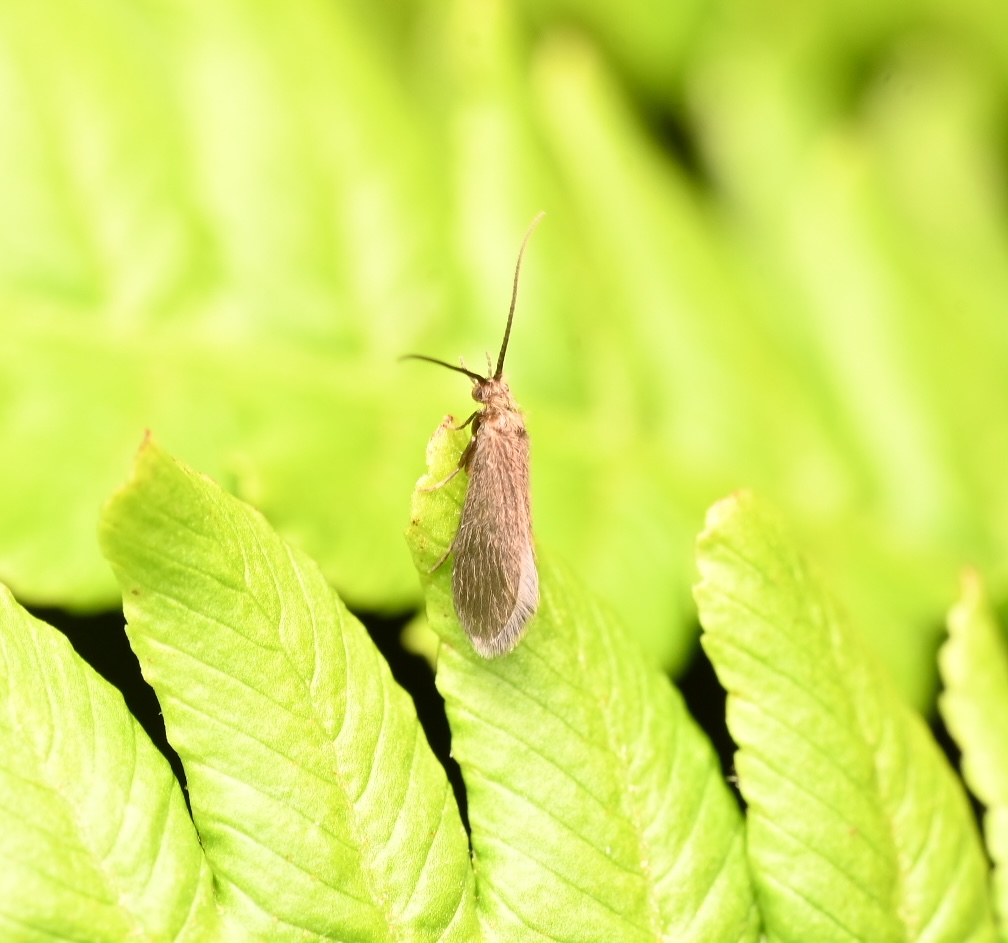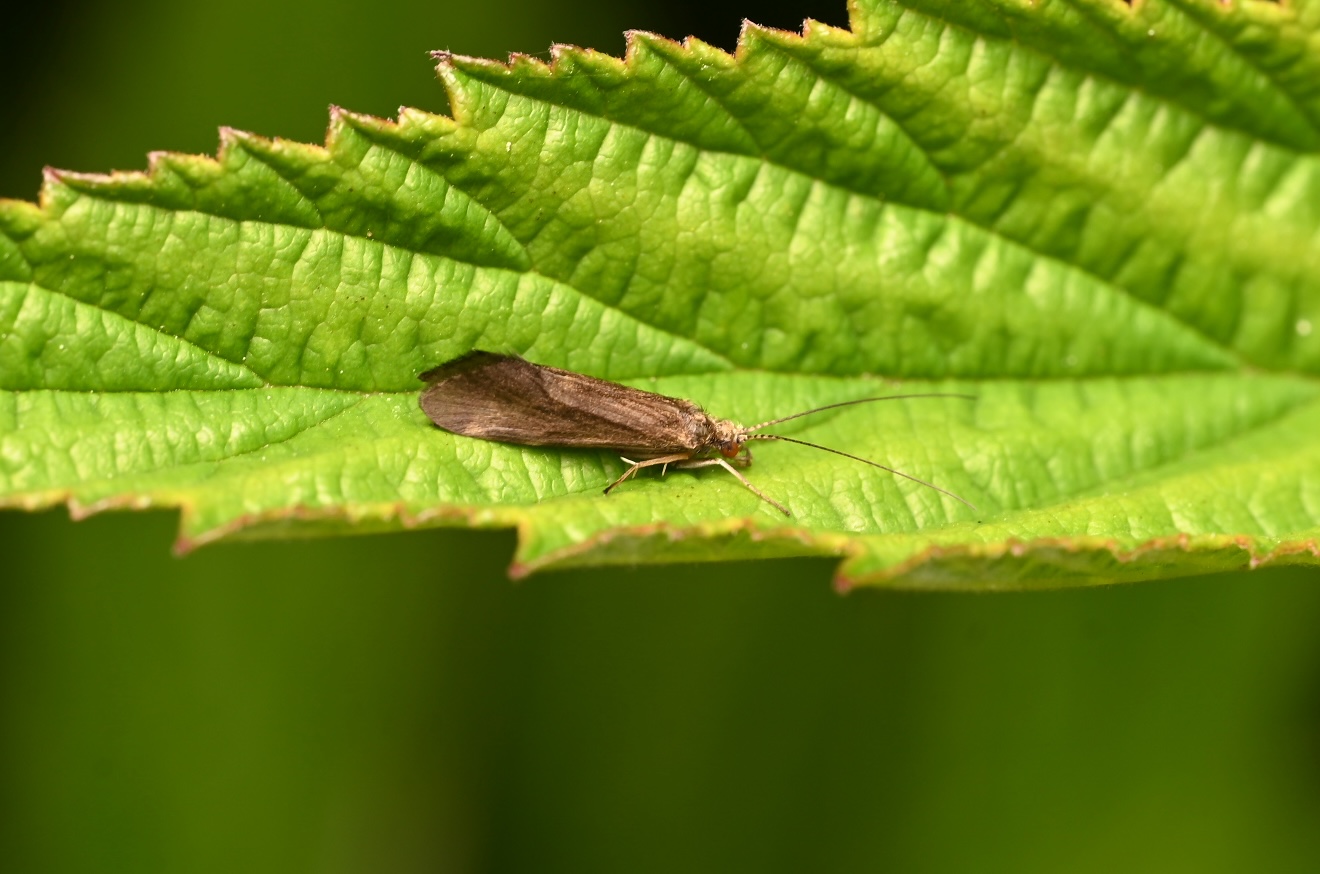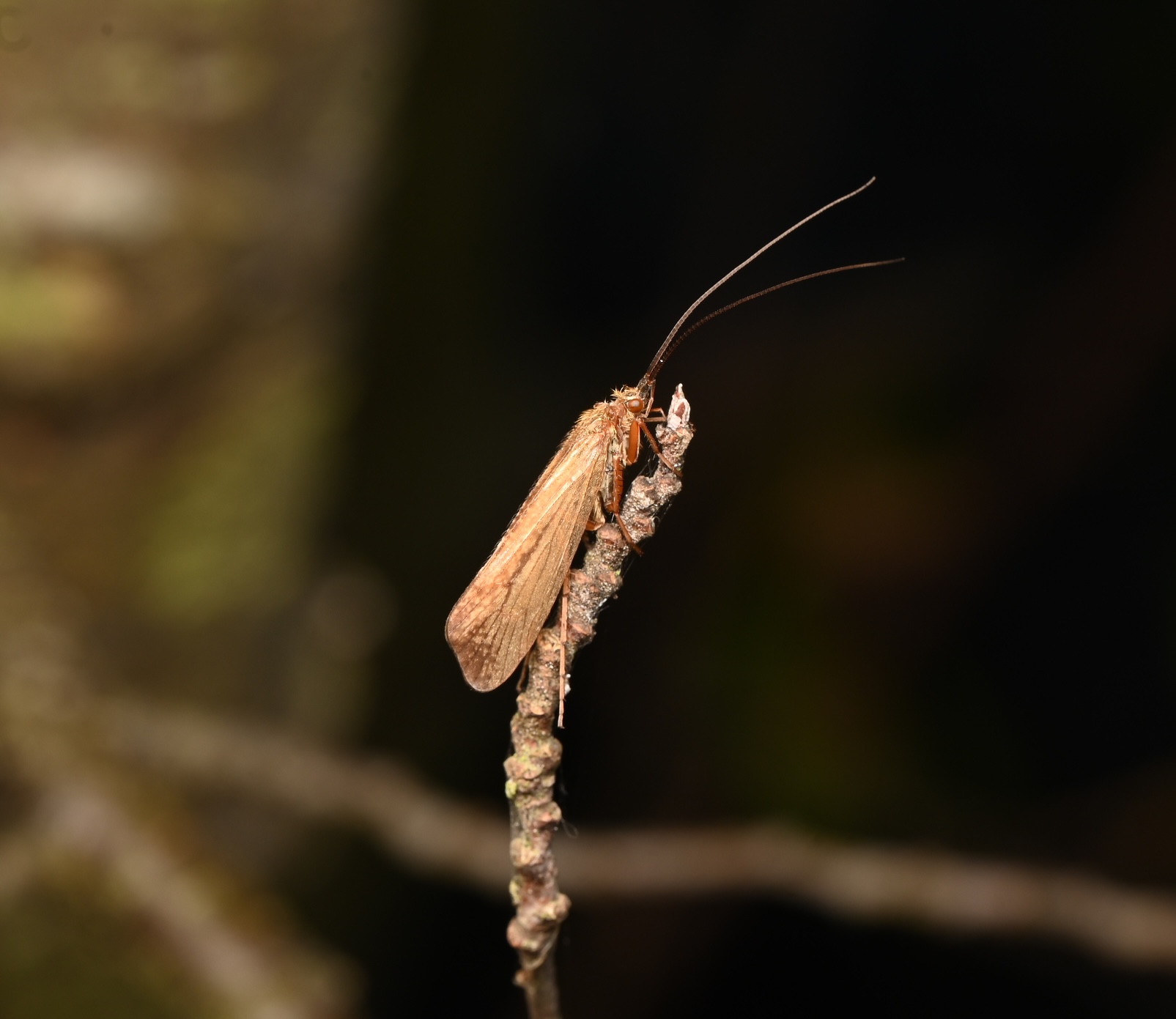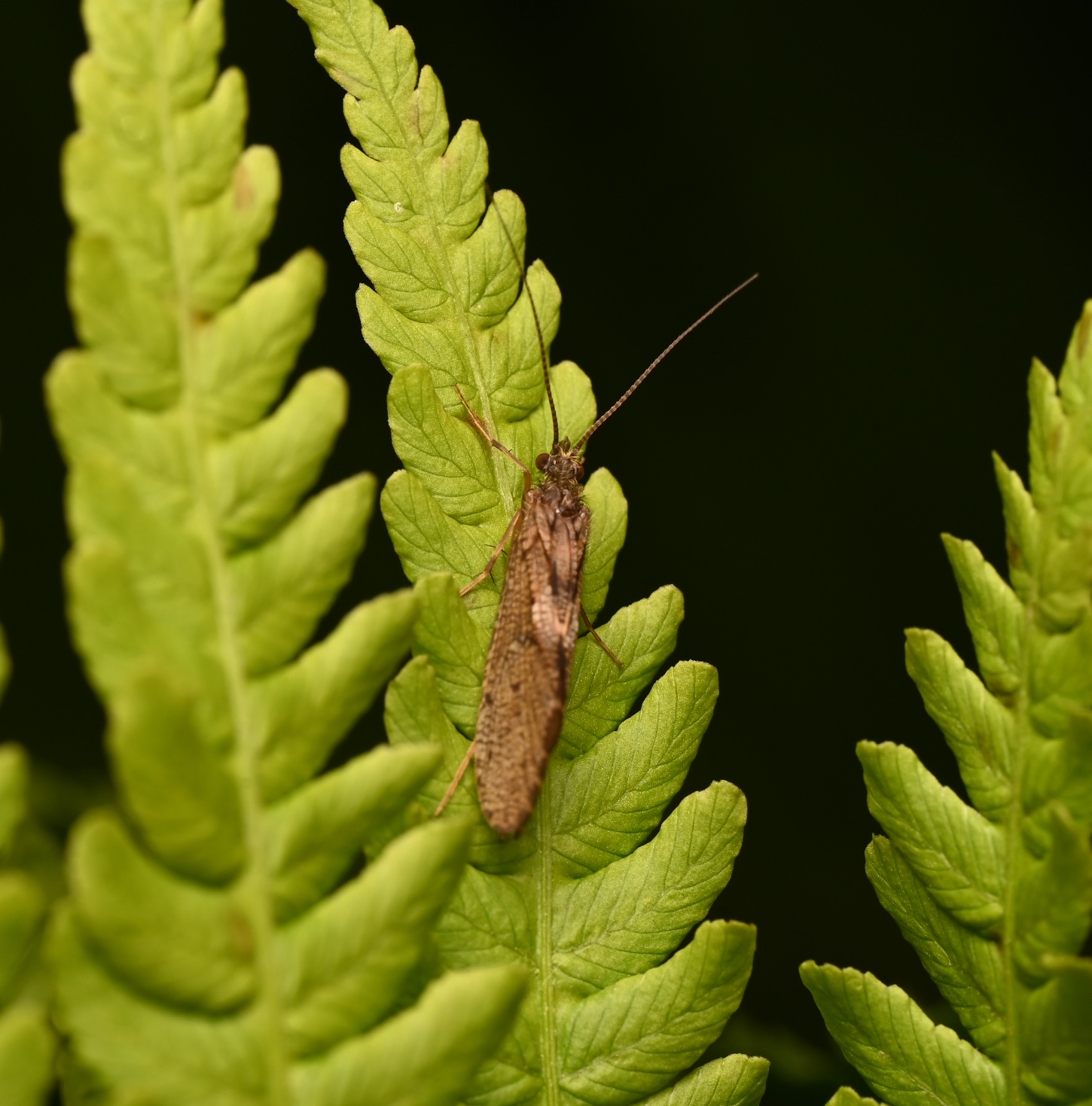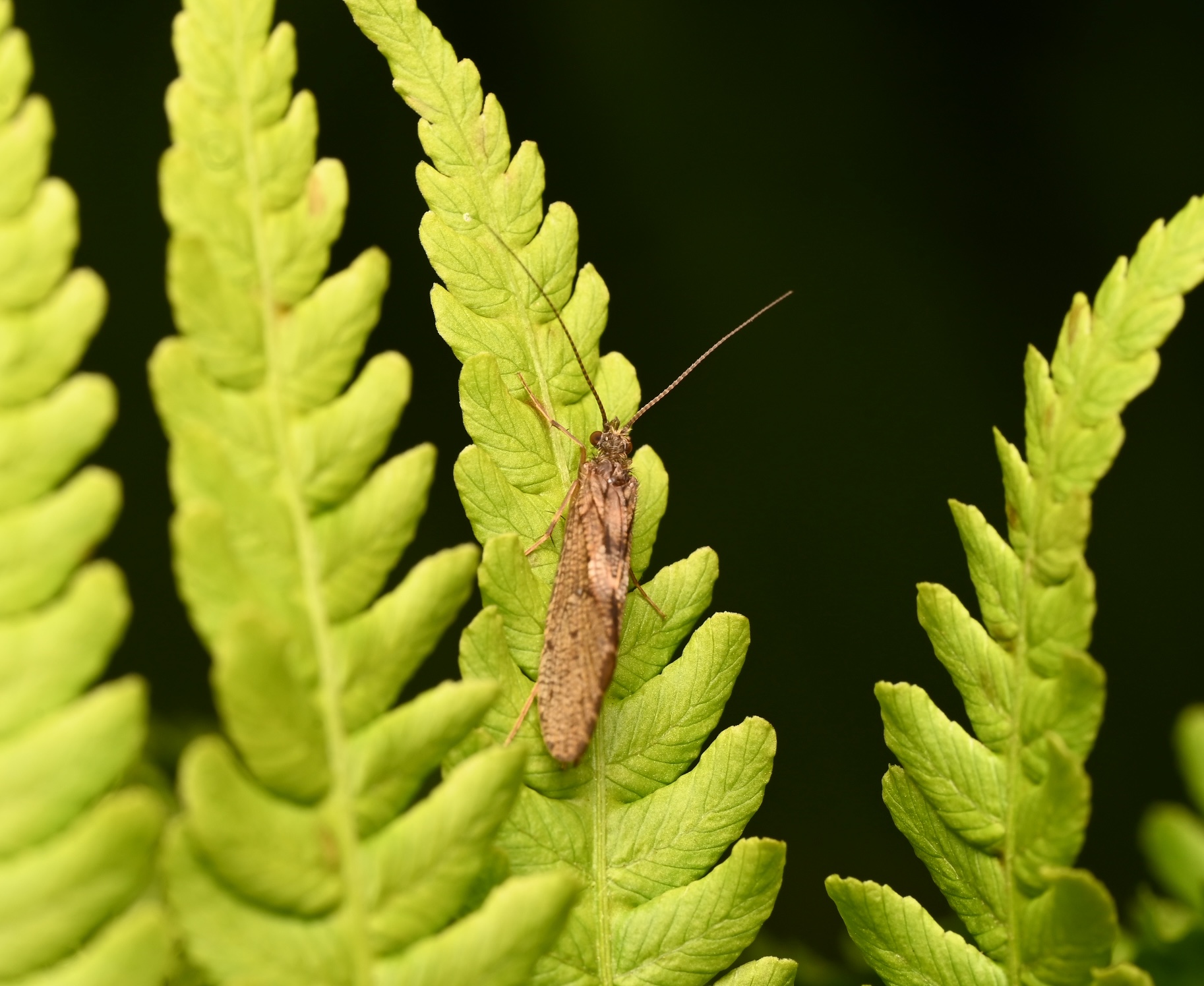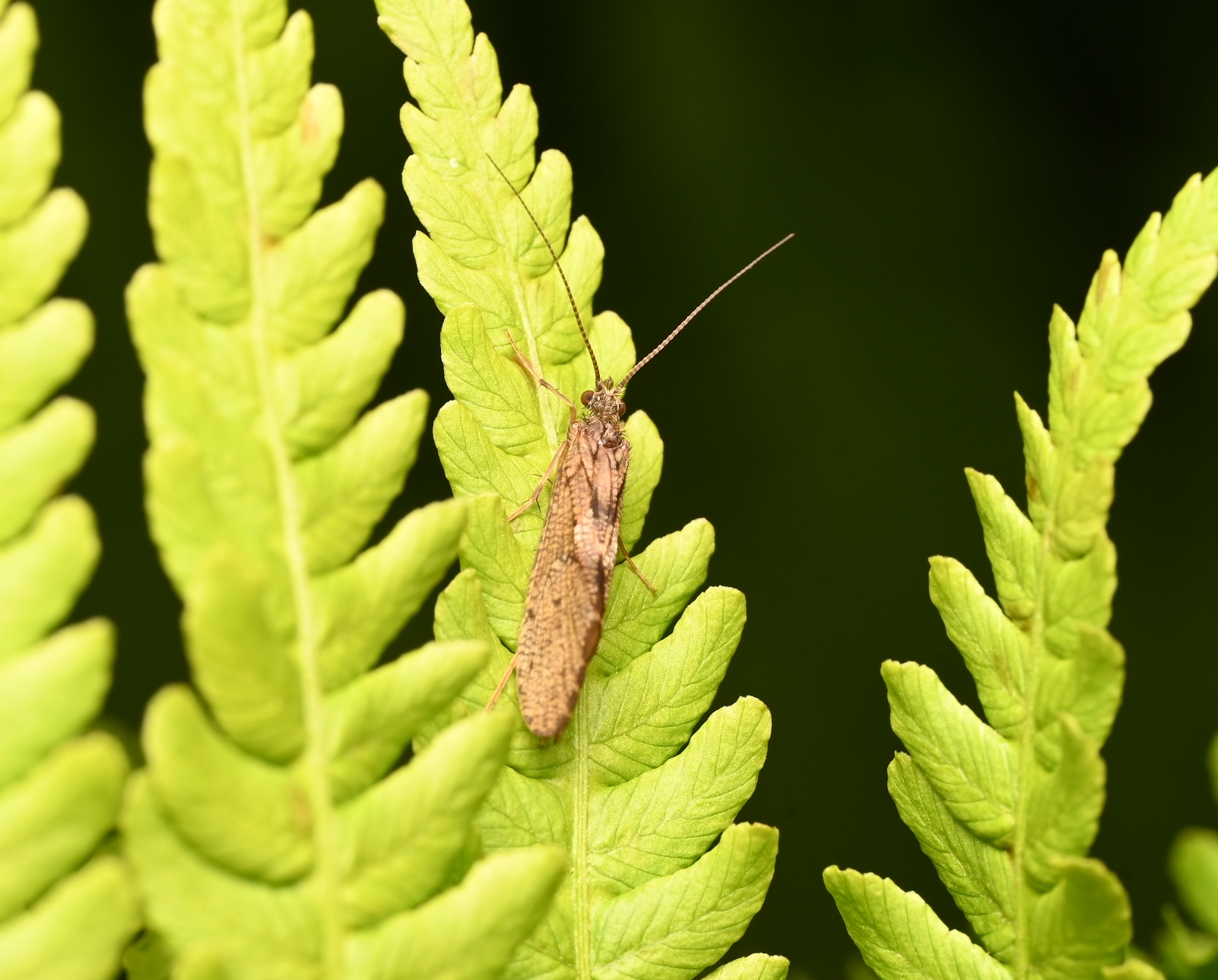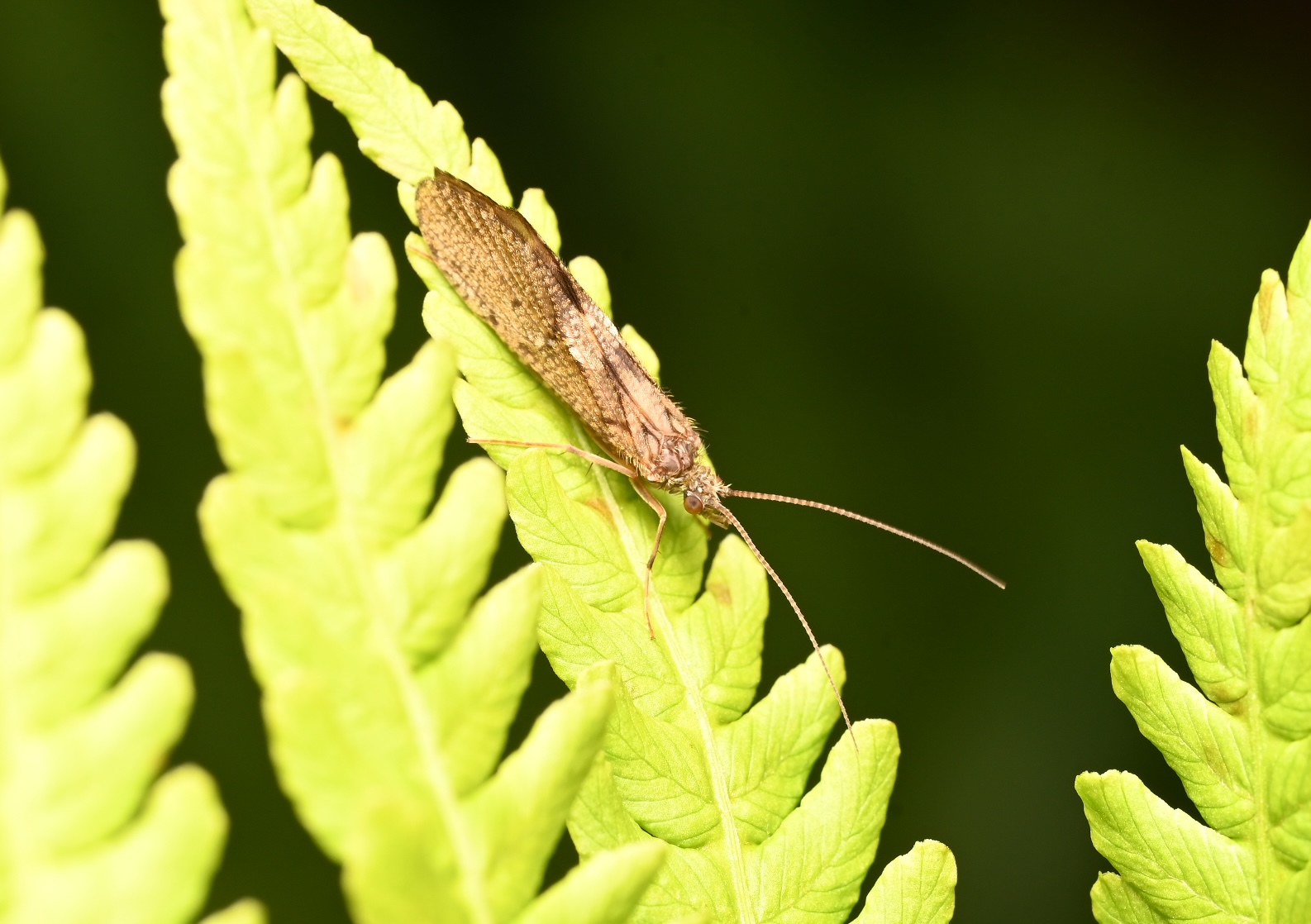
While most caddisfly larvae are famous for building portable stone or twig armor, Rhyacophila breaks all the rules. Representing one of the oldest lineages of caddisflies on Earth, the larvae of this massive genus roam completely “naked”—wandering freely across cold riverbeds without a protective case on their backs. Equipped with powerful hooks on their tails to anchor themselves against rushing currents, mature larvae are aggressive aquatic hunters that prowl fast-flowing streams for mayfly nymphs. Some species lack external gills altogether, absorbing oxygen directly through their skin—a feat that demands freezing, highly oxygenated mountain waters to survive. Only when it’s time to transform into adults do they quickly gather small pebbles with silk to build a temporary, protective pupal shelter. I crossed paths with this remarkable insect at a riverside campsite in Finland! Astonishingly, this was one of three distinct caddisfly species, belonging to three distinct families I observed at that single camp, capping off a month-long moth-photographing journey across Sweden and Finland.