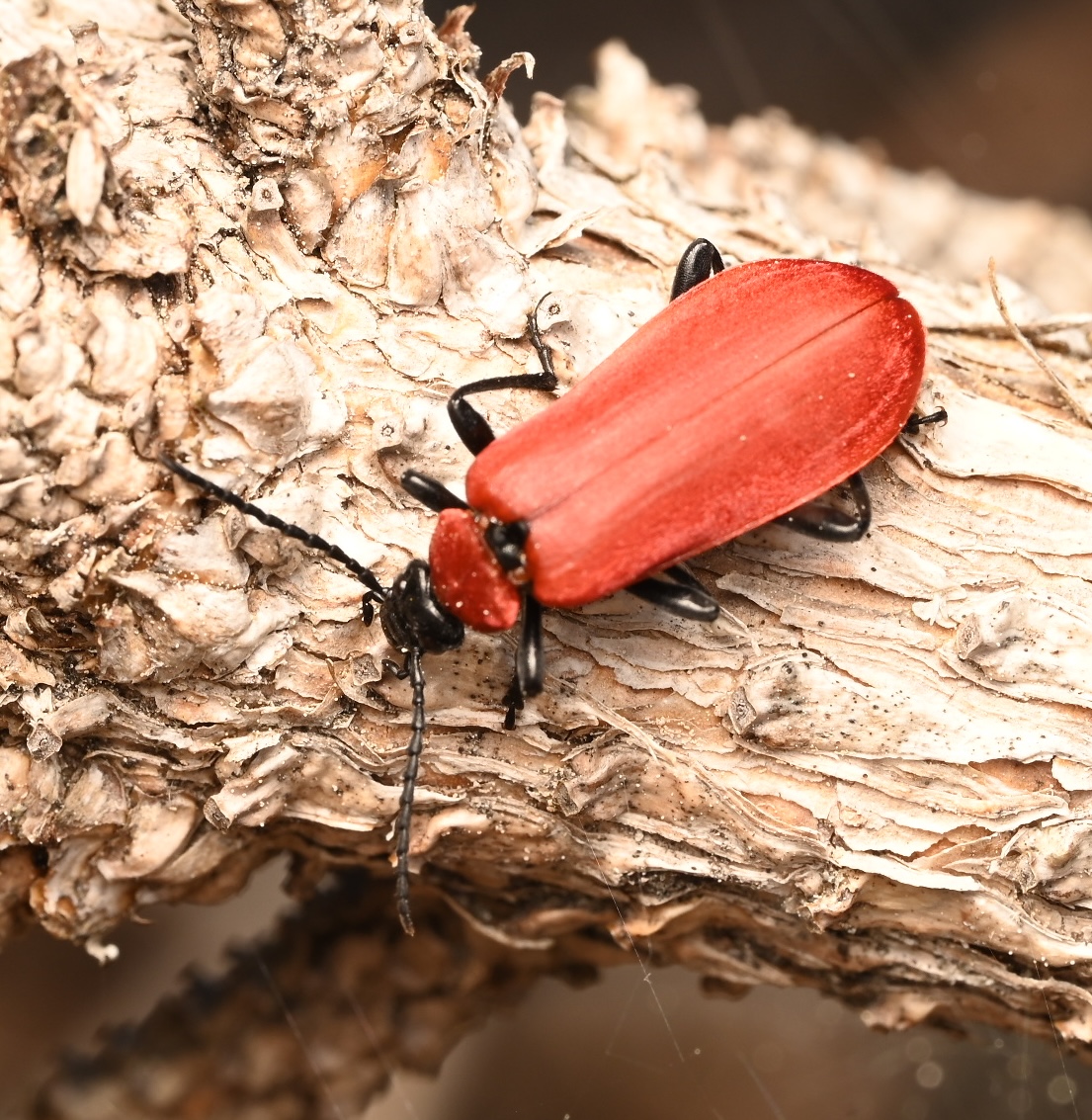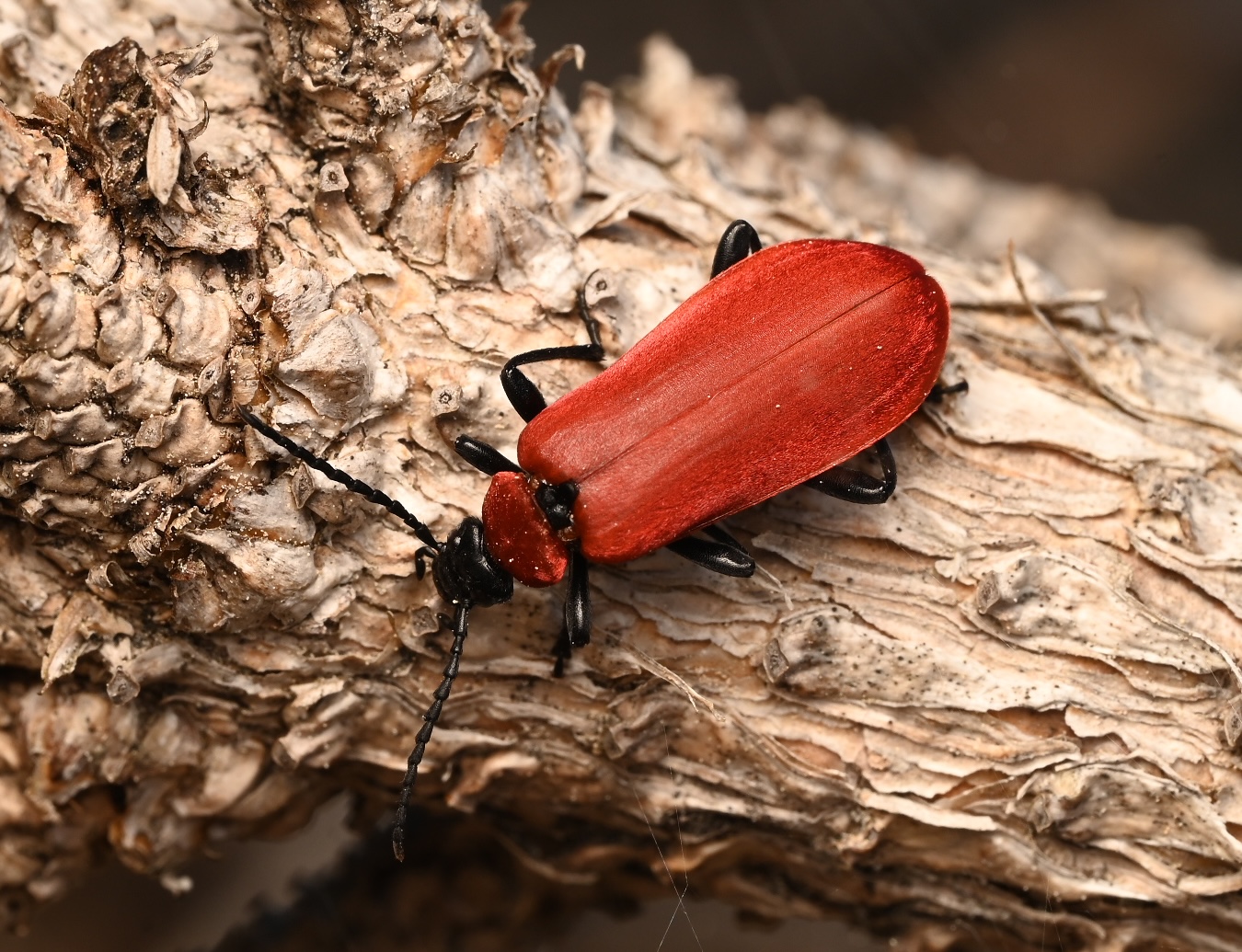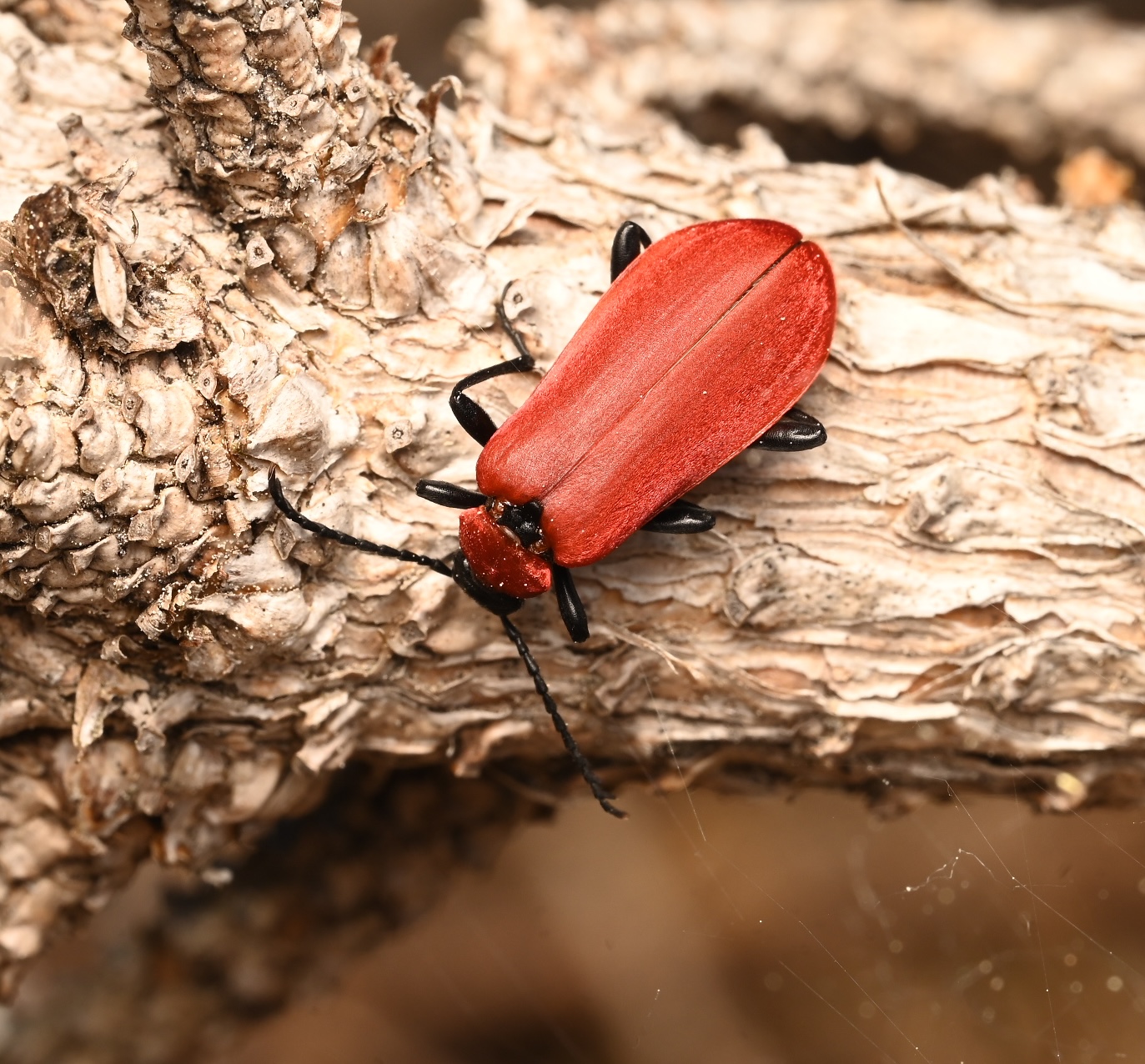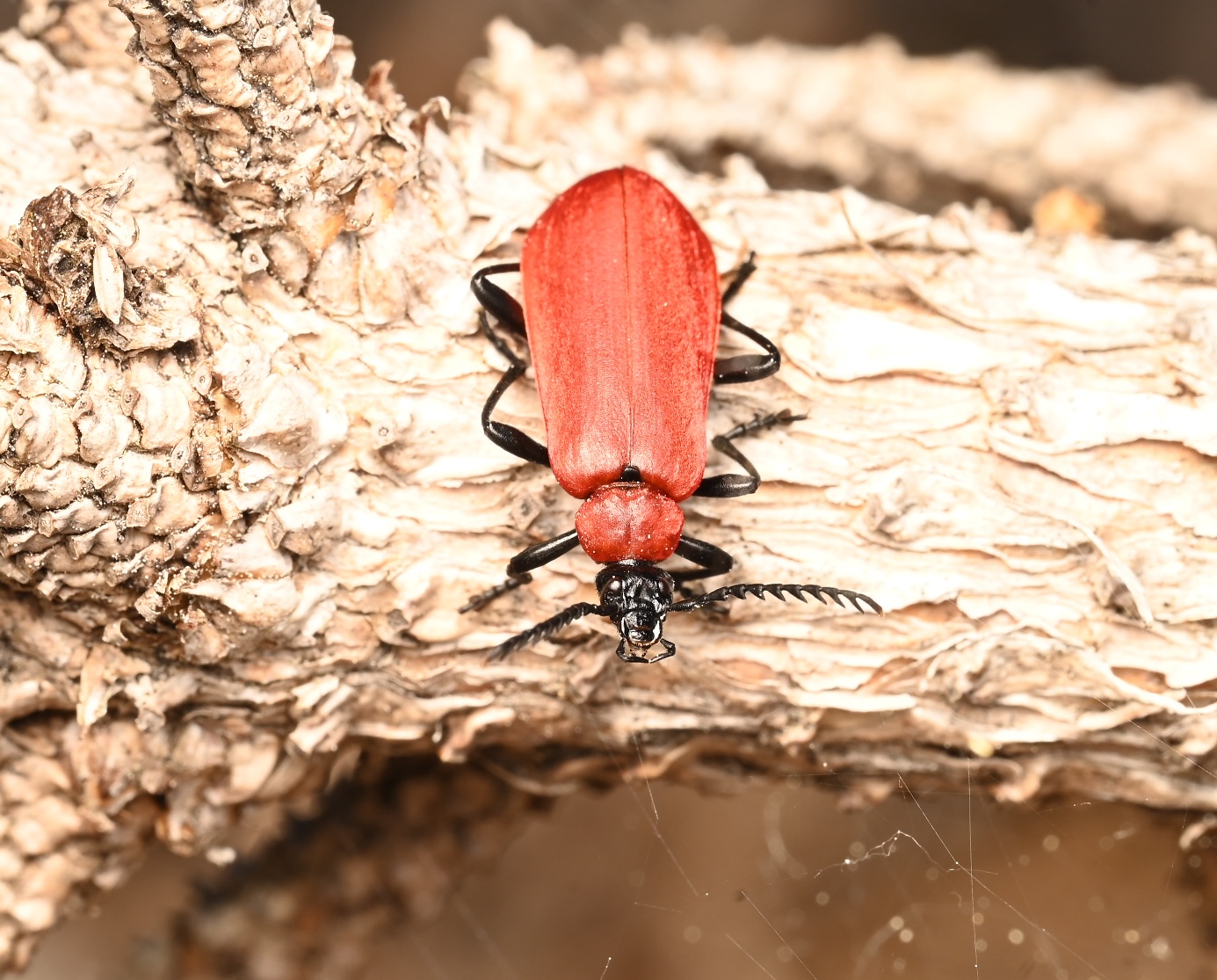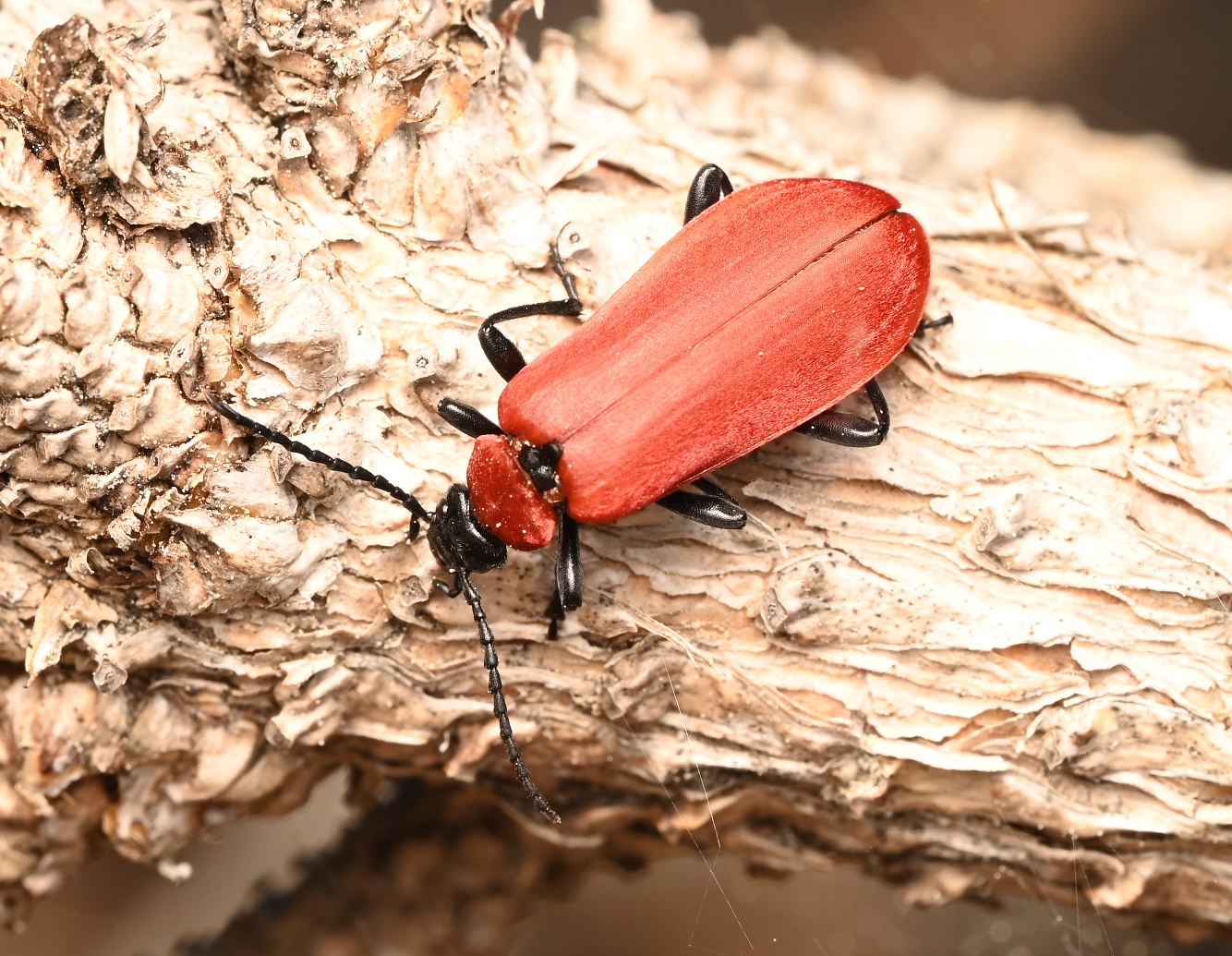
Meet the black-headed cardinal beetle (Pyrochroa coccinea), a stunning forest dweller whose fiery red body and contrasting, pitch-black head make it look like a drop of molten lava on the woodland floor. These beetles are highly valued by conservationists; because they depend on dead, decaying wood to thrive, their presence serves as an ecological badge of honor, indicating an old-growth forest with a long, undisturbed history. While the adults emerge for only a fleeting moment in the spring, their fierce, predatory larvae spend a grueling two to three years lurking beneath loose tree bark, relentlessly hunting down other insect larvae. To survive freezing winter temperatures in their shallow wooden shelters, the larvae rely on a brilliant biological trick called cold hardening. By drastically doubling the salt and chemical concentrations in their bodily fluids, they create a highly effective, natural antifreeze that prevents their cells from turning to ice. I spotted this brilliant crimson gem during a bicycle tour in Sweden, when its intense red color instantly caught my eye during a quiet walk through the forest.