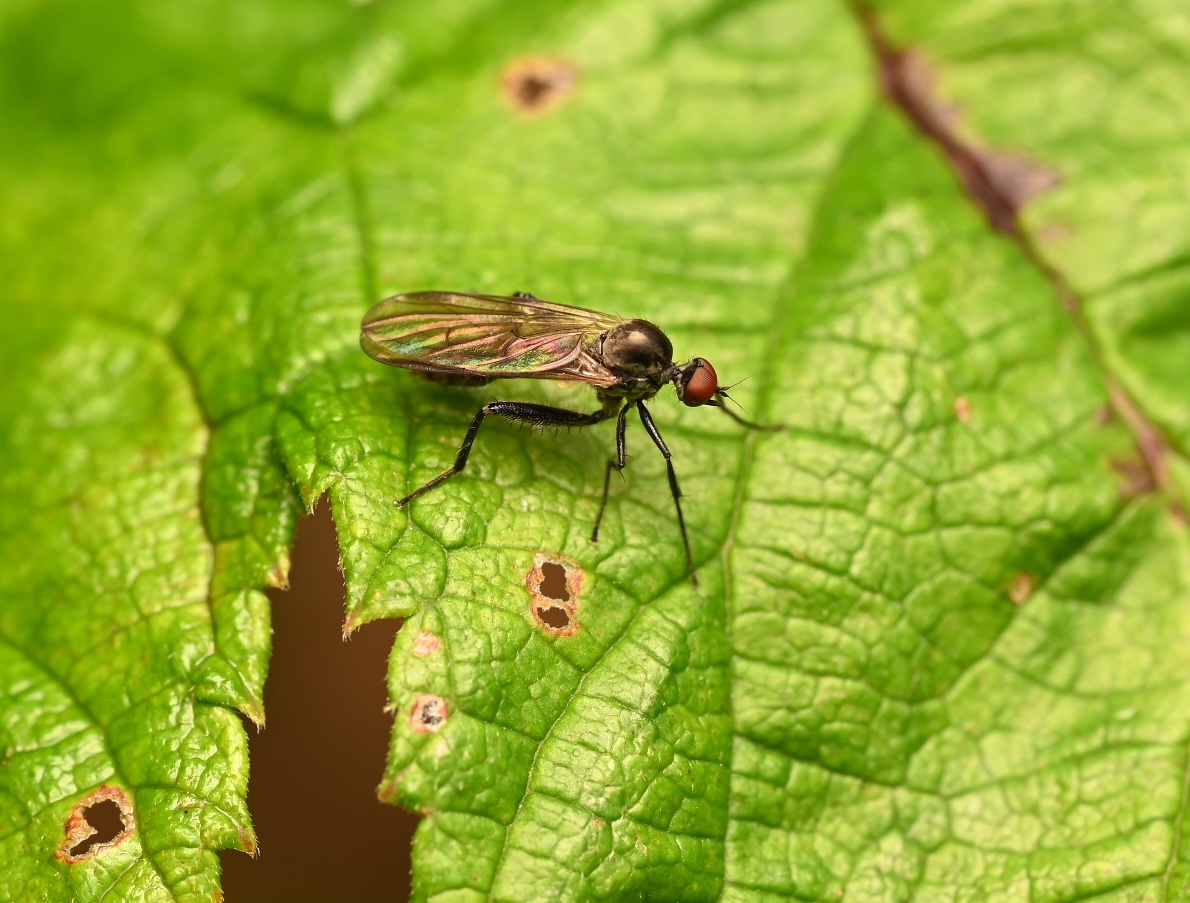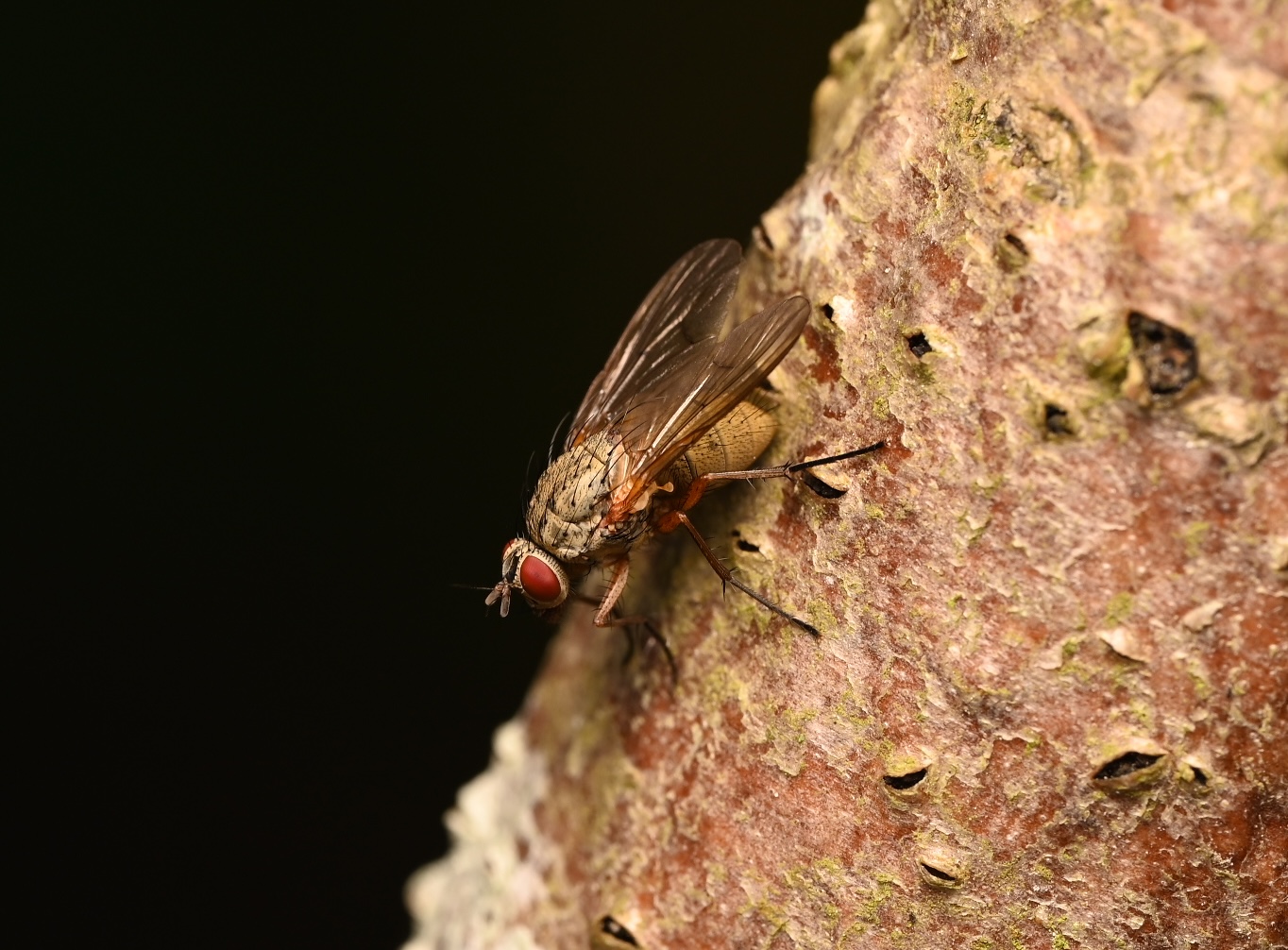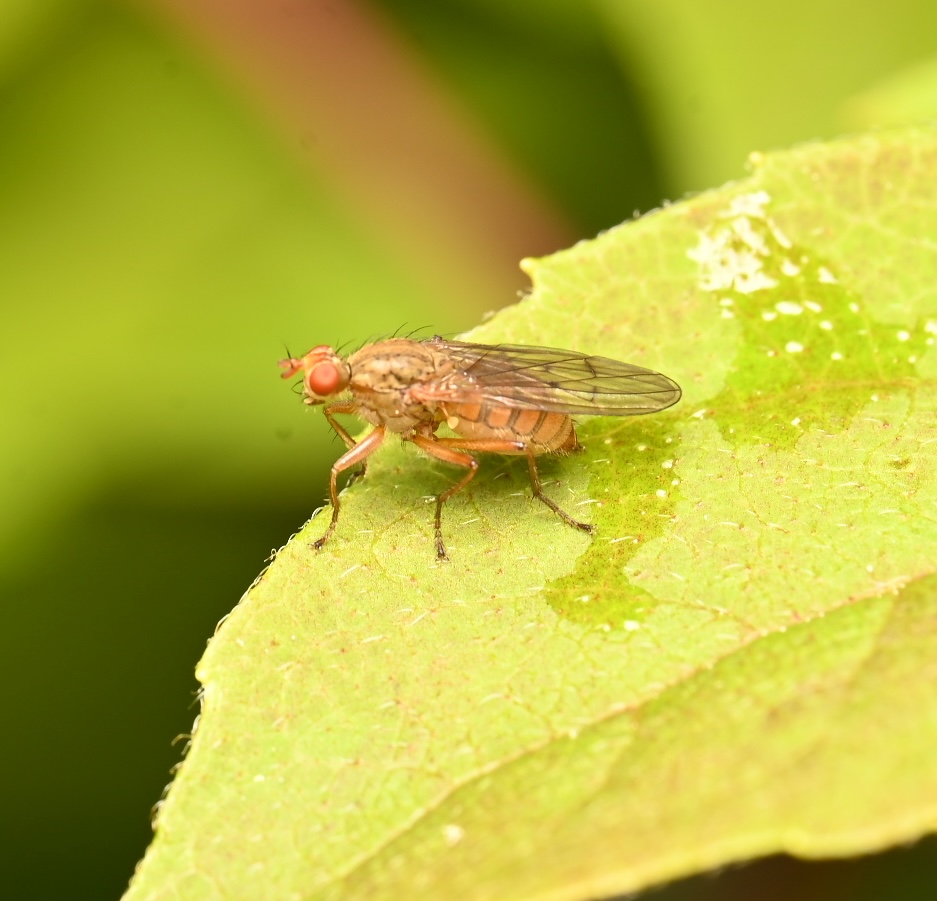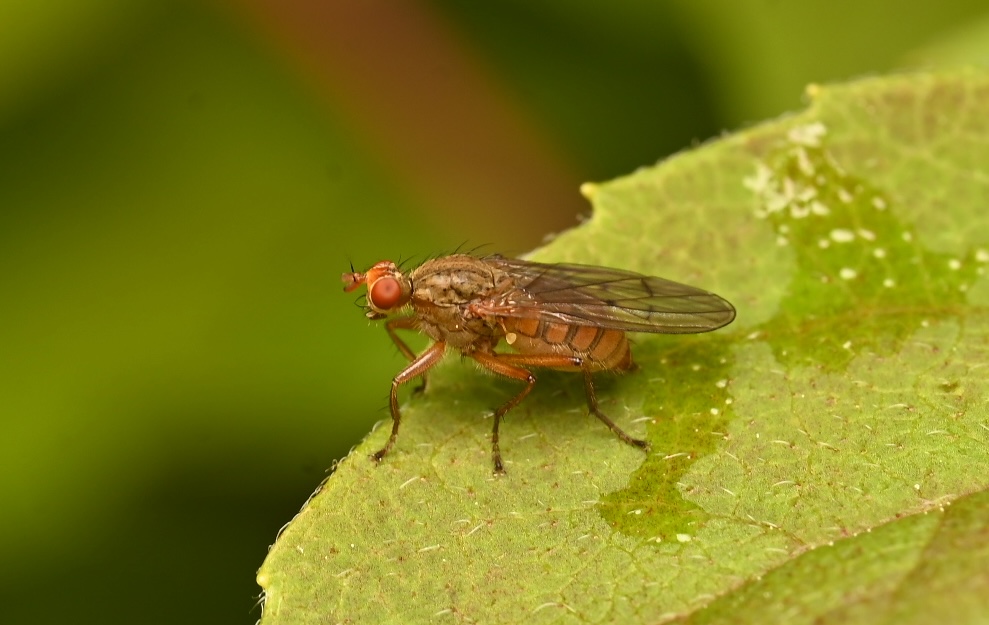
The furcate dung fly (Scathophaga furcata) is a stout, dull-yellow fly closely related to the well-known common golden dung fly. Widespread across Europe and Northern Asia, this 4–7.5 mm insect thrives in shady, humid environments such as woodland edges and damp grasslands. Adult flies are keen predators that hunt smaller flies mid-air, supplementing their diet with flower nectar and dung fluids. Meanwhile, their larvae play an essential ecological role by breaking down animal droppings, and the adults themselves provide a critical food source for nesting birds. Active mainly from April through October, a few resilient individuals can even be seen flying on mild winter days. I met this unassuming little fly during a month-long bicycle trip along the Baltic Sea. I had initially mistaken it for one of the many common yellowish micro-flies often seen resting on foliage, only realizing its true identity upon closer look!