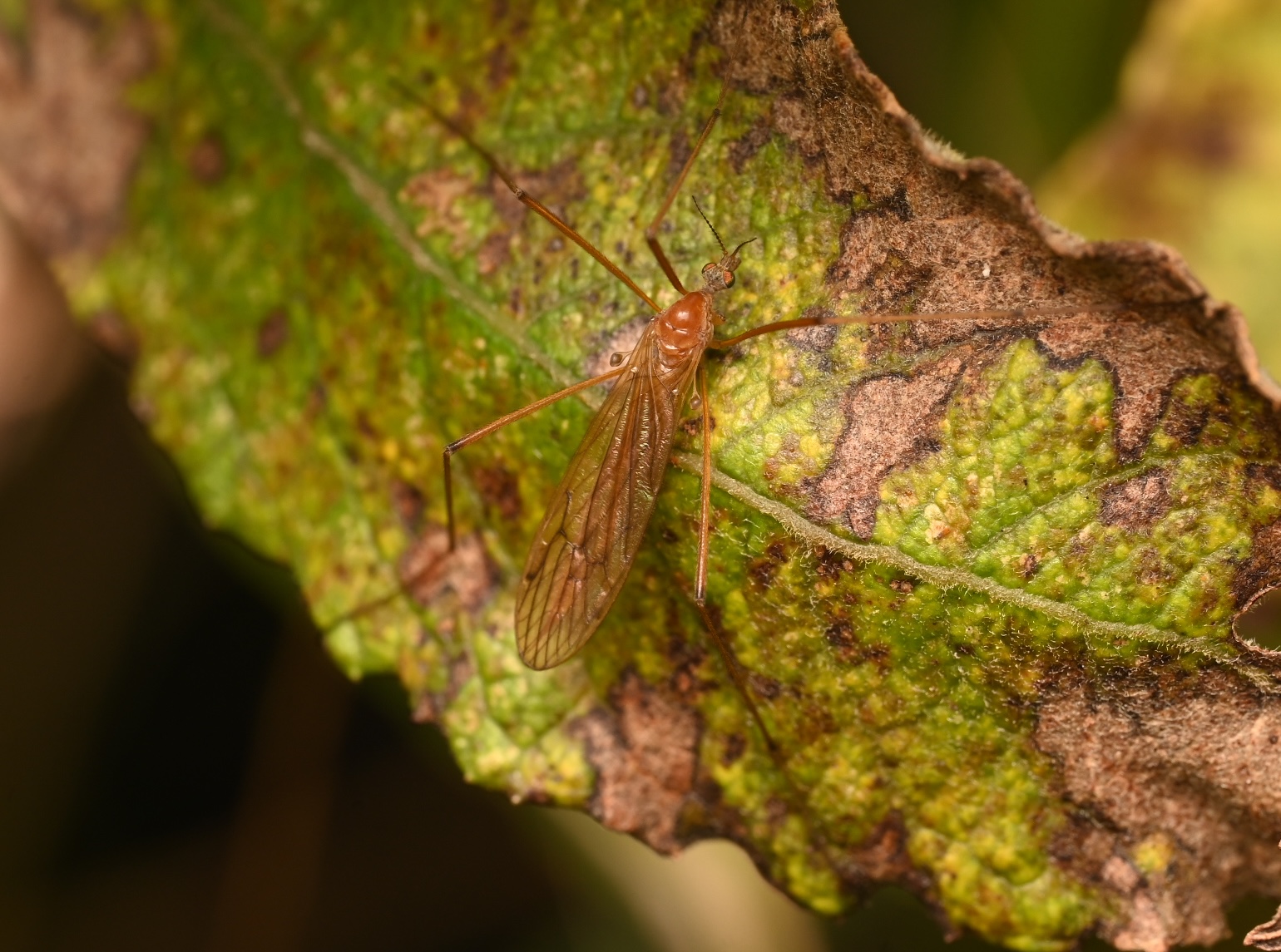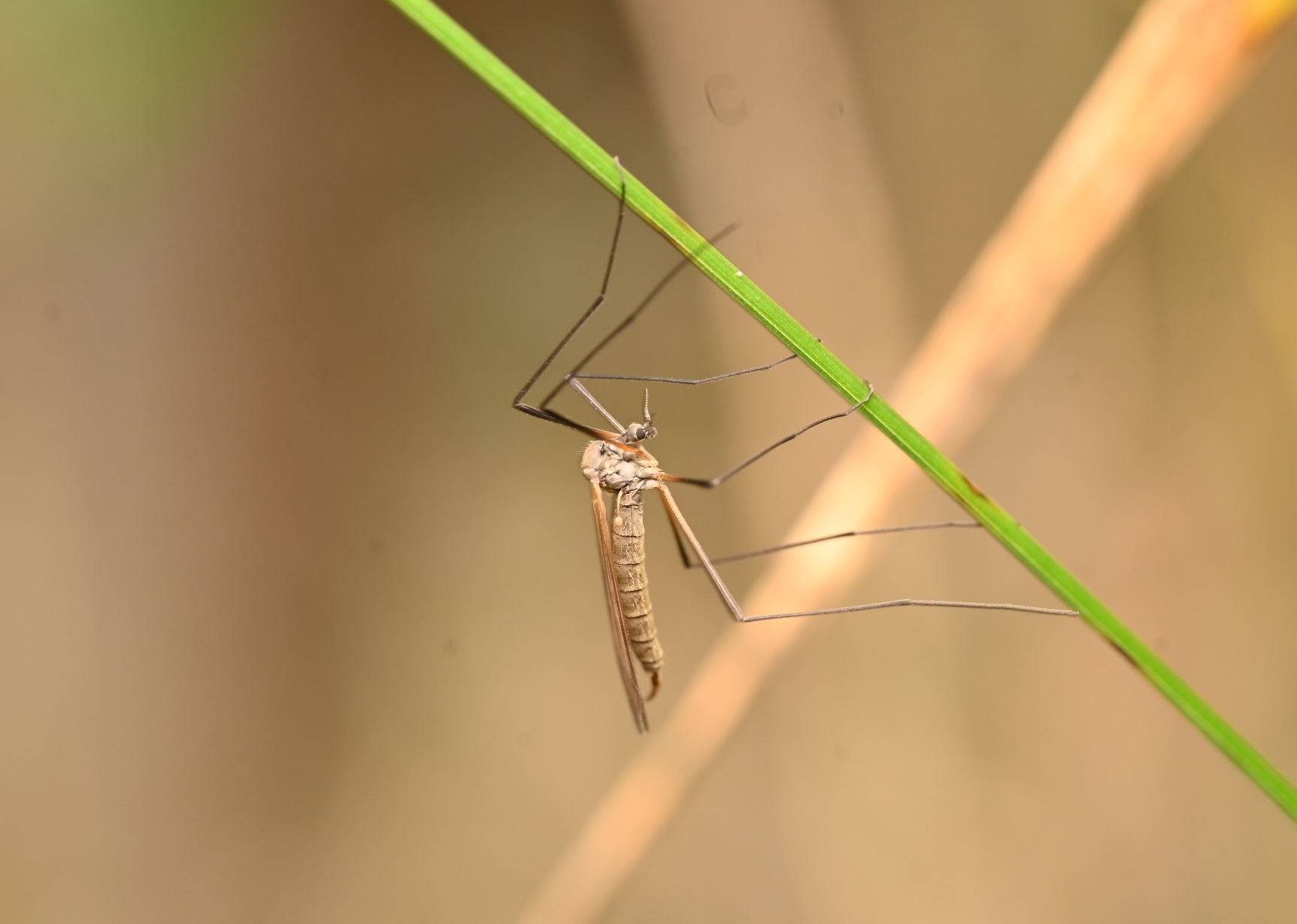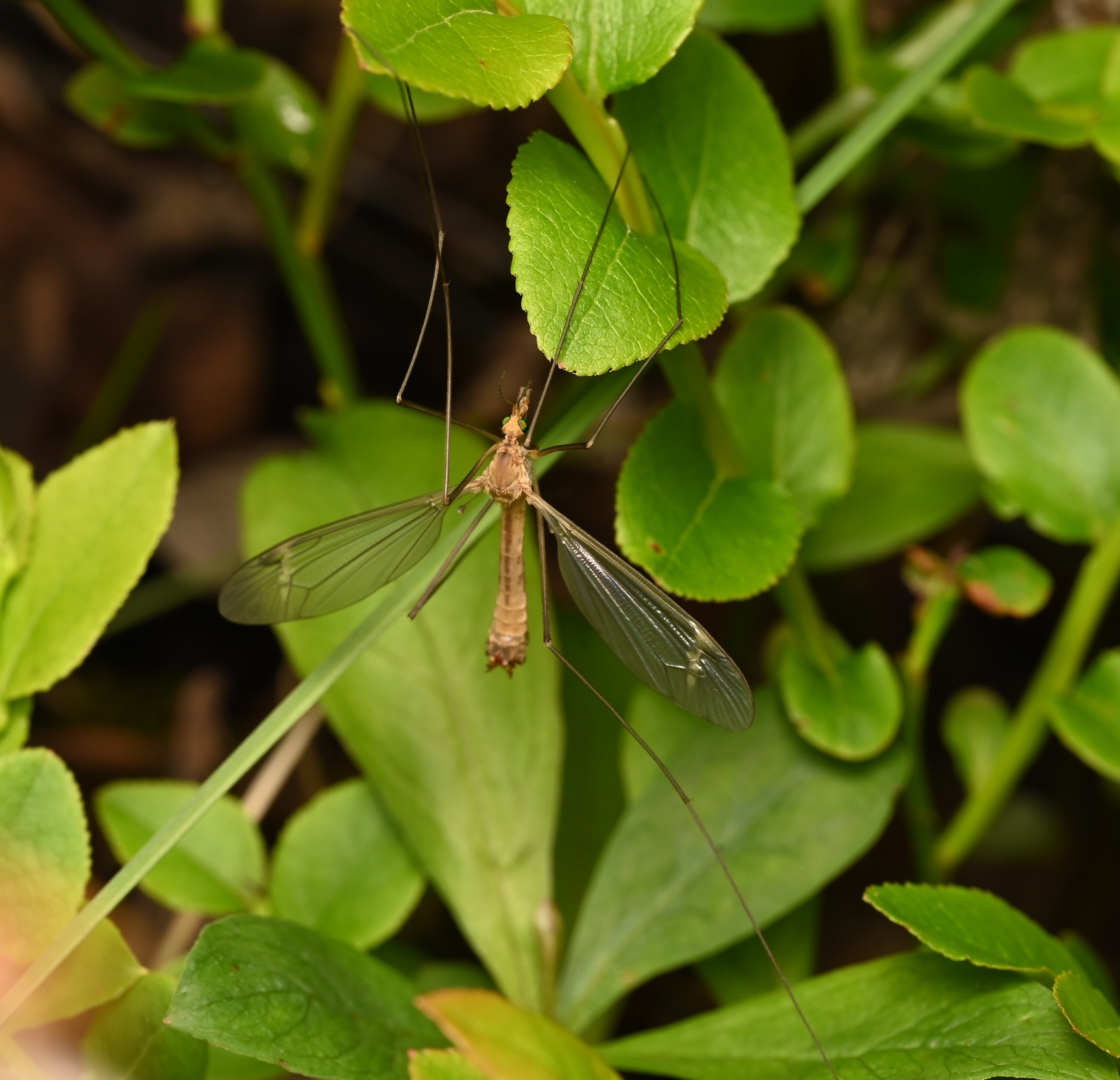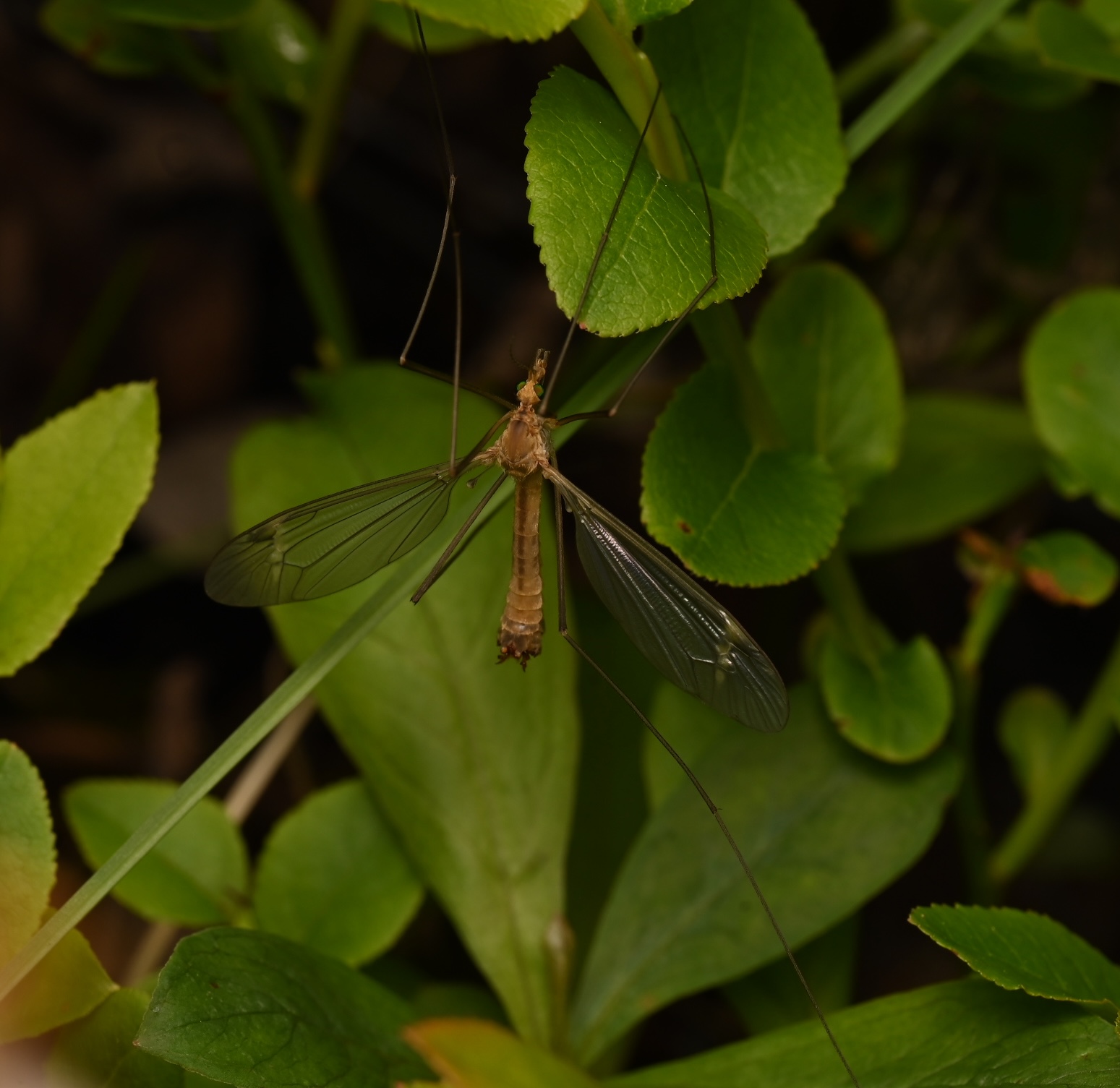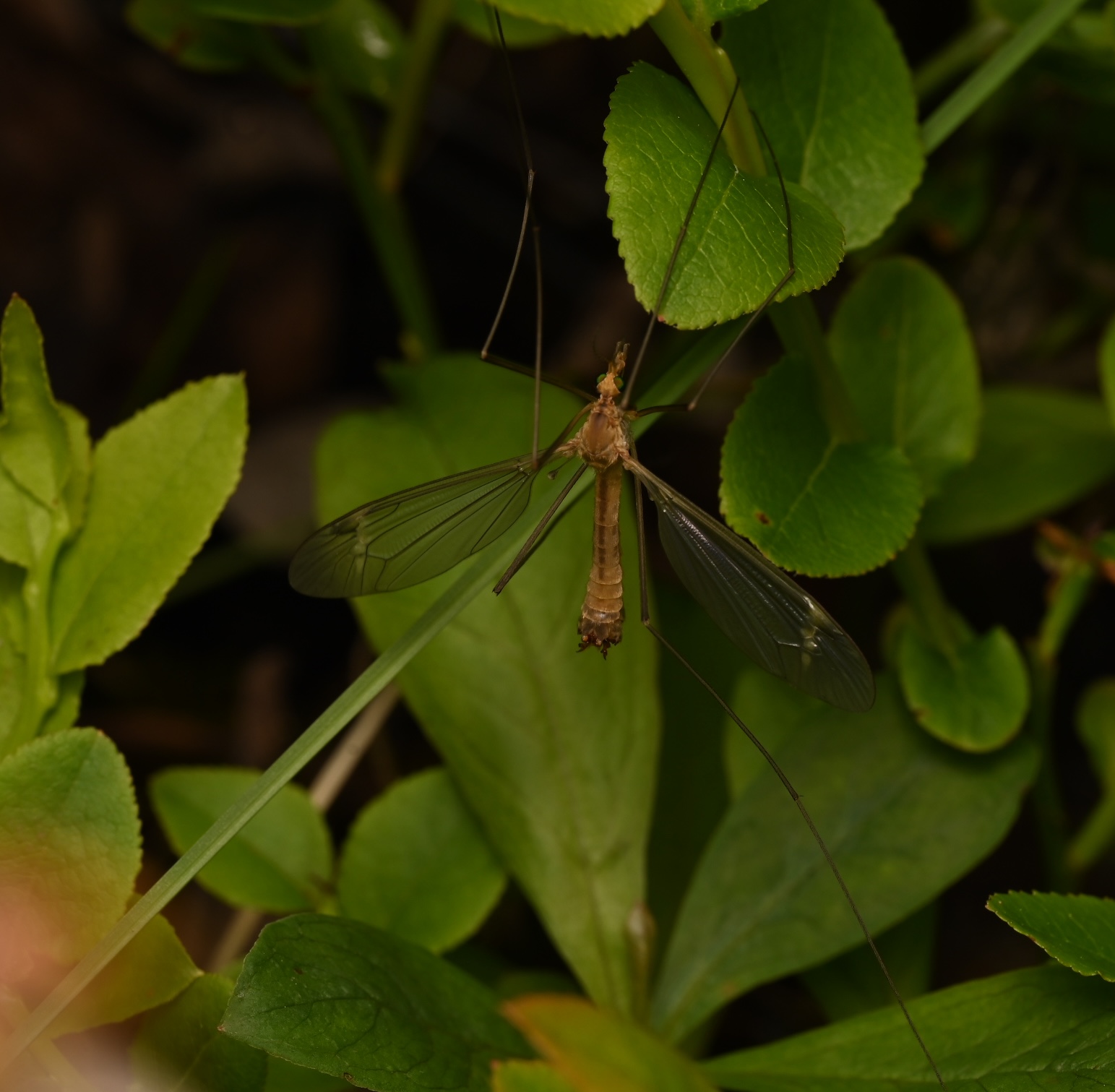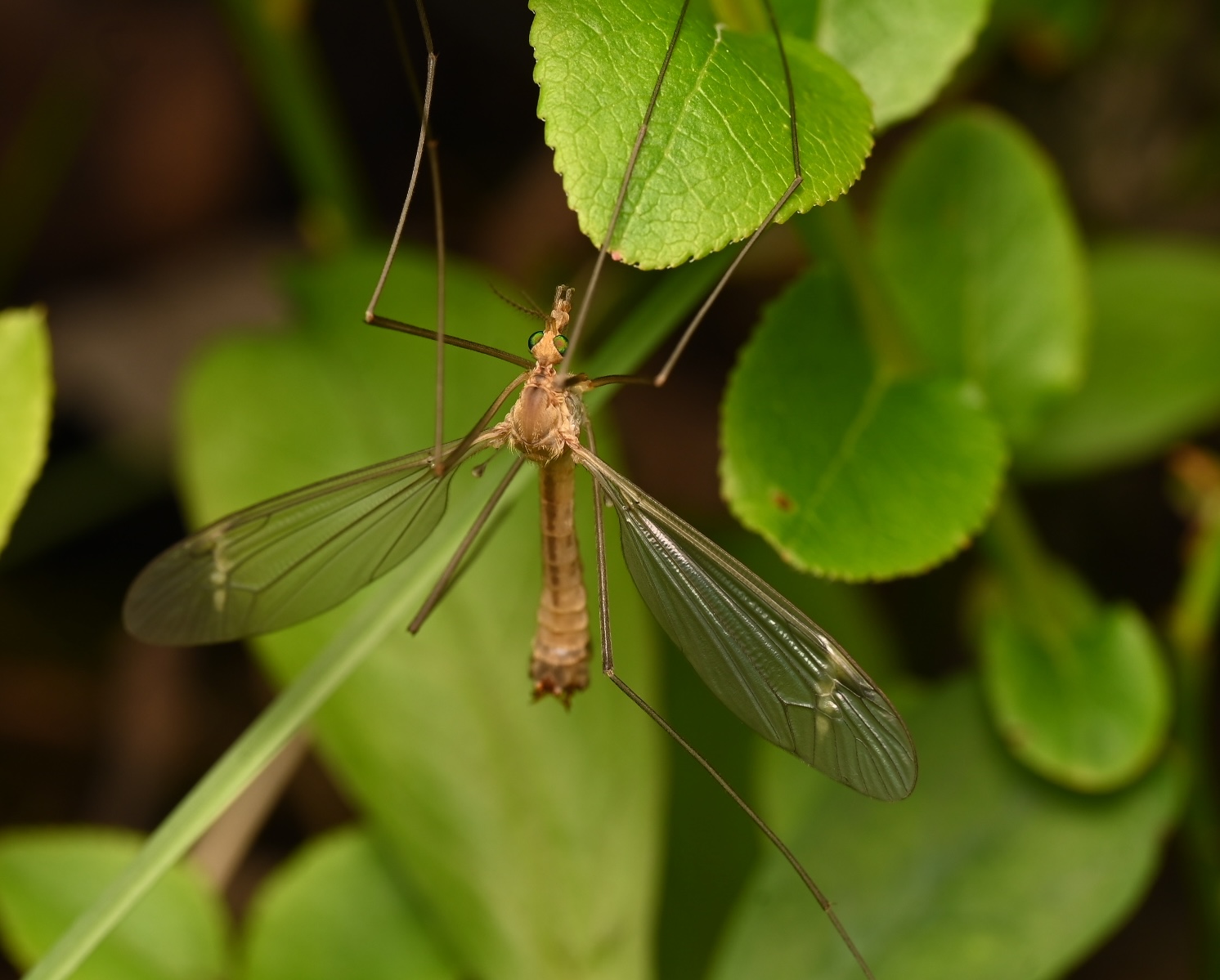
Meet Tipula lunata, a Palearctic species of common crane fly belonging to the family Tipulidae. Part of a highly diverse genus containing over 2,000 species, these delicate, long-legged insects live on a strict biological clock. The entire adult life of a crane fly is a race against time to mate and lay eggs; they live for only a few days, relying almost entirely on energy reserves stored during their larval stage. When they do feed, it is exclusively to sip nectar from umbellifer flowers like cow parsley, making them accidental pollinators. Like all true flies, they possess a single pair of flight wings alongside a pair of modified hindwings called halteres. These tiny, club-like structures act as natural gyroscopes, keeping the insect perfectly balanced mid-air. Meanwhile, their tough, legless larvae—known as “leatherjackets”—thrive in the well-drained humus of heathlands, breaking down decaying matter. I discovered this beautiful specimen, complete with mesmerizing green eyes, resting quietly at a riverside campsite in Sweden.