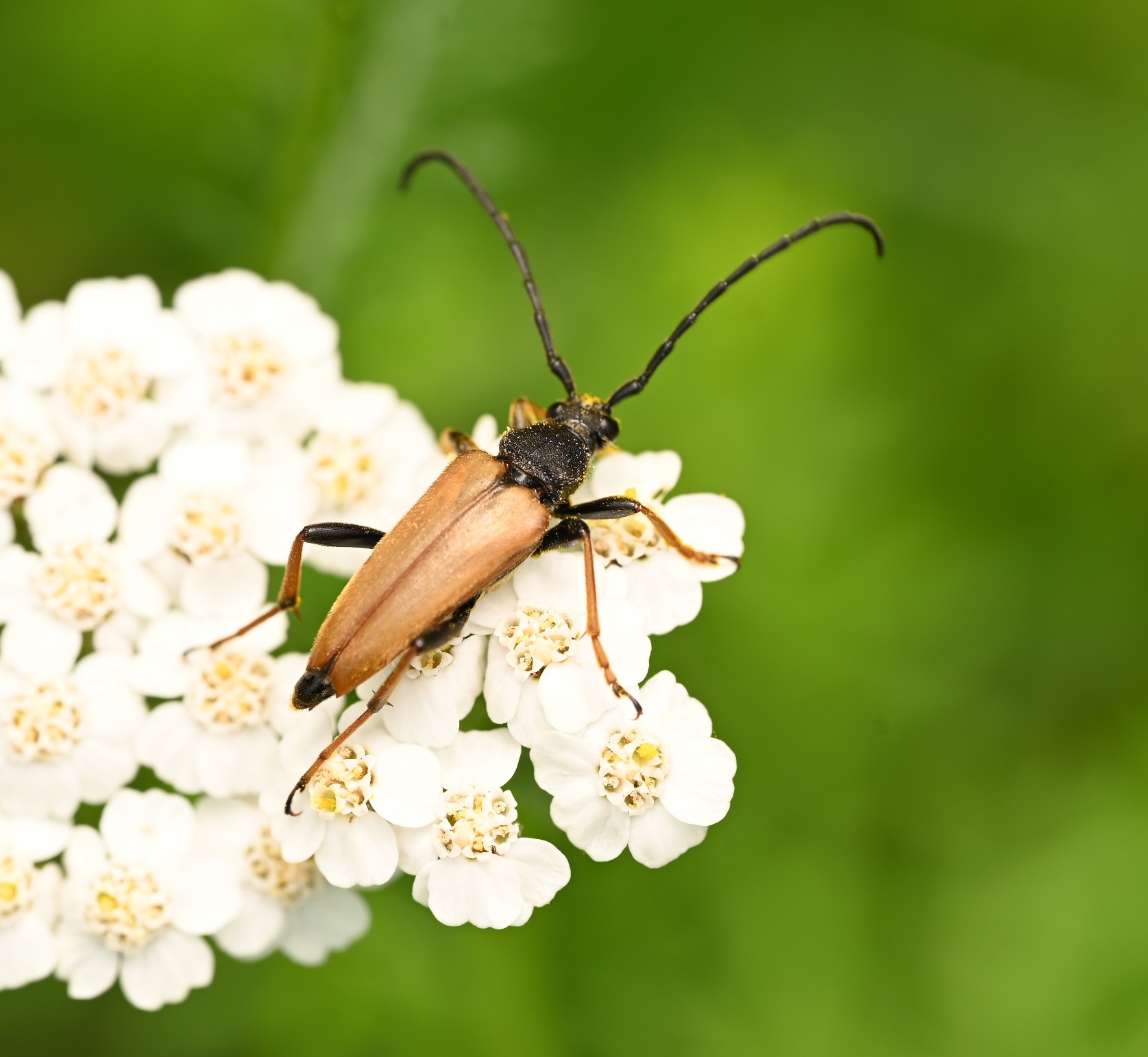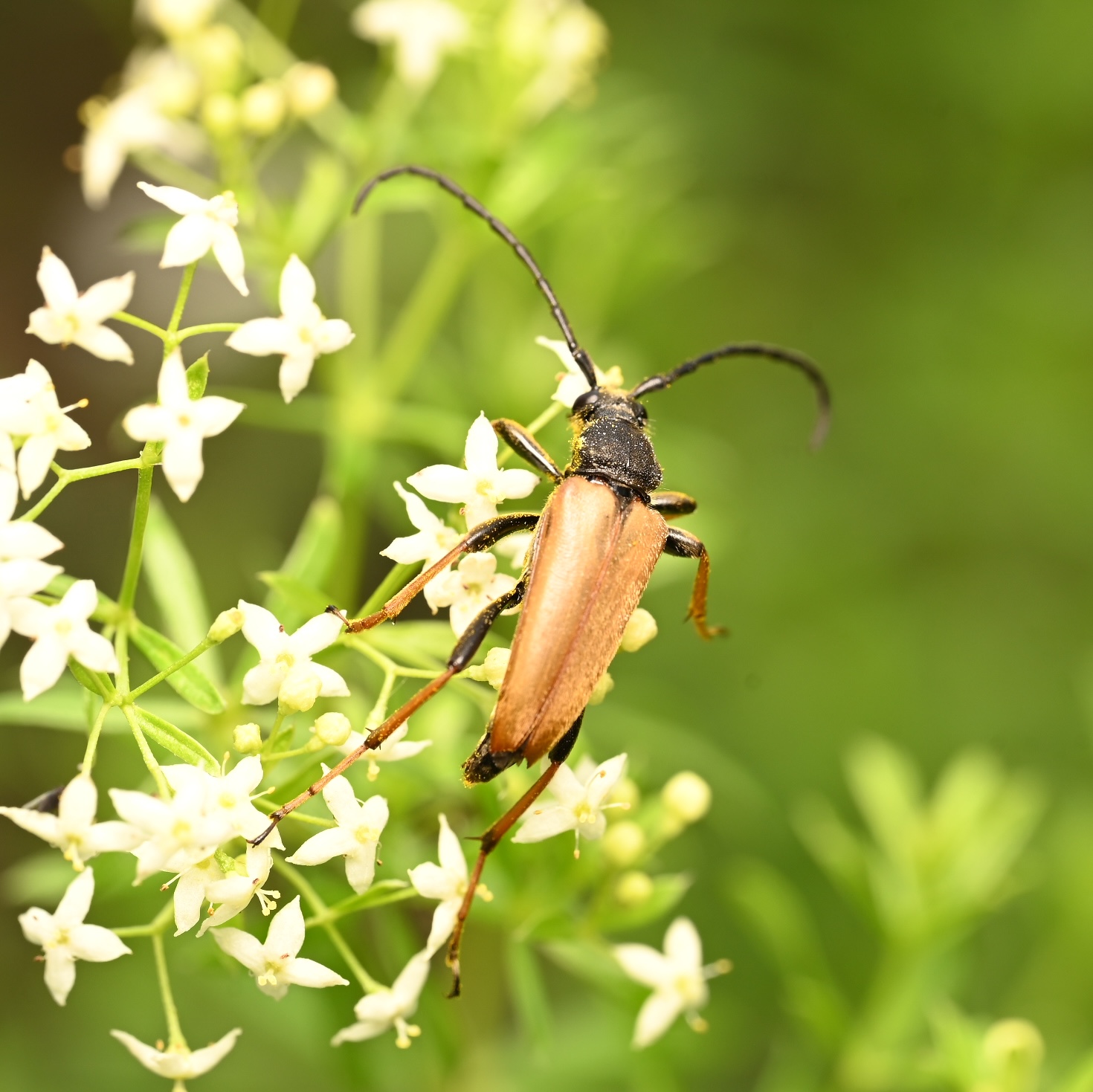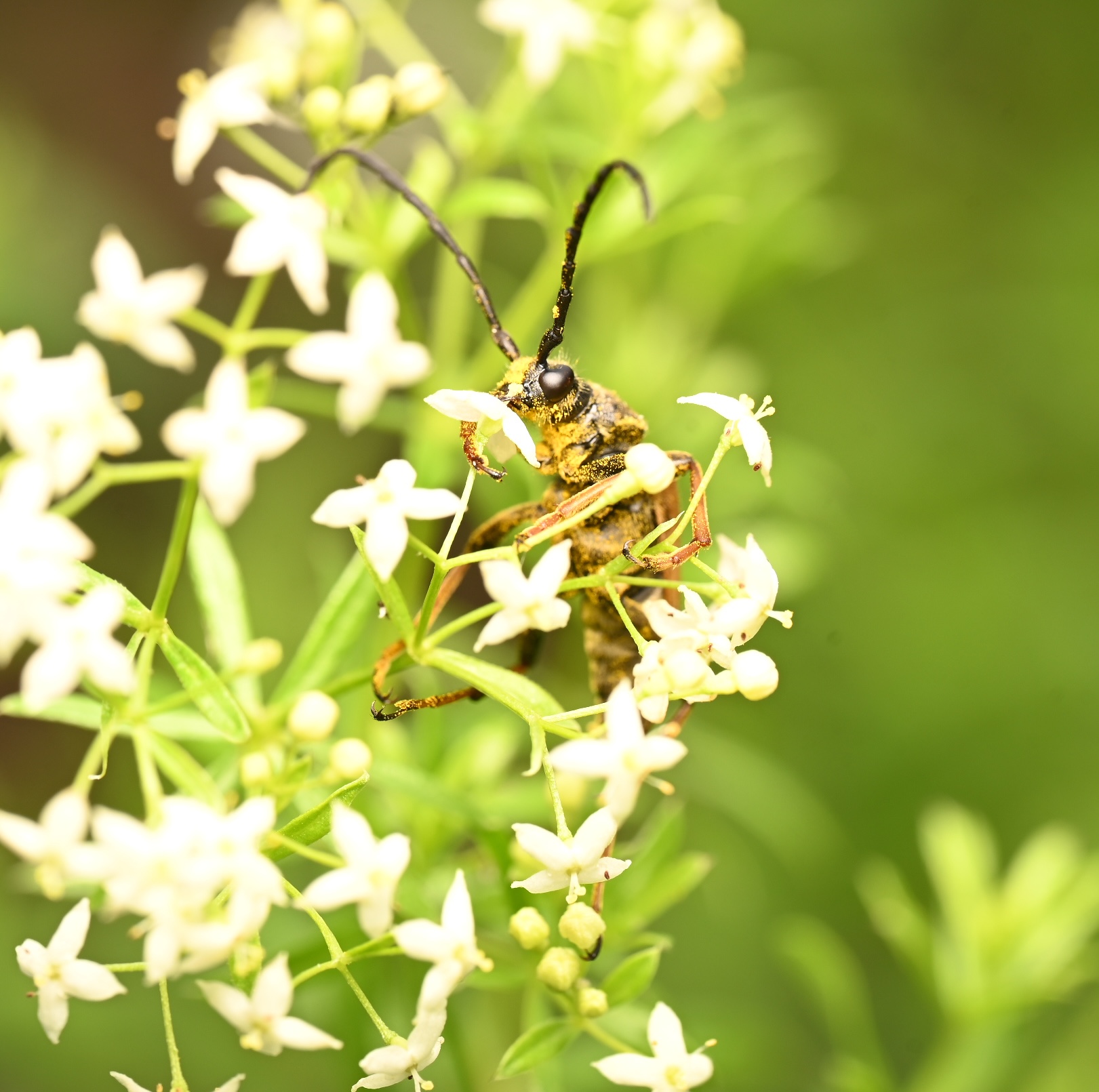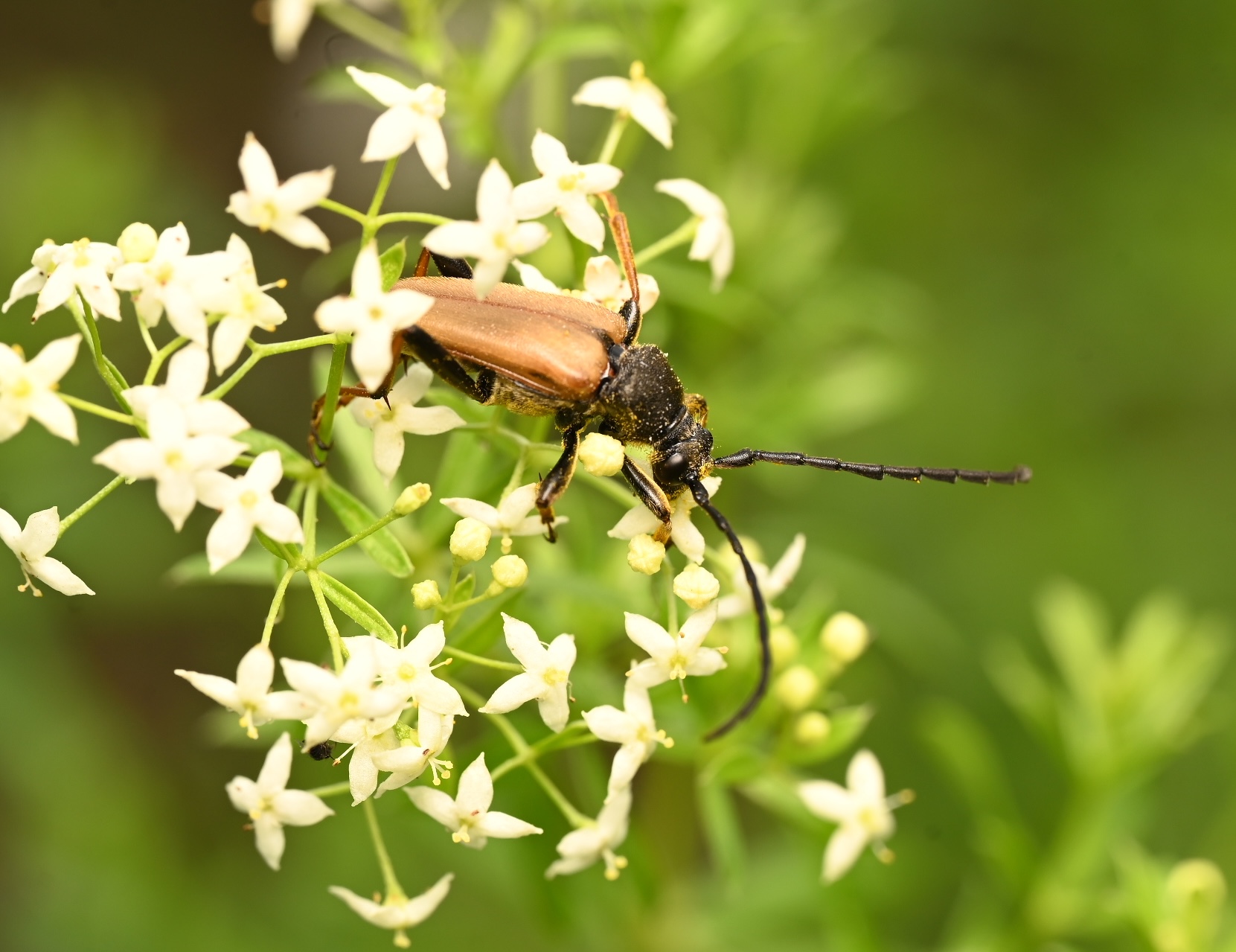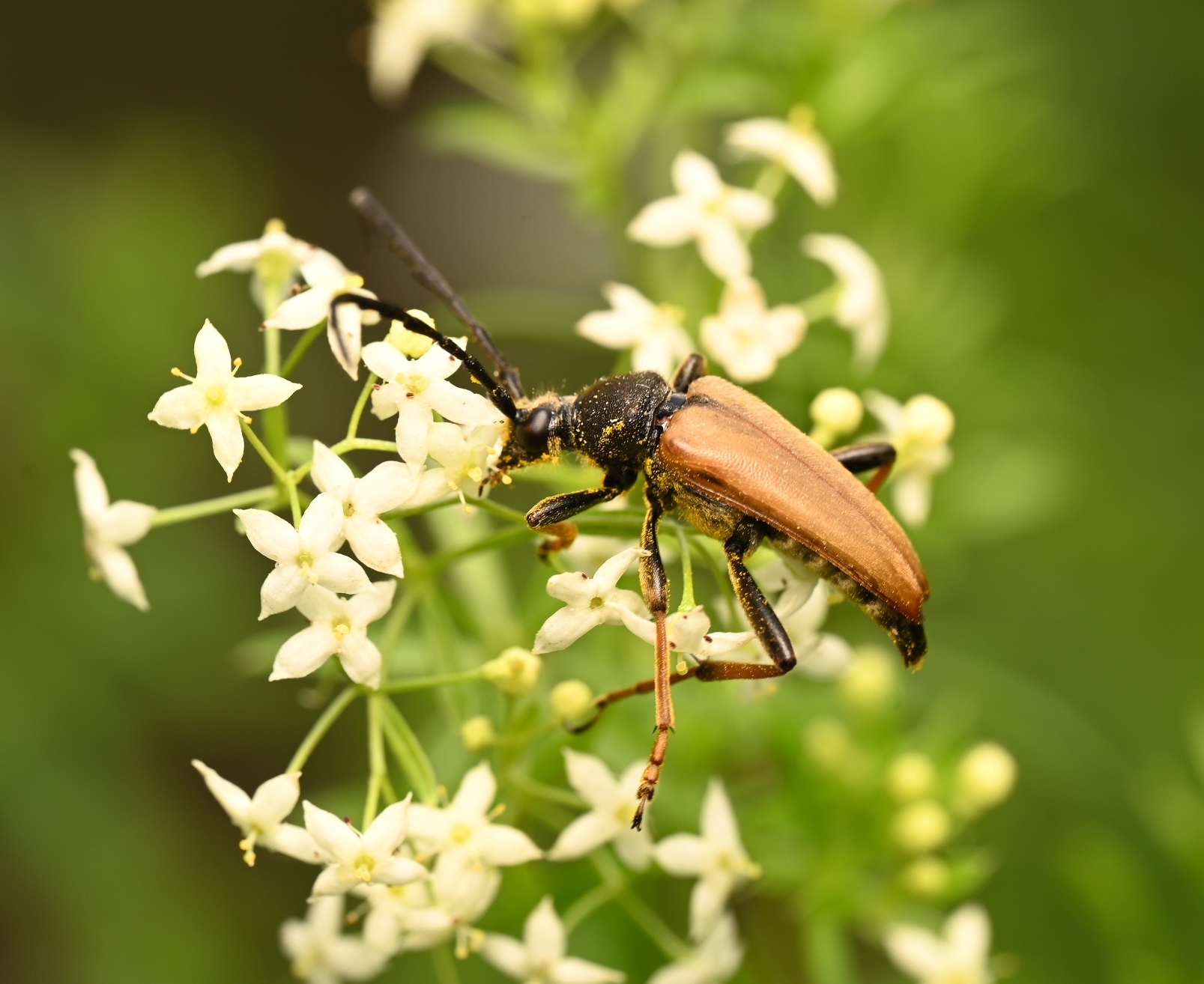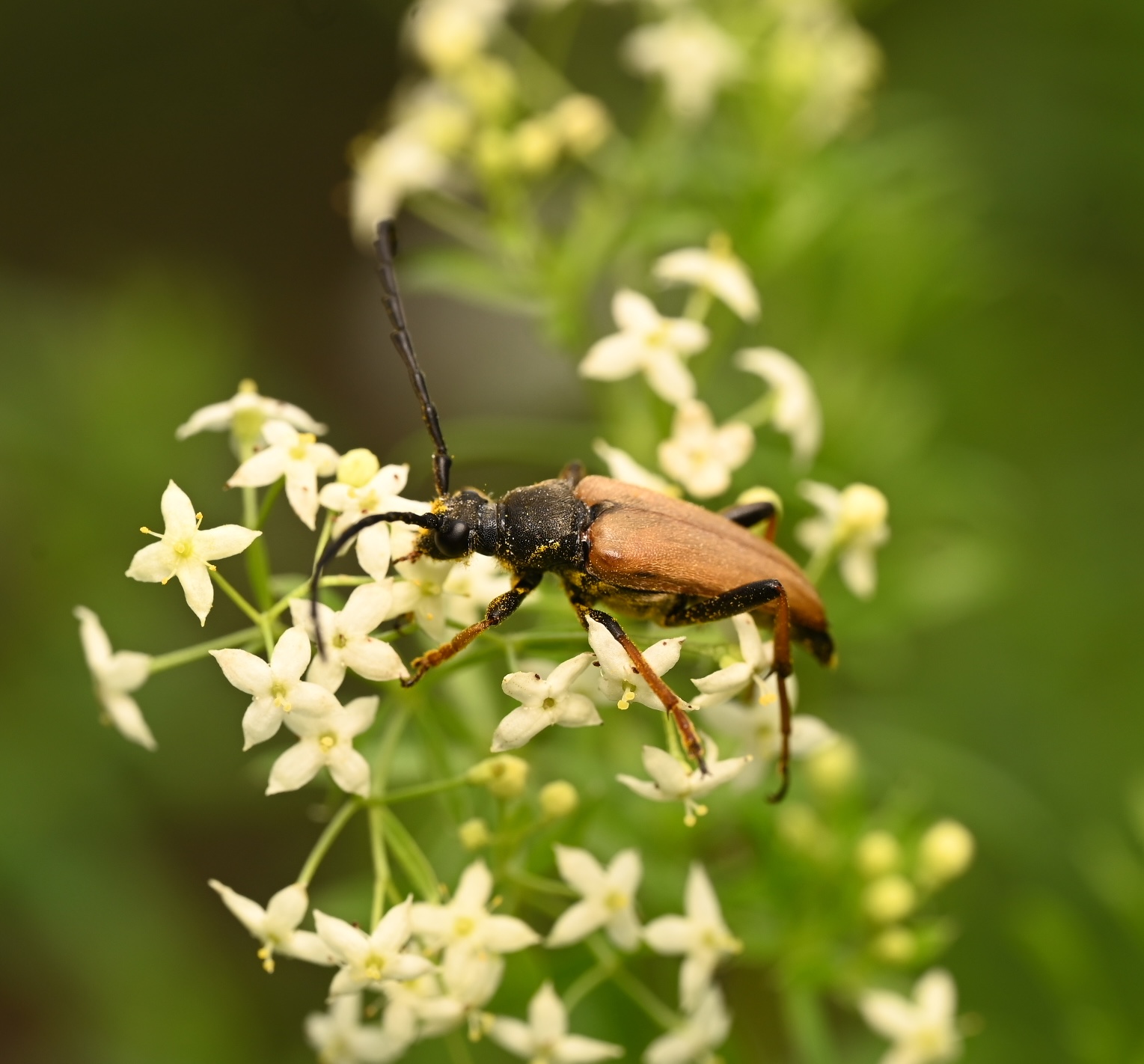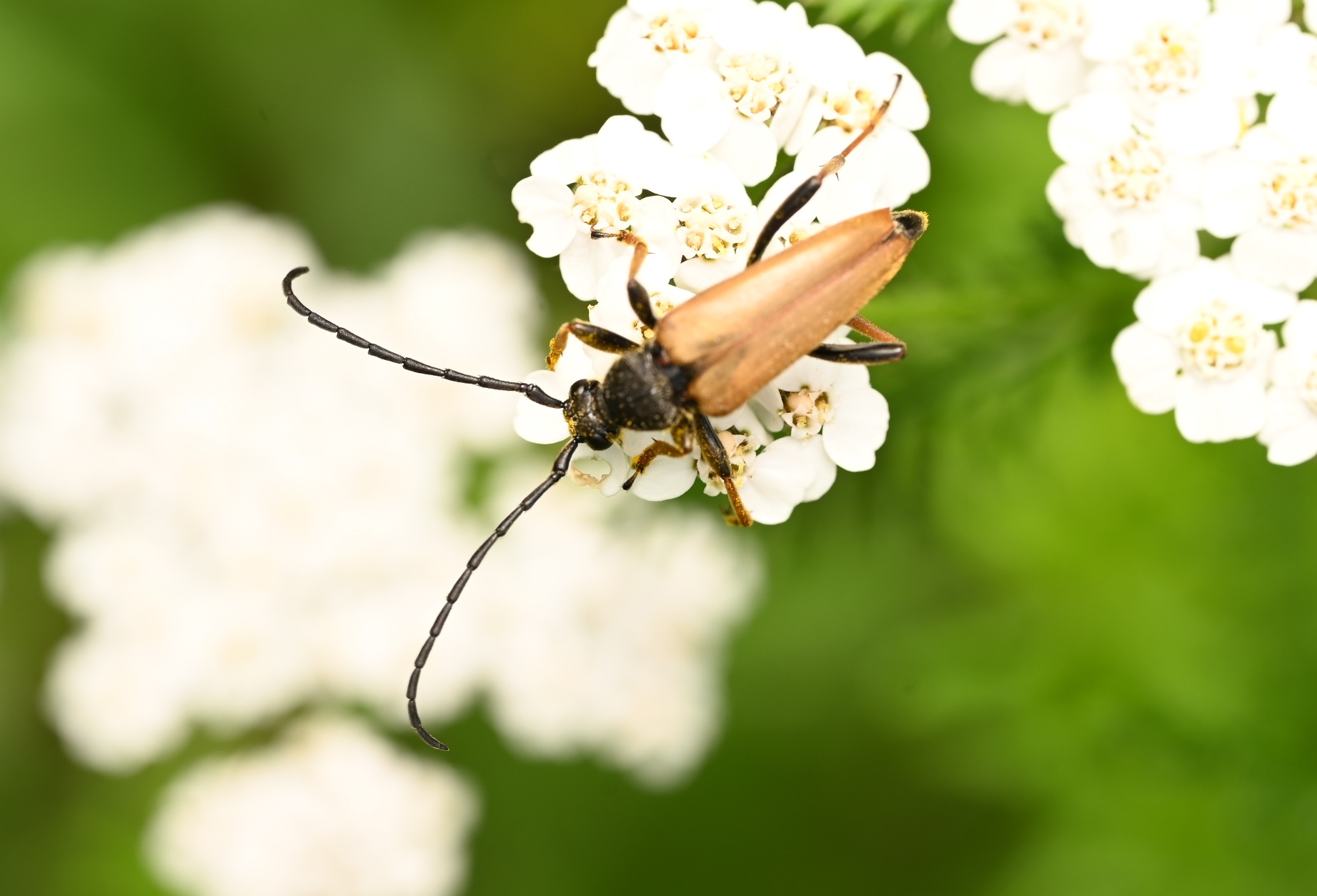
The red longhorn beetle (Stictoleptura rubra) exhibits such striking sexual dimorphism that males and females were historically classified as two separate species. Females grow up to 10–20 mm in length and display a uniform, brick-red or reddish-brown head, thorax, and elytra. Males are smaller and noticeably more slender, featuring a solid black head and thorax paired with yellowish-buff wing covers. Beneath the bark, their larvae act as essential decomposers, spending two to three years tunneling through decaying coniferous wood like pine and spruce to cycle nutrients back into forest soil. To digest tough plant cellulose, their digestive tracts harbor specialized cellulase-producing yeasts—though they also depend on nutrients supplied by specific wood-inhabiting fungi to reach full maturity. While larvae hollow out dead timber, the adult beetles emerge from May to September to feed peacefully on nectar and pollen from umbellifers and brambles. I encountered this handsome male wandering across wildflowers on a sunny afternoon in a Swedish forest.