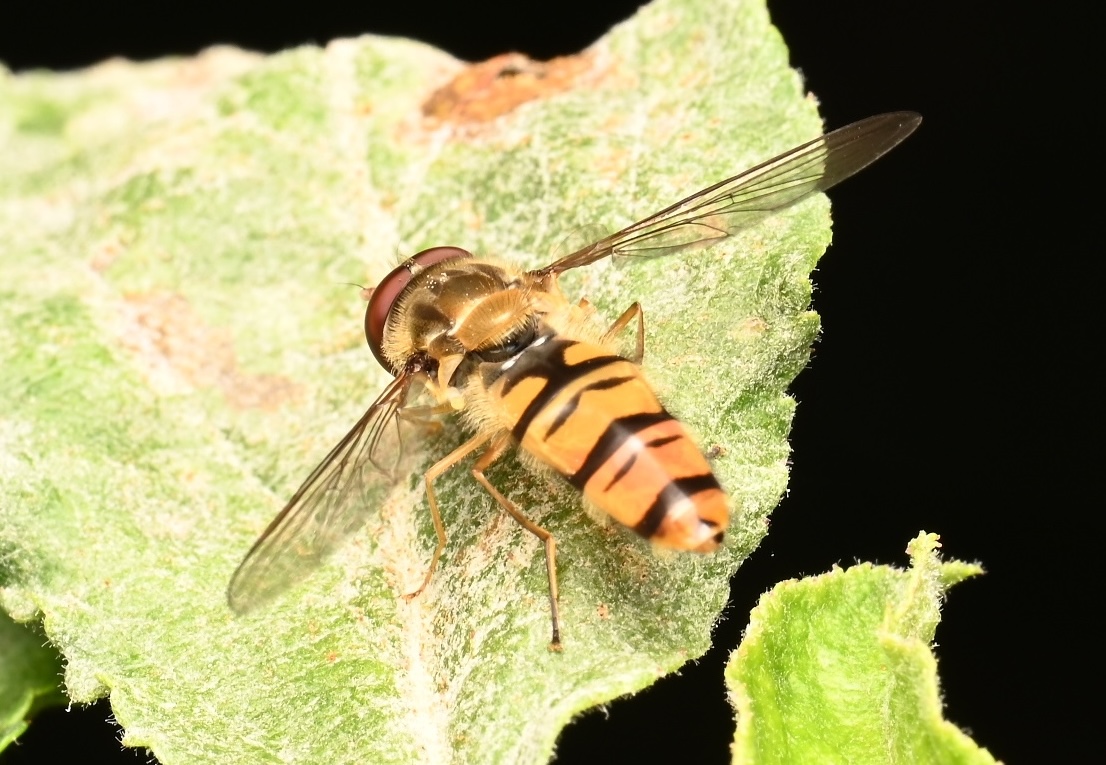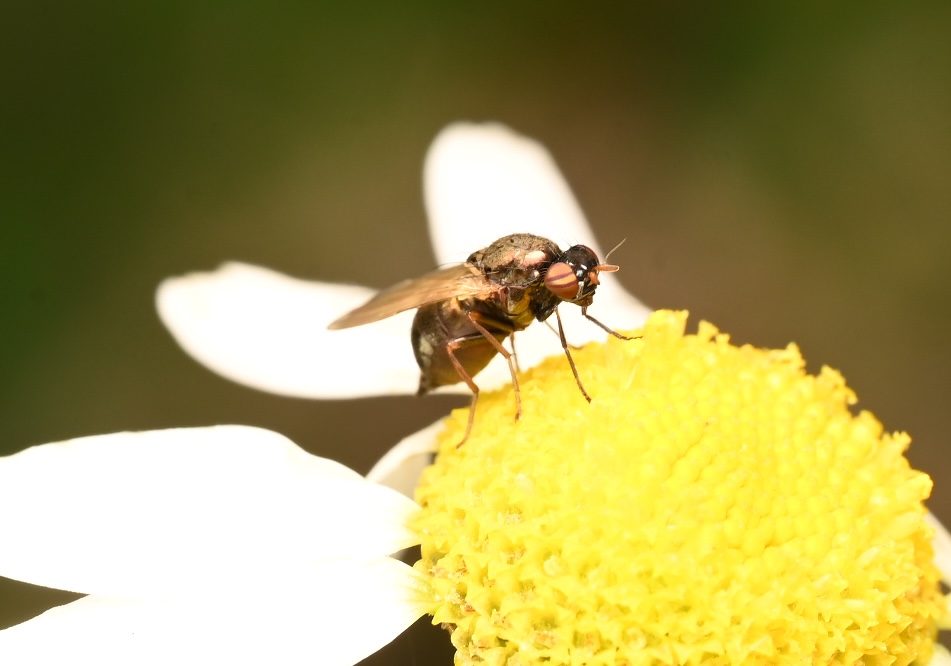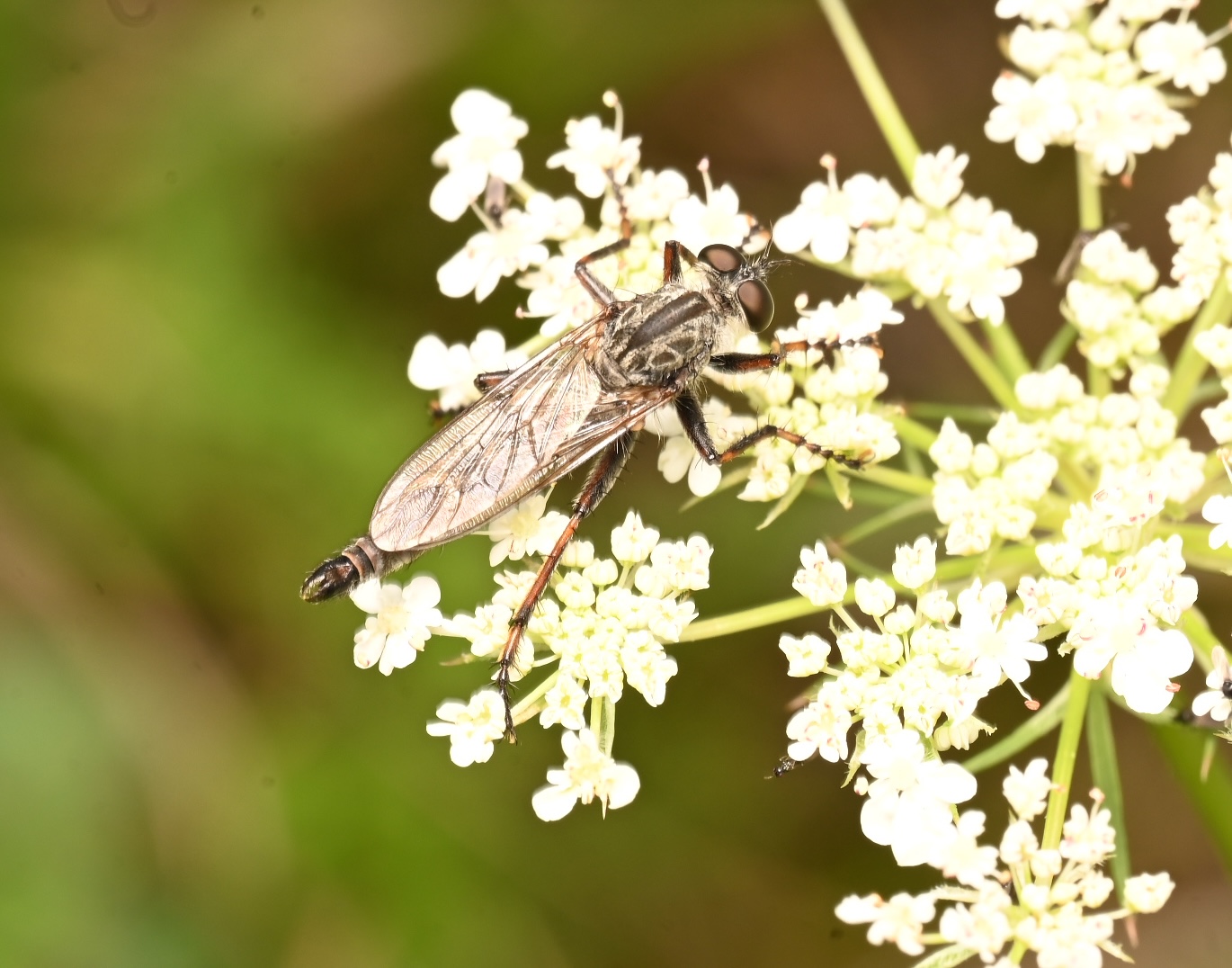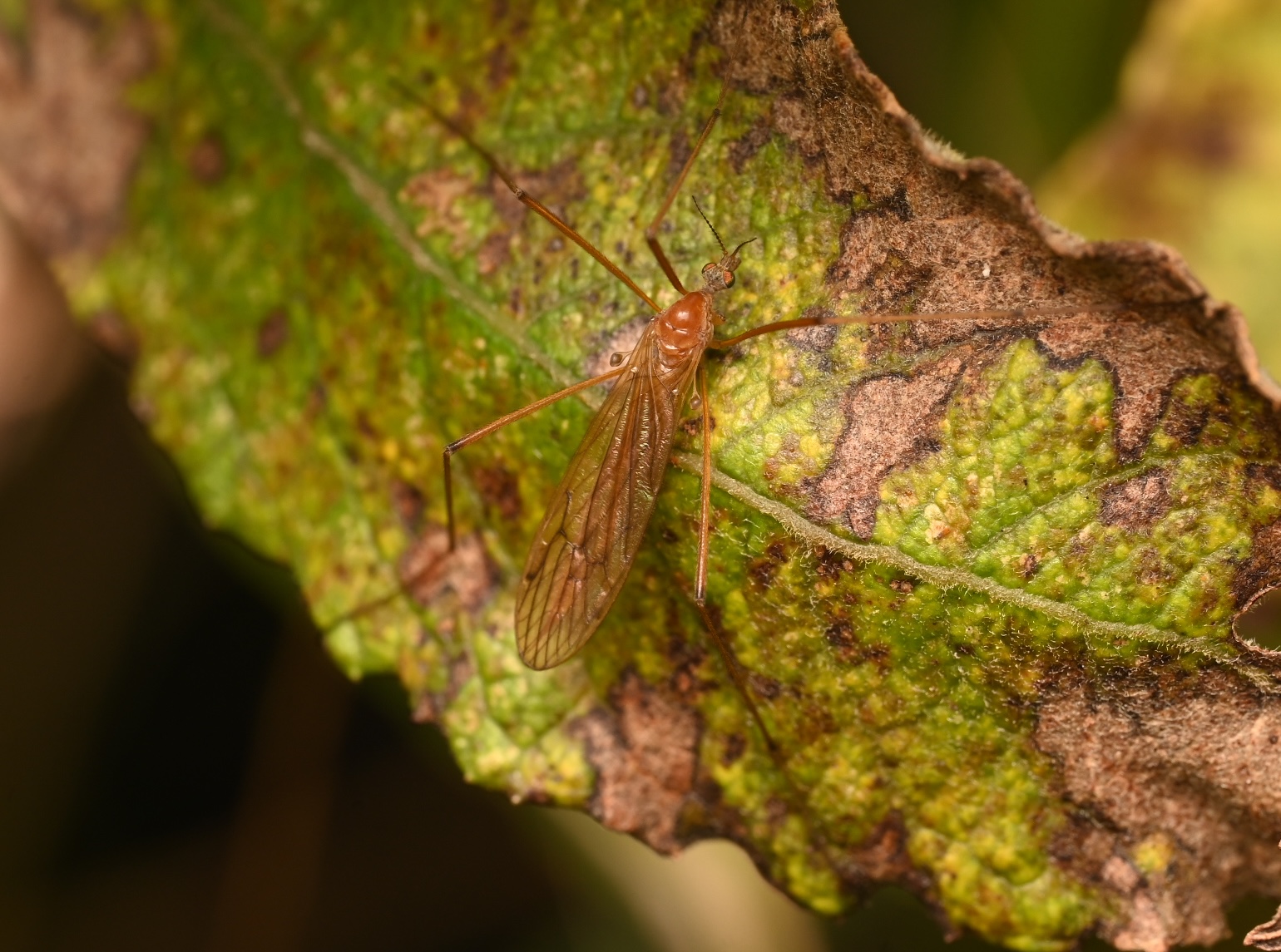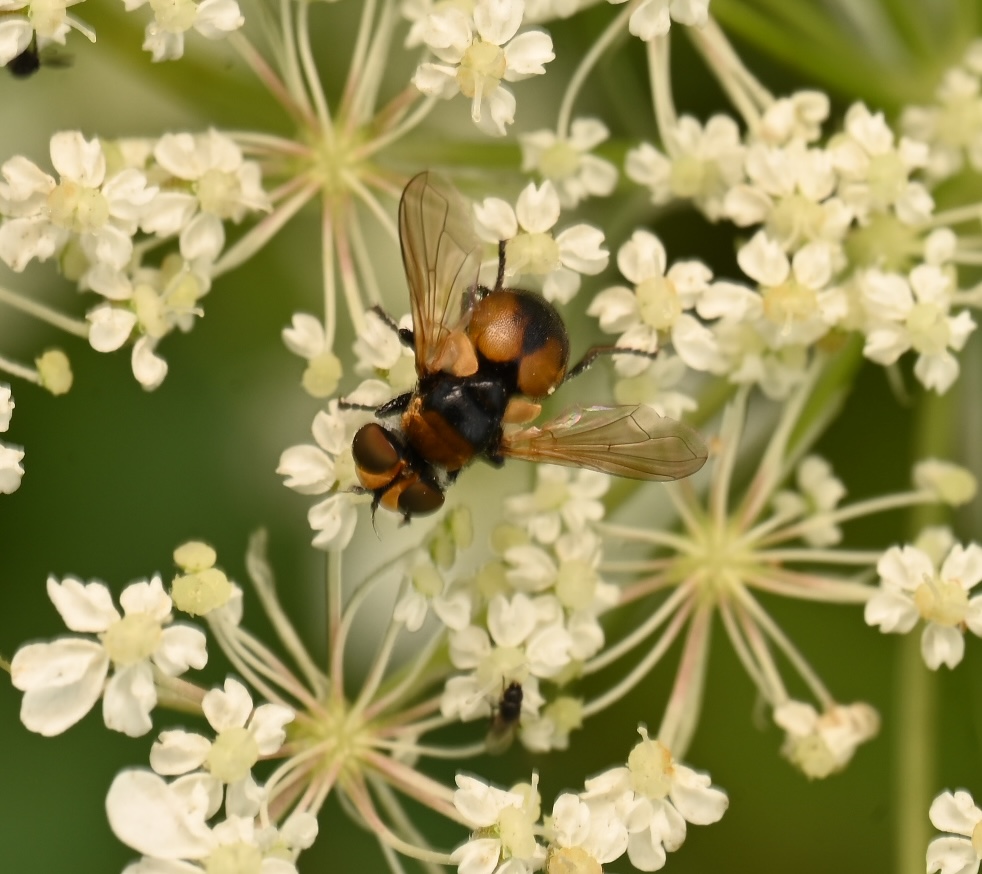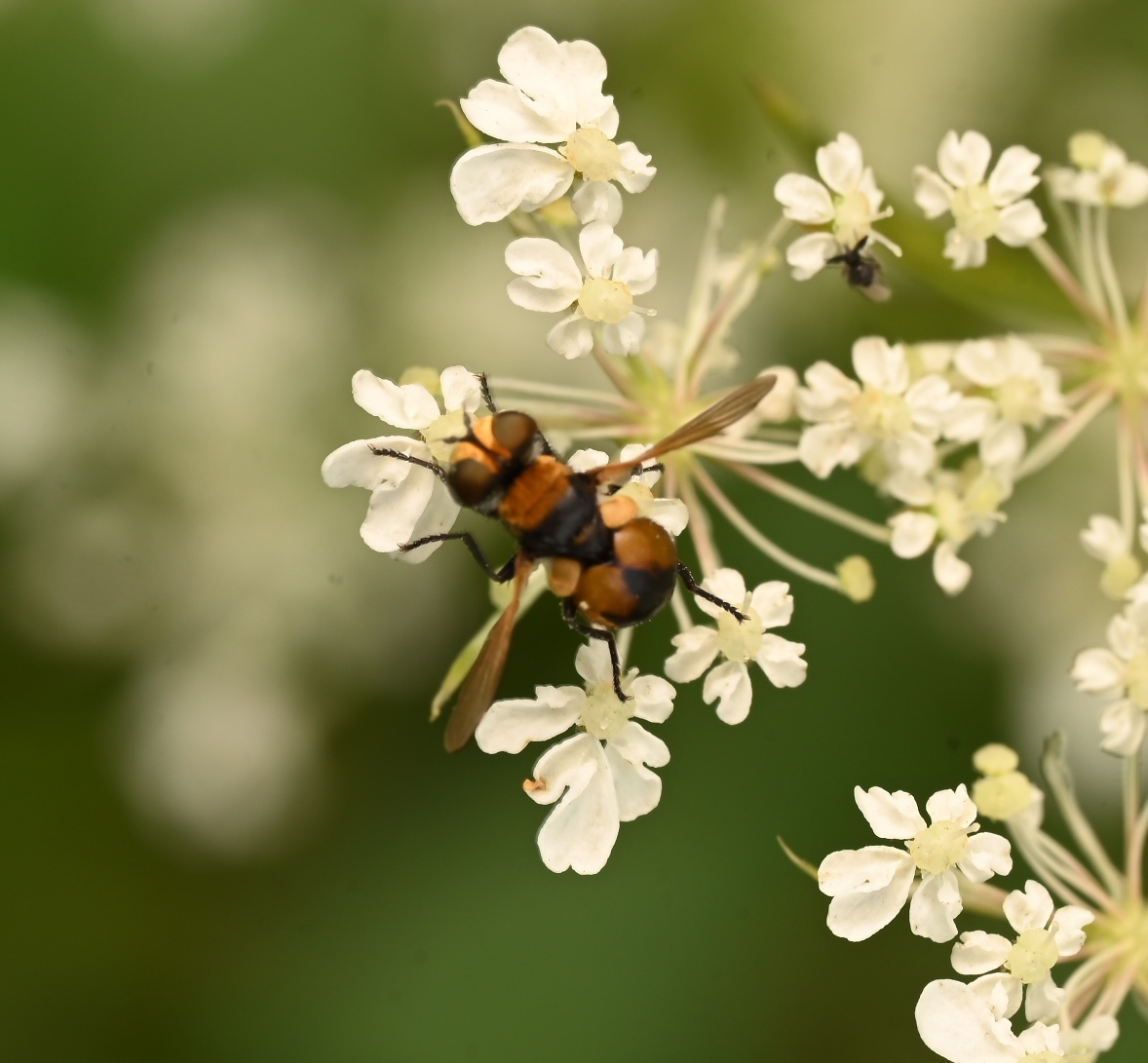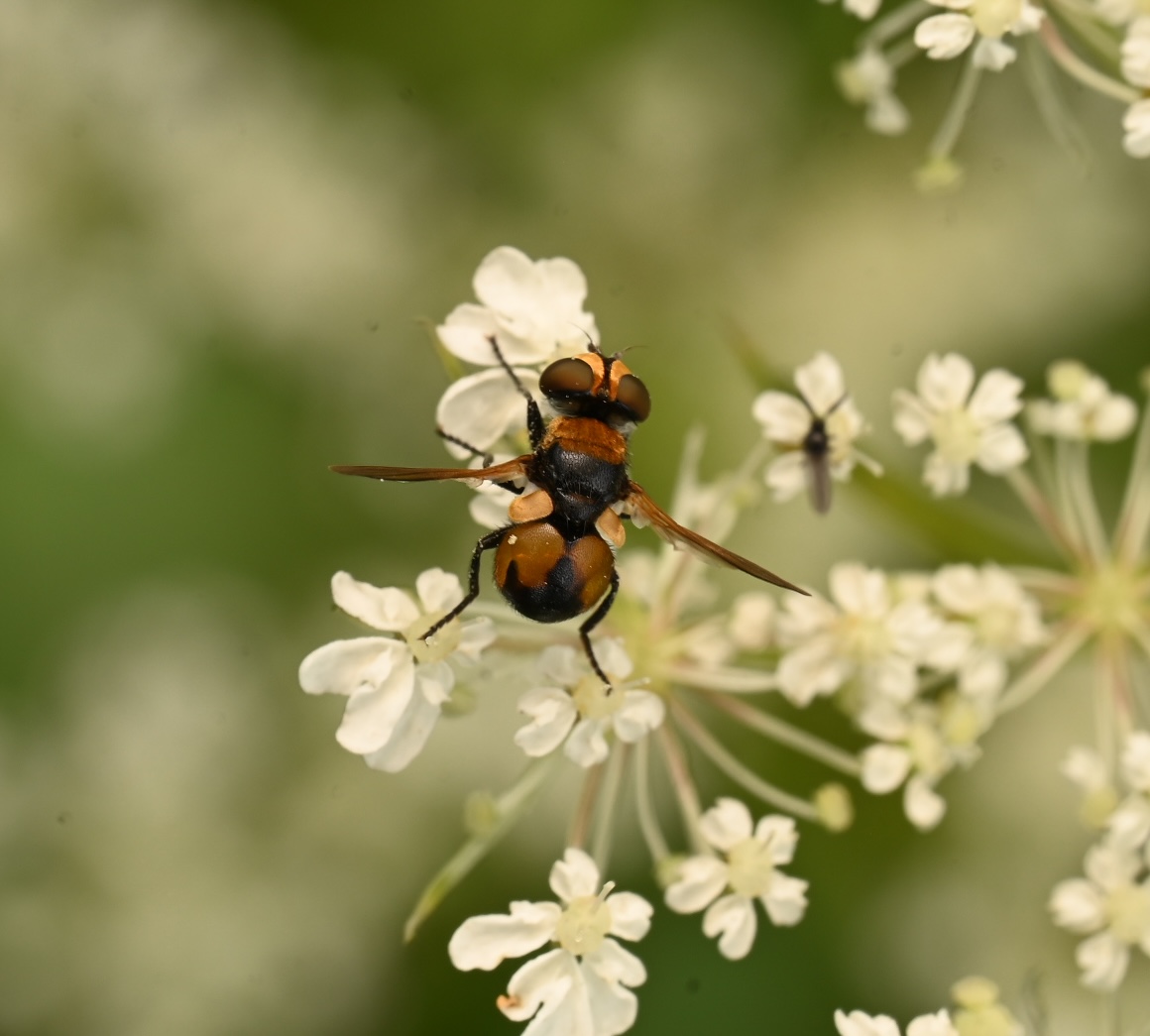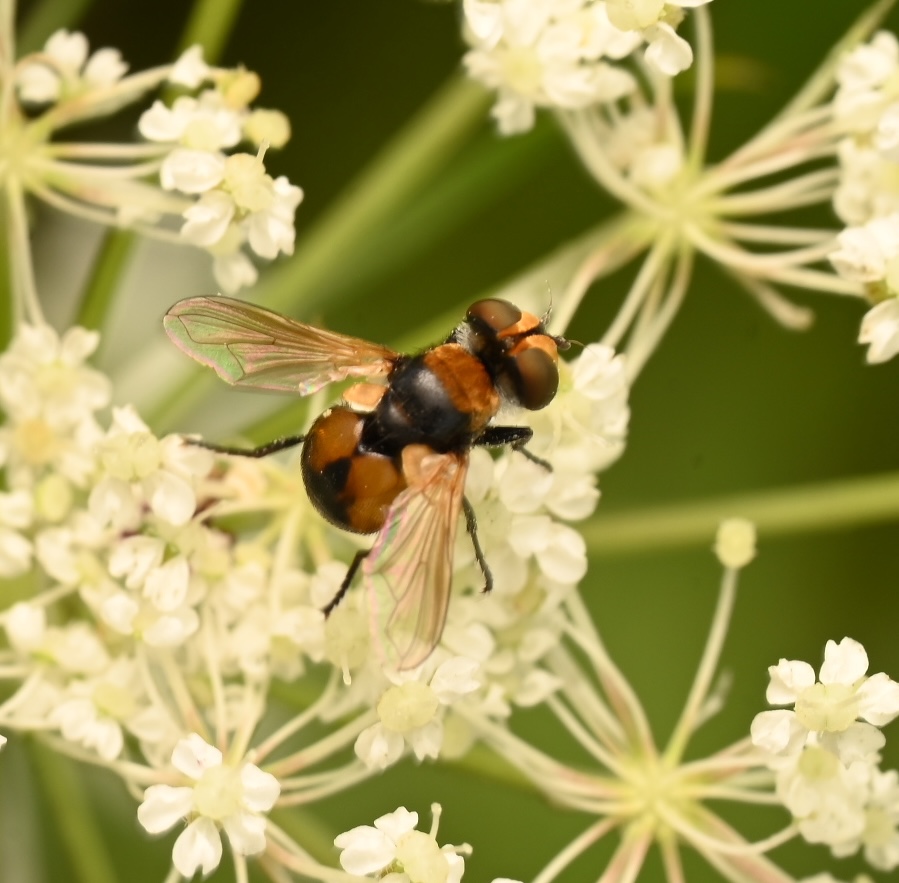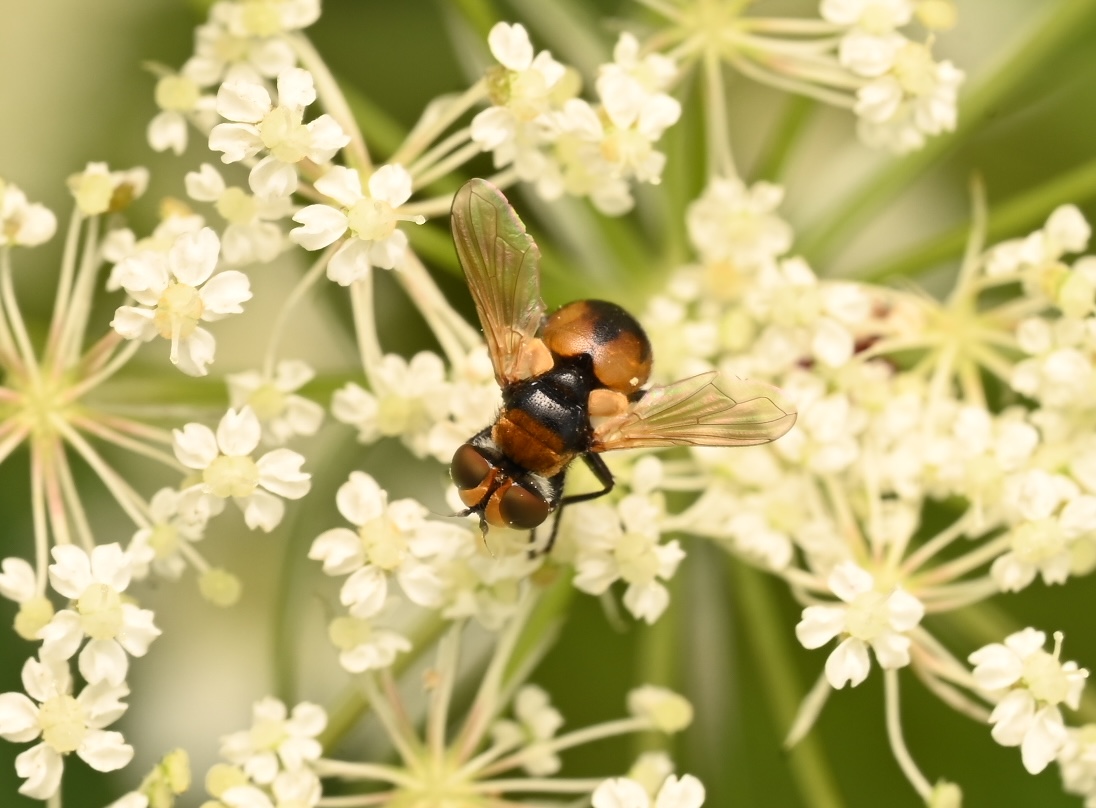
The bishop’s-mitre parasite fly (Cistogaster globosa) is a tiny, highly specialized bristle fly measuring just 3.5 to 5 millimeters long. Despite its miniature size, this fascinating insect sports striking differences between the sexes: while females are completely midnight-black, males show off a brilliant golden-orange body that instantly stands out in the grass. Thriving in warm, sunlit meadows and field edges, free-living adult flies spend their days sipping nectar from umbrella-shaped flowers and daisies. Beneath this peaceful routine lies a dramatic lifestyle: females lay their eggs directly onto the back of the bishop’s-mitre shieldbug (Aelia acuminata). Once hatched, the tiny larva burrows inside the bug nymph to develop, eventually bringing down its host before emerging as an adult. By an incredible coincidence, I spotted this male parasite fly for the very first time on a large meadow near Akalla, Sweden—just one hour after finding its host shieldbug for the first time only a few hundred meters away!