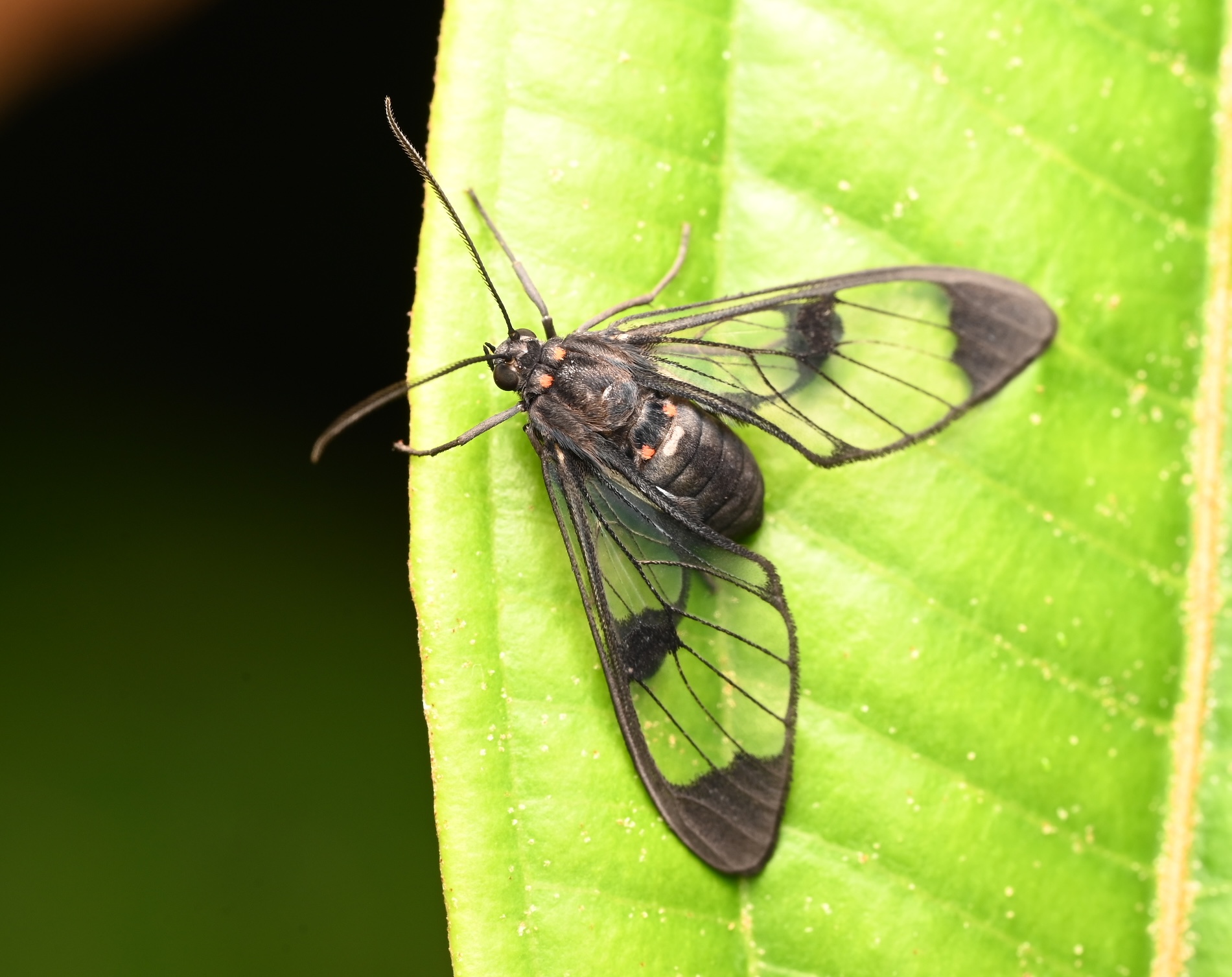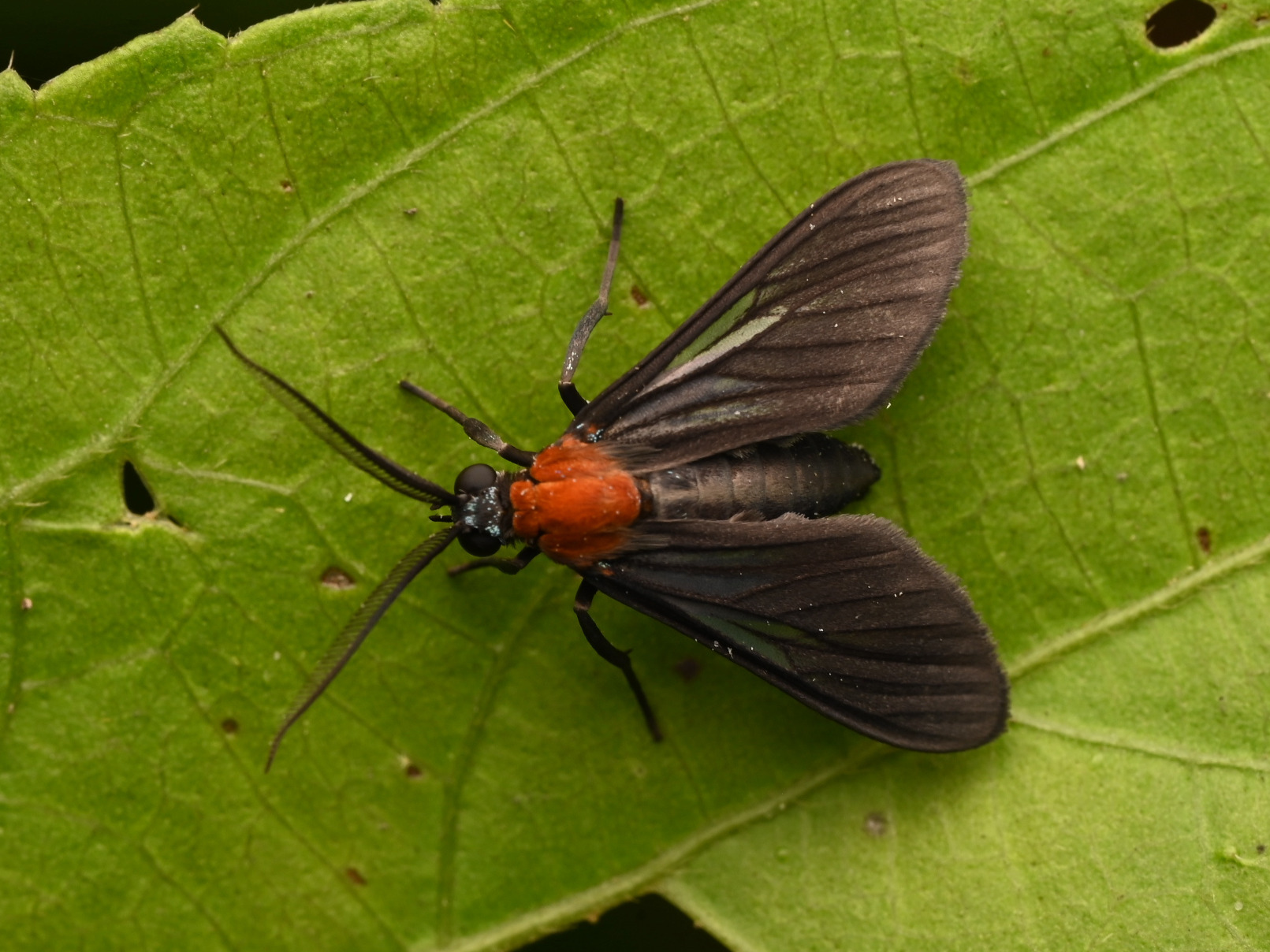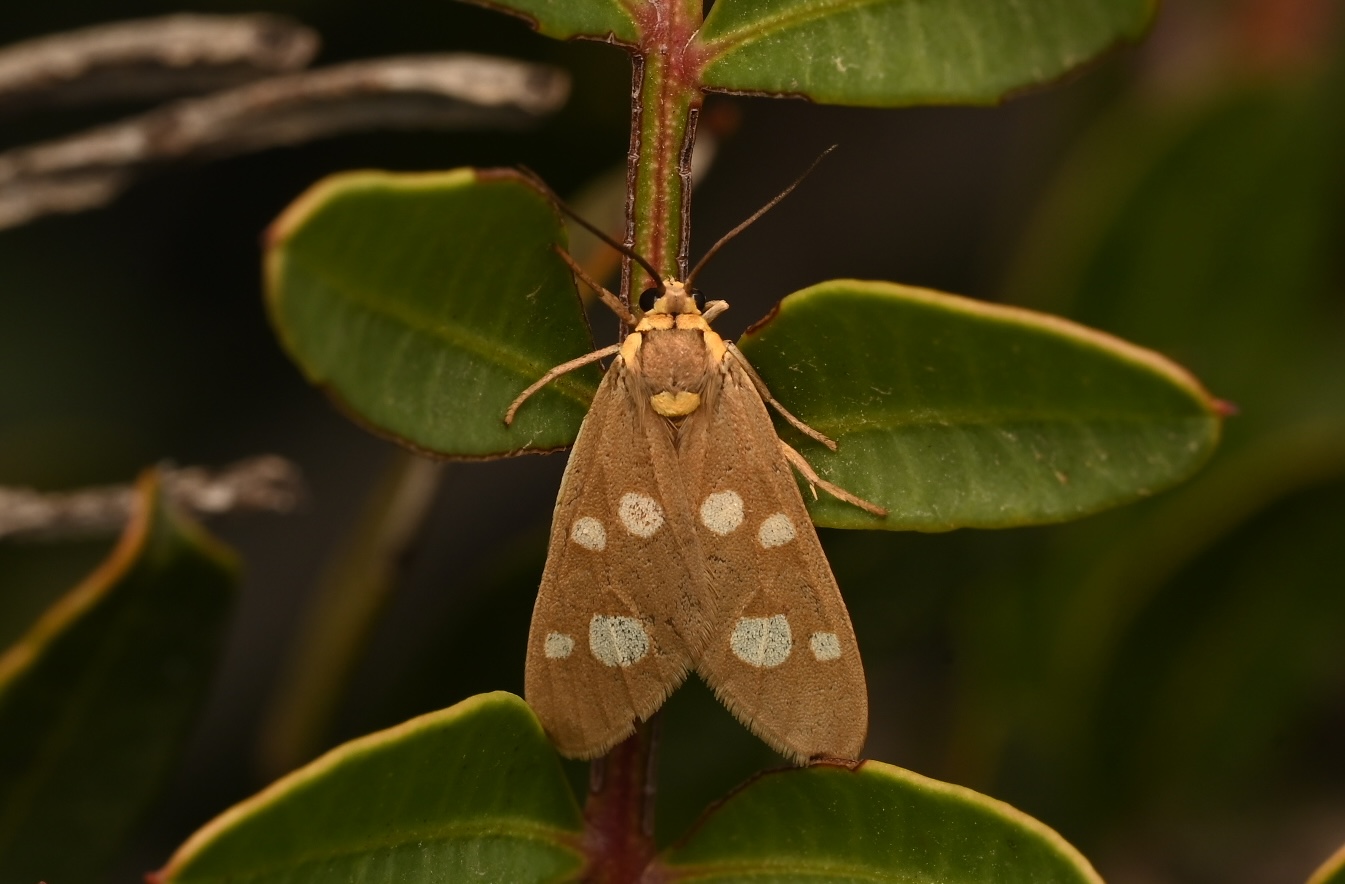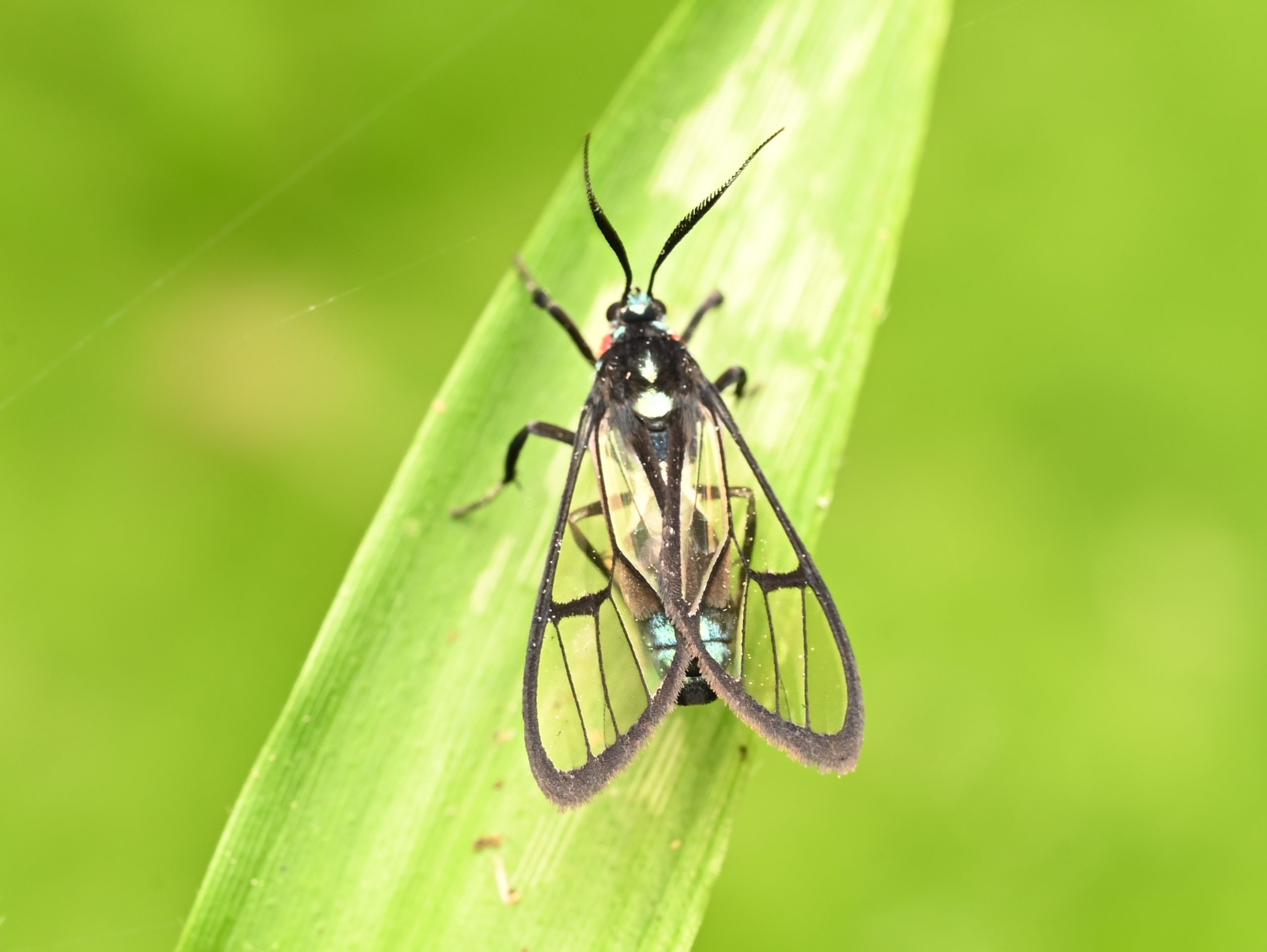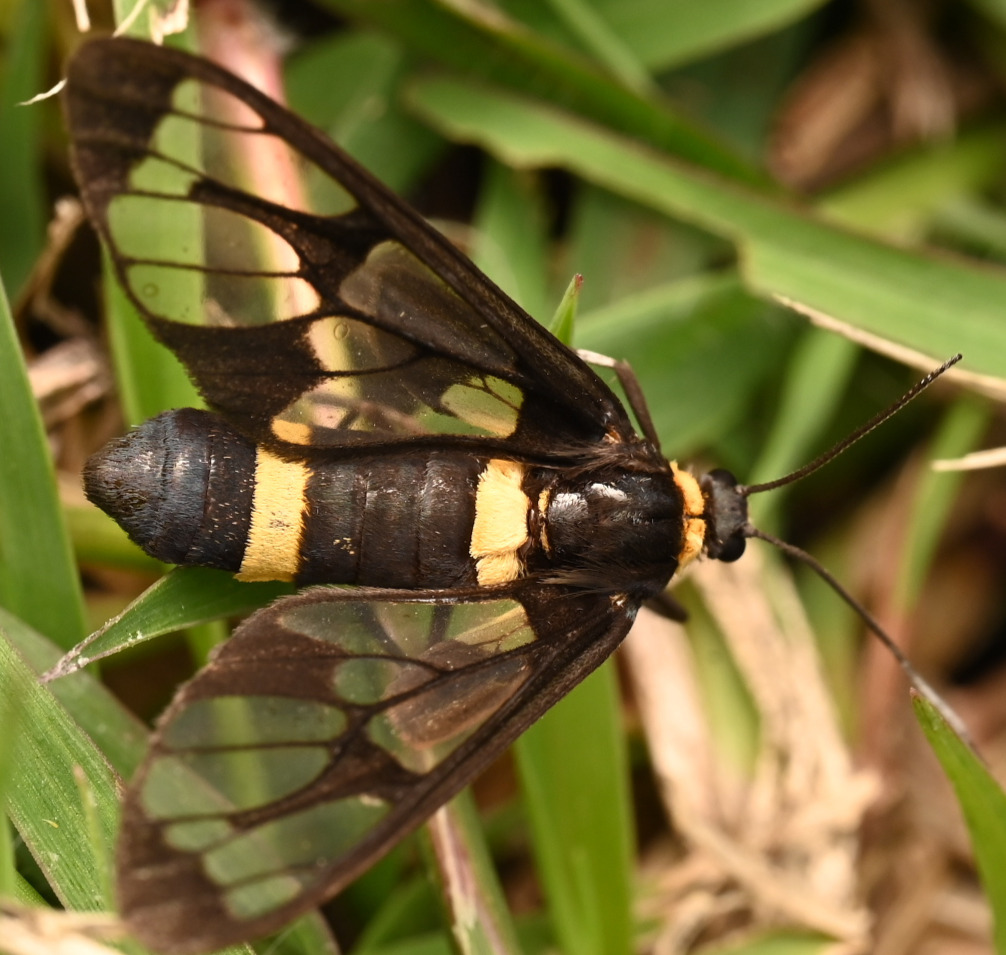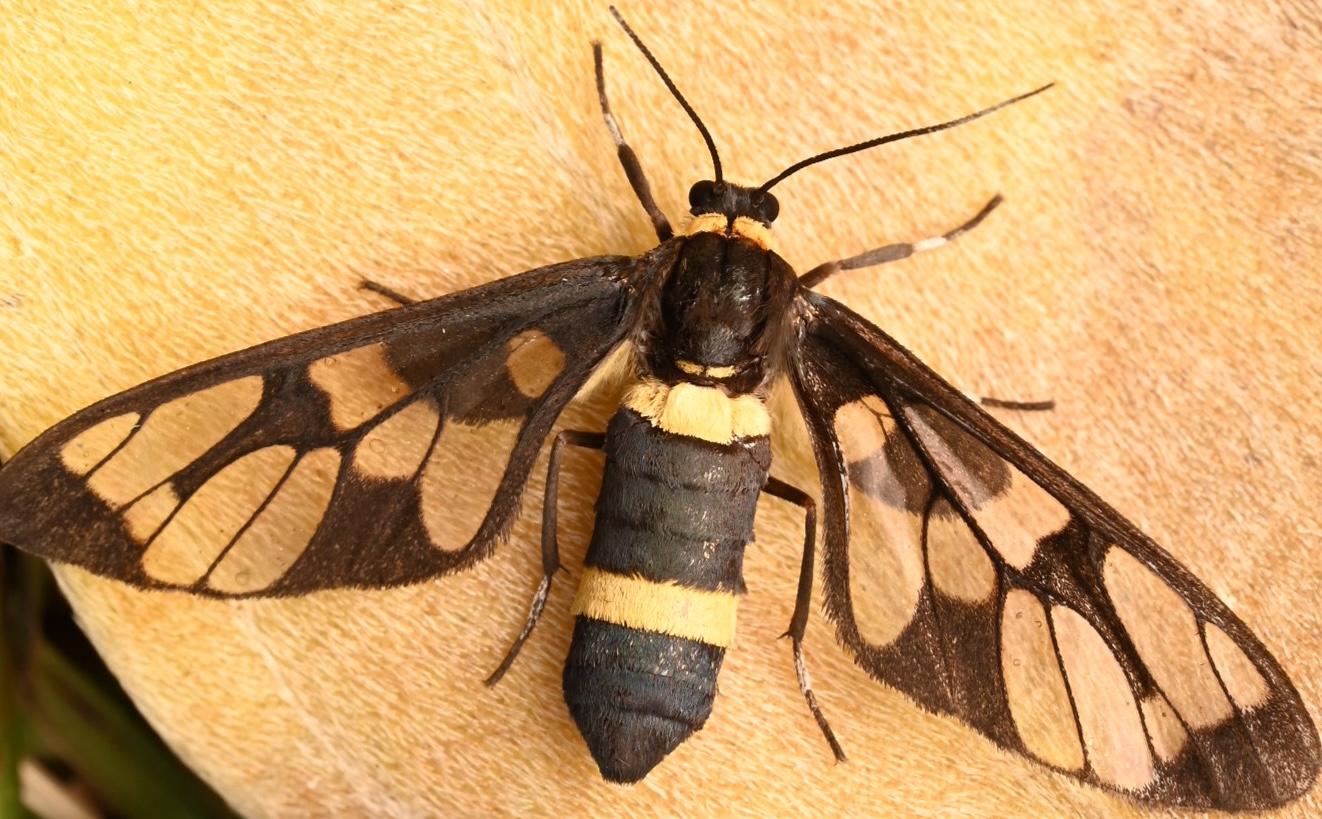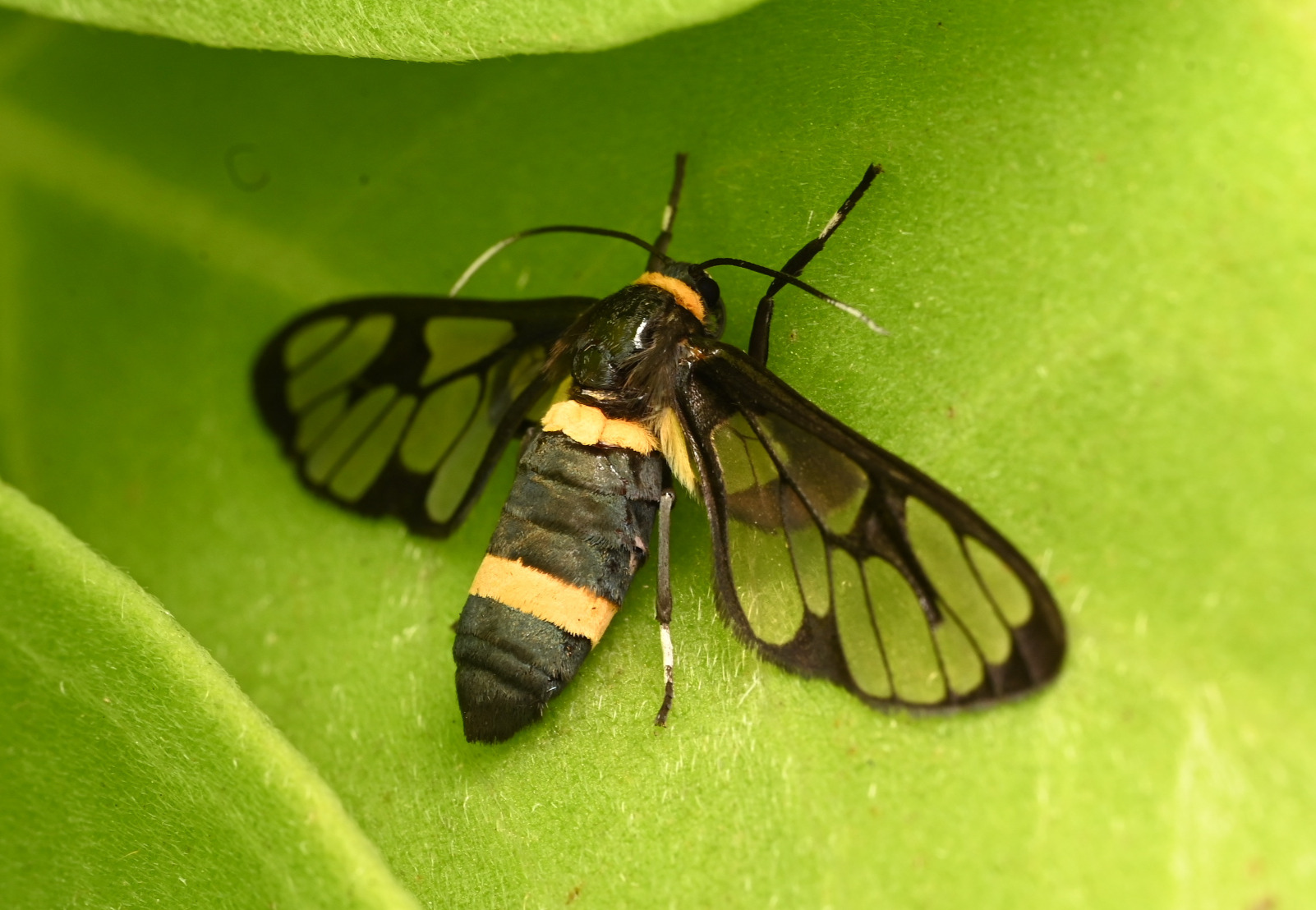
The handmaiden moth (Syntomoides imaon) is a strikingly elegant species found across much of Asia, boasting a generous wingspan of about 3–4 cm. During a trip to Okinawa in December 2025, I was fortunate enough to encounter two individuals resting on a small tree. Because they were largely inactive and moved with a gentle, slow rhythm, they proved to be incredibly cooperative subjects. This rare stillness granted me the luxury of time to experiment with various camera settings and capture the scene from several different angles. Unlike most of their nocturnal cousins, handmaiden moths are strictly diurnal, flying by day to feed on nectar. To survive the daylight hours, they rely on a clever evolutionary trick: mimicry. Their bold, high-contrast coloration mirrors that of venomous wasps—a brilliant visual bluff that effectively deters predators and keeps them safe while out in the open.