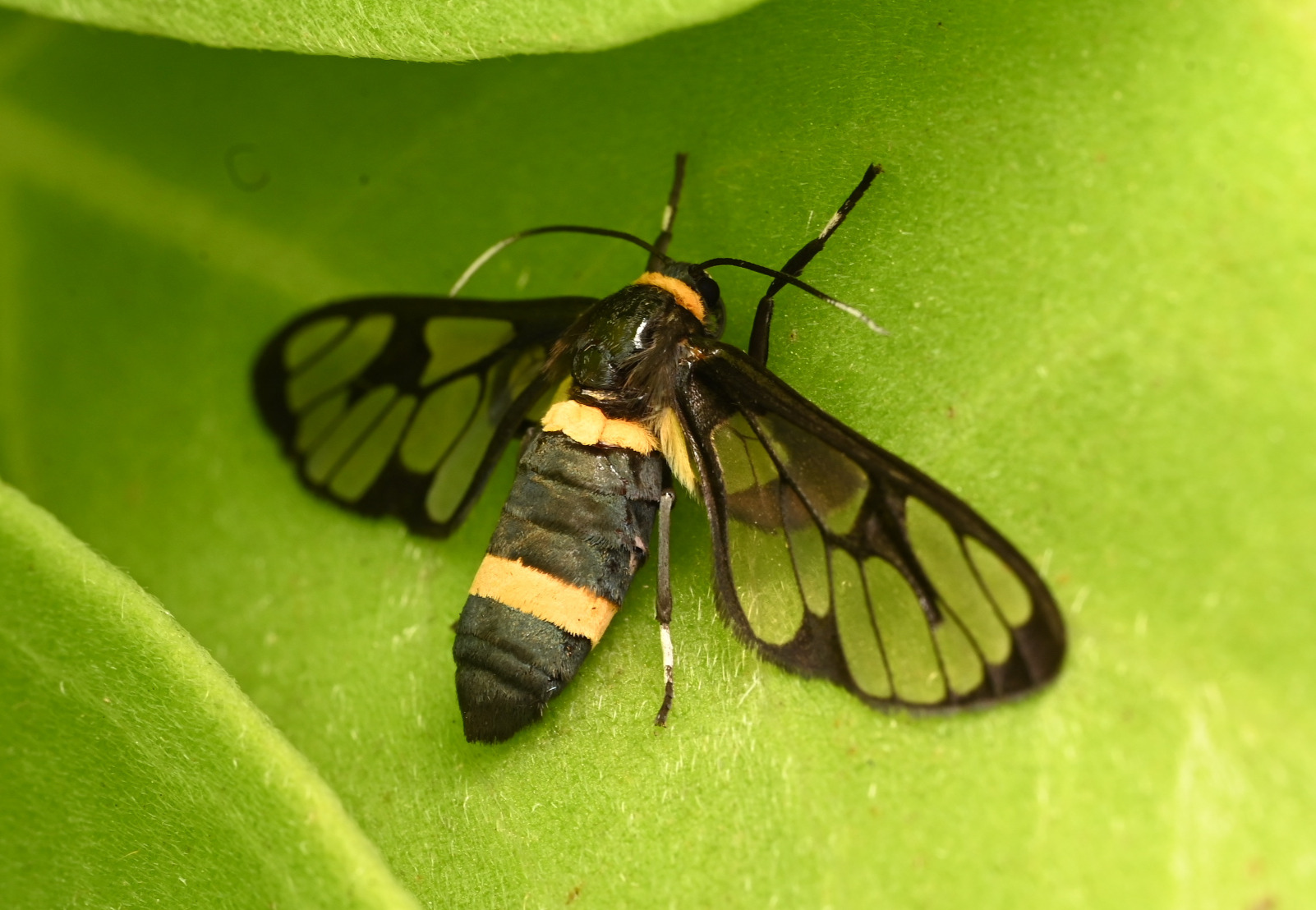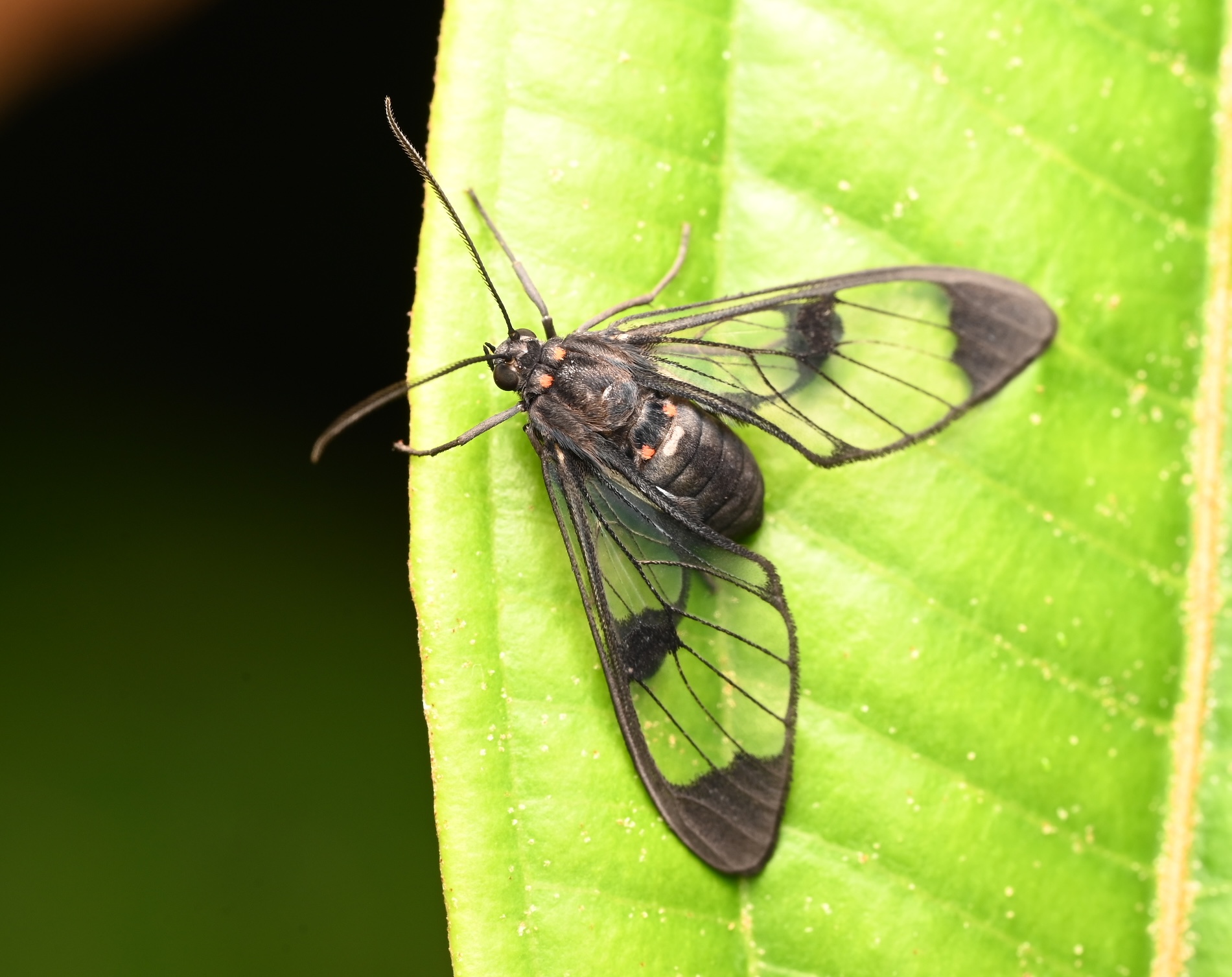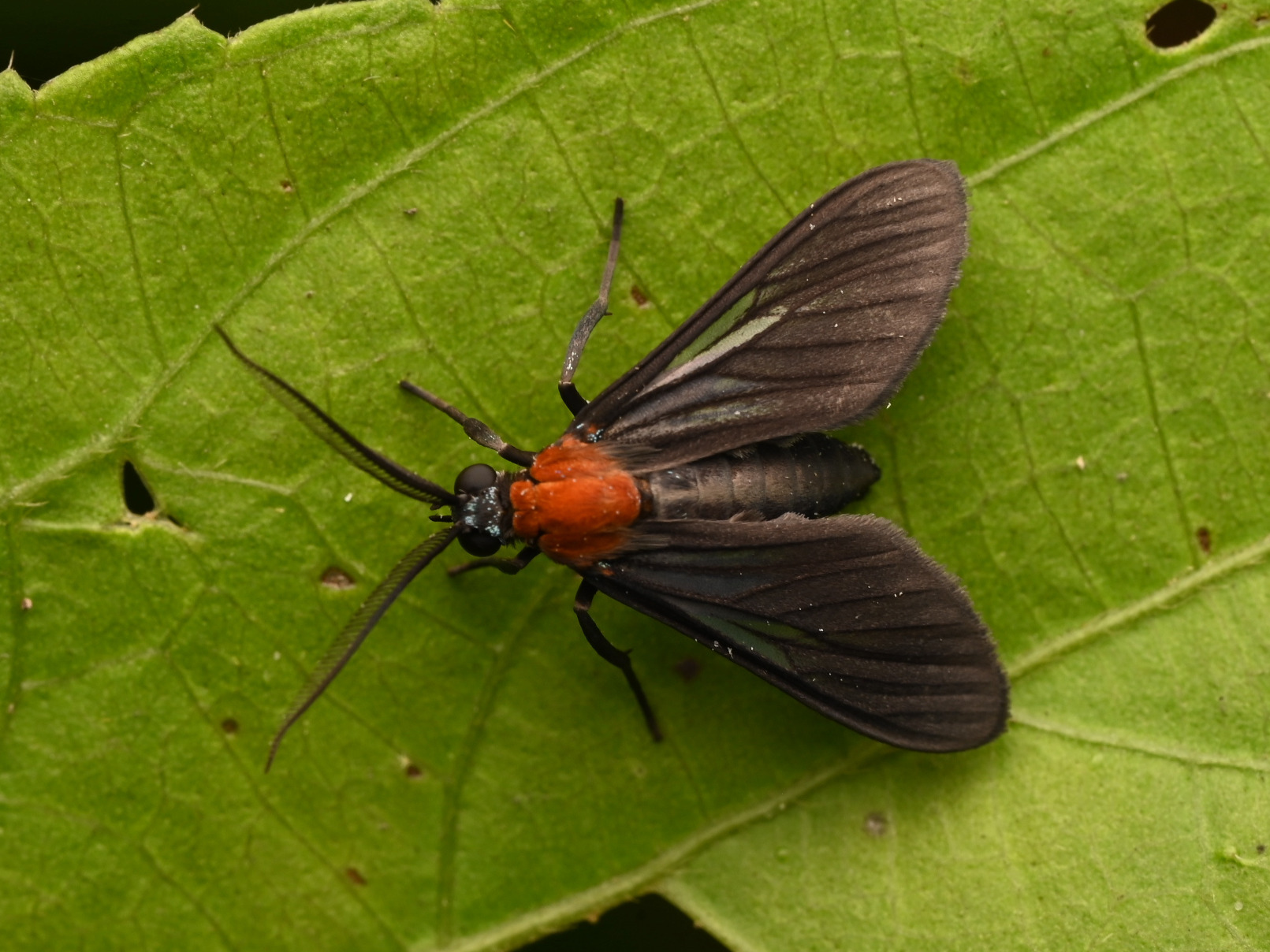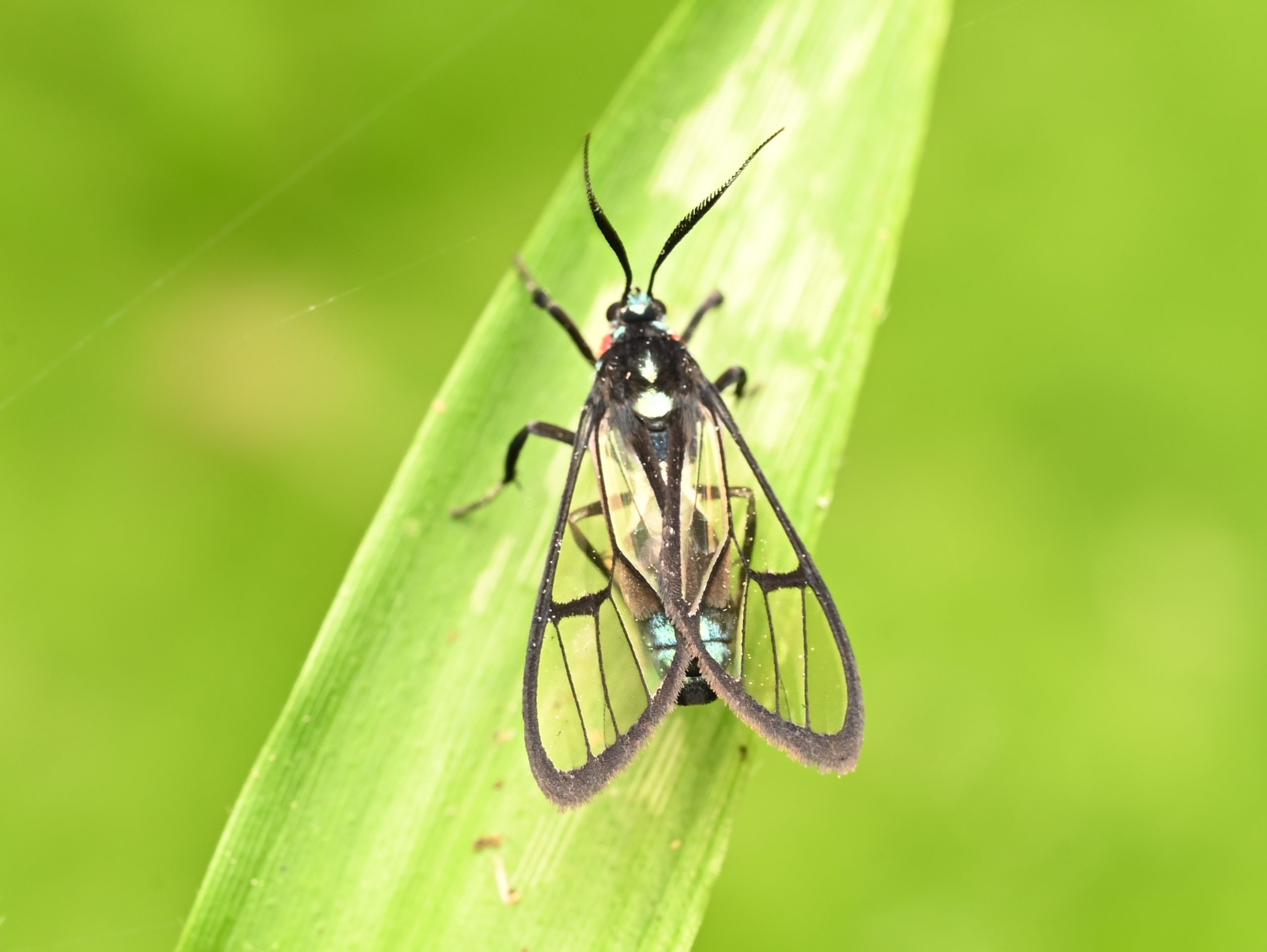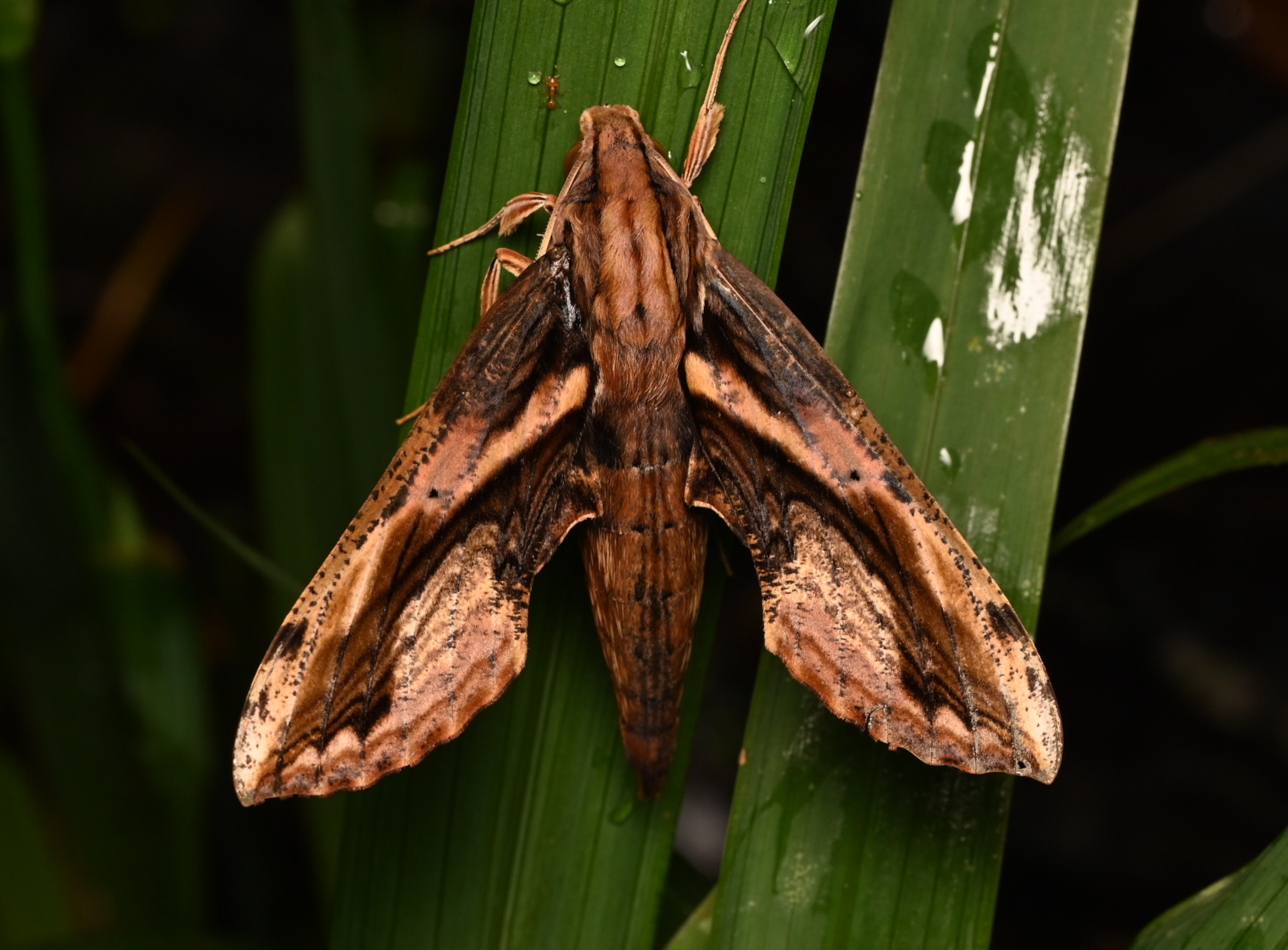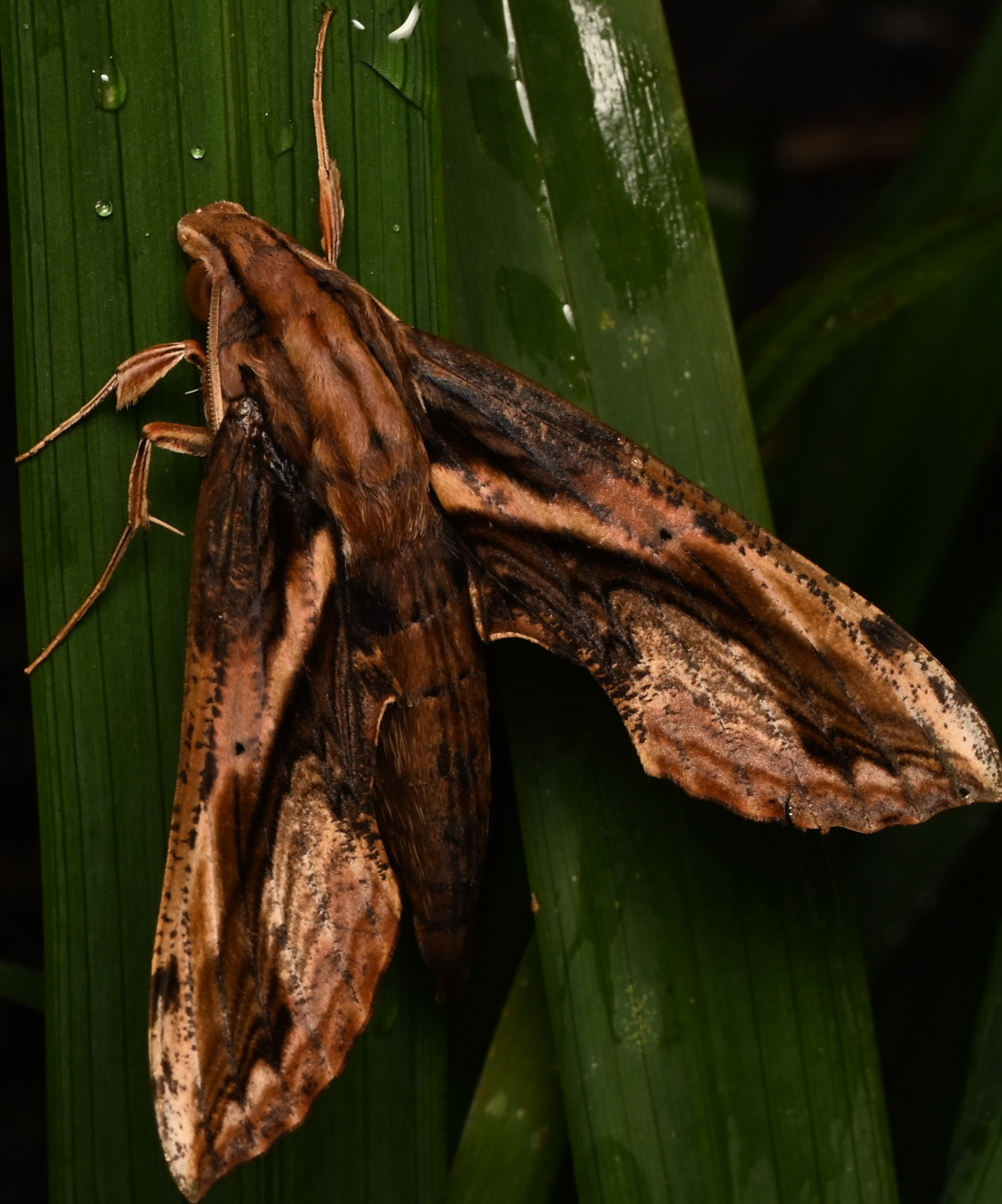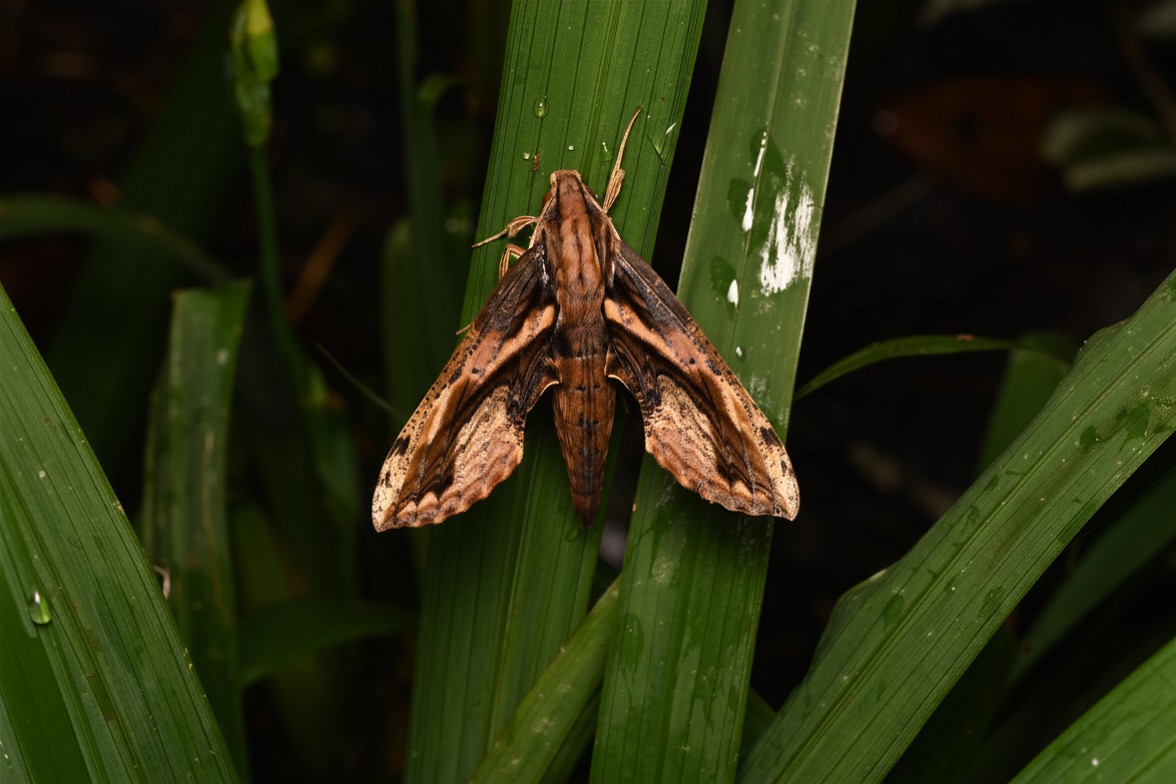
This gorgeous specimen of Xylophanes ceratomioides was absolutely immense—measuring roughly 4 cm in body length with a staggering estimated wingspan of 8 to 9 cm. It belongs to the Sphingidae family, commonly known as sphinx moths or hawk-moths. Renowned for being among the fastest and most skilled flyers in the insect world, these heavy-bodied moths act as the “hummingbirds of the night.” While they are famously active at dusk and throughout the night—hovering effortlessly over deep-throated flowers to drink nectar with incredibly long proboscises—they spend their daylight hours hidden away. I discovered this gentle giant completely motionless amidst the lush foliage in Puyo, right on the vibrant outskirts of the Ecuadorian Amazon. Because it was still the early afternoon, the moth was fast asleep, perfectly camouflaged and waiting for the safety of twilight. This daytime slumber granted me an opportunity to capture its intricate, jet-fighter-like wing patterns without disturbing its rest.