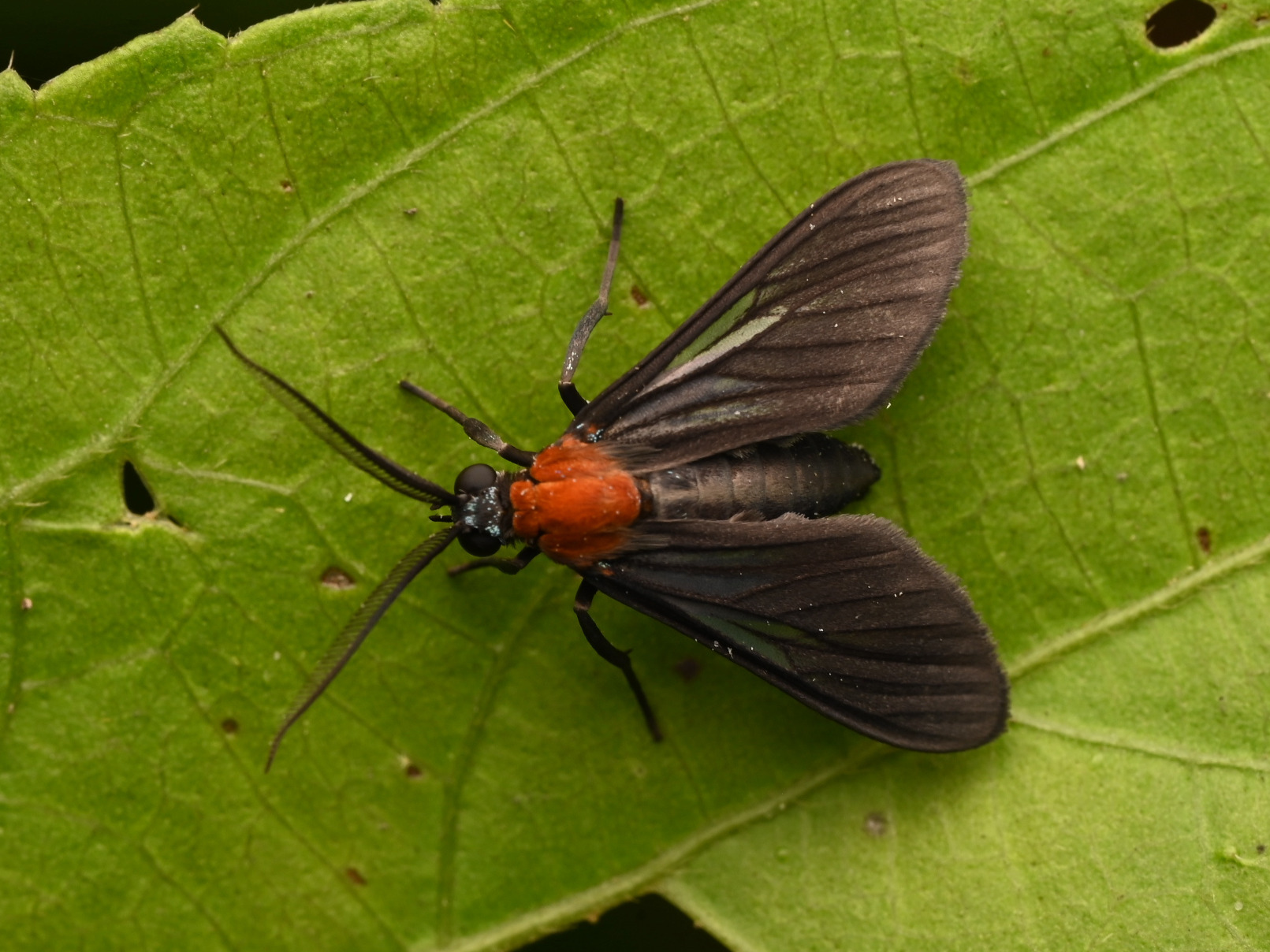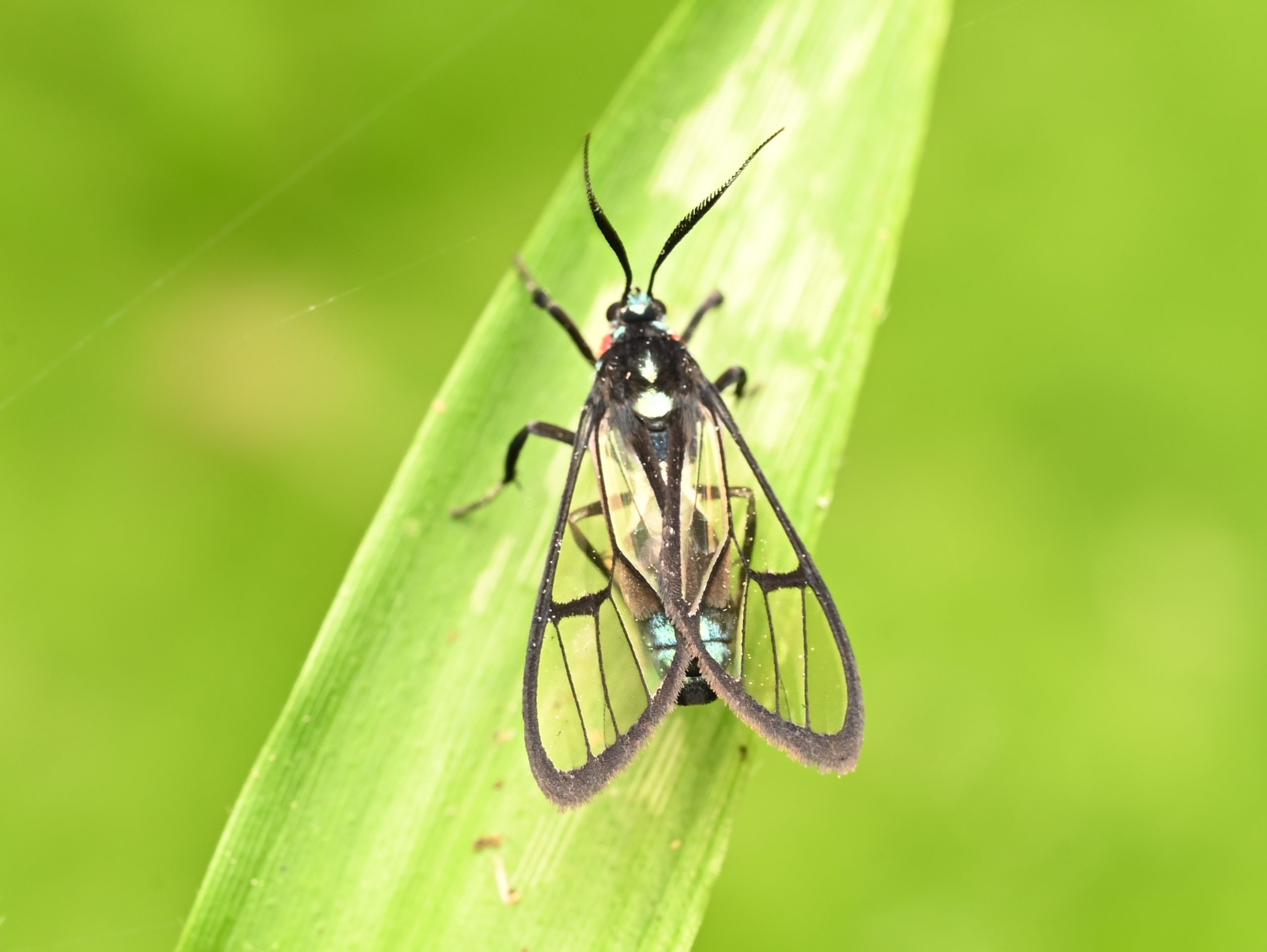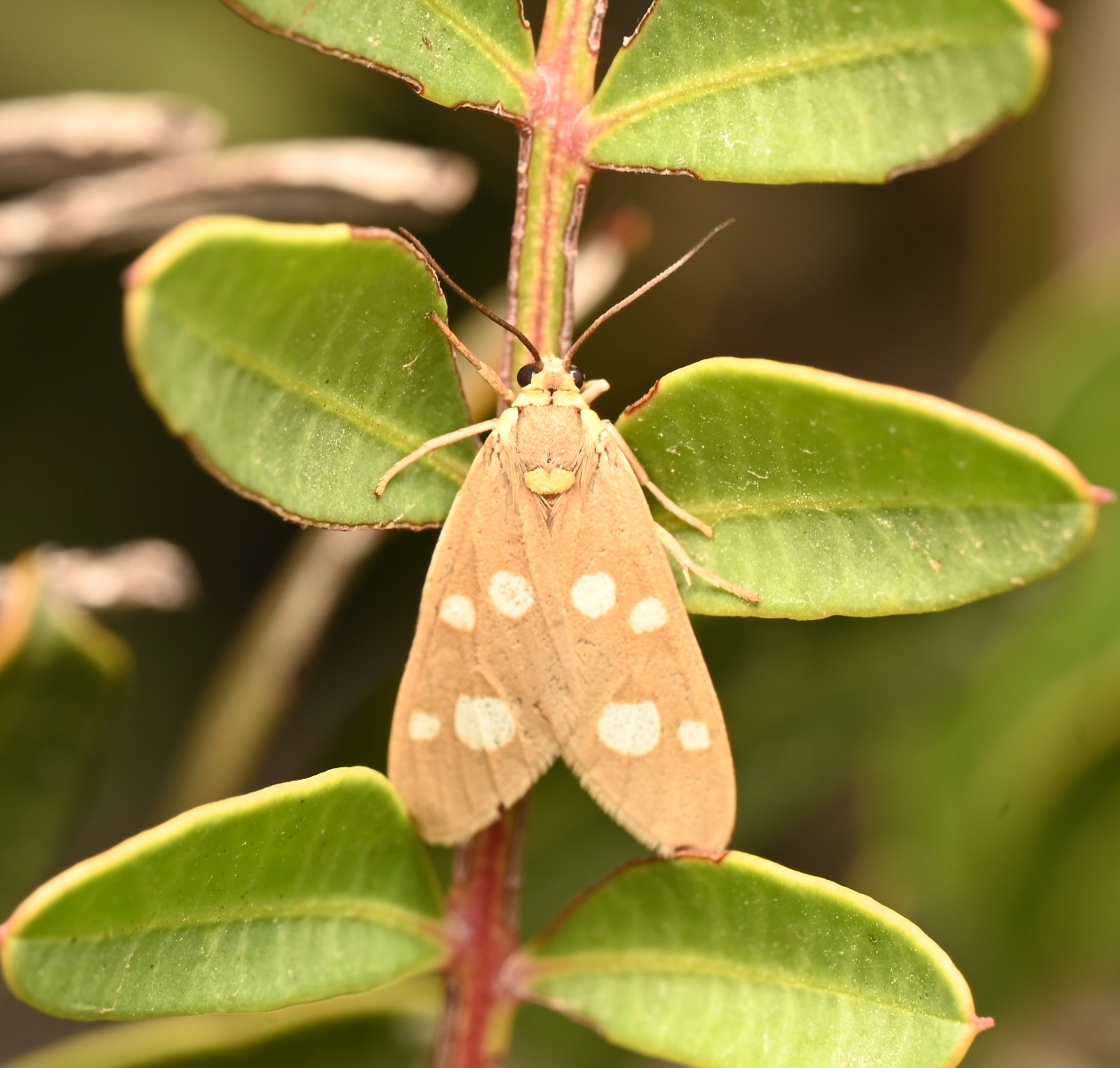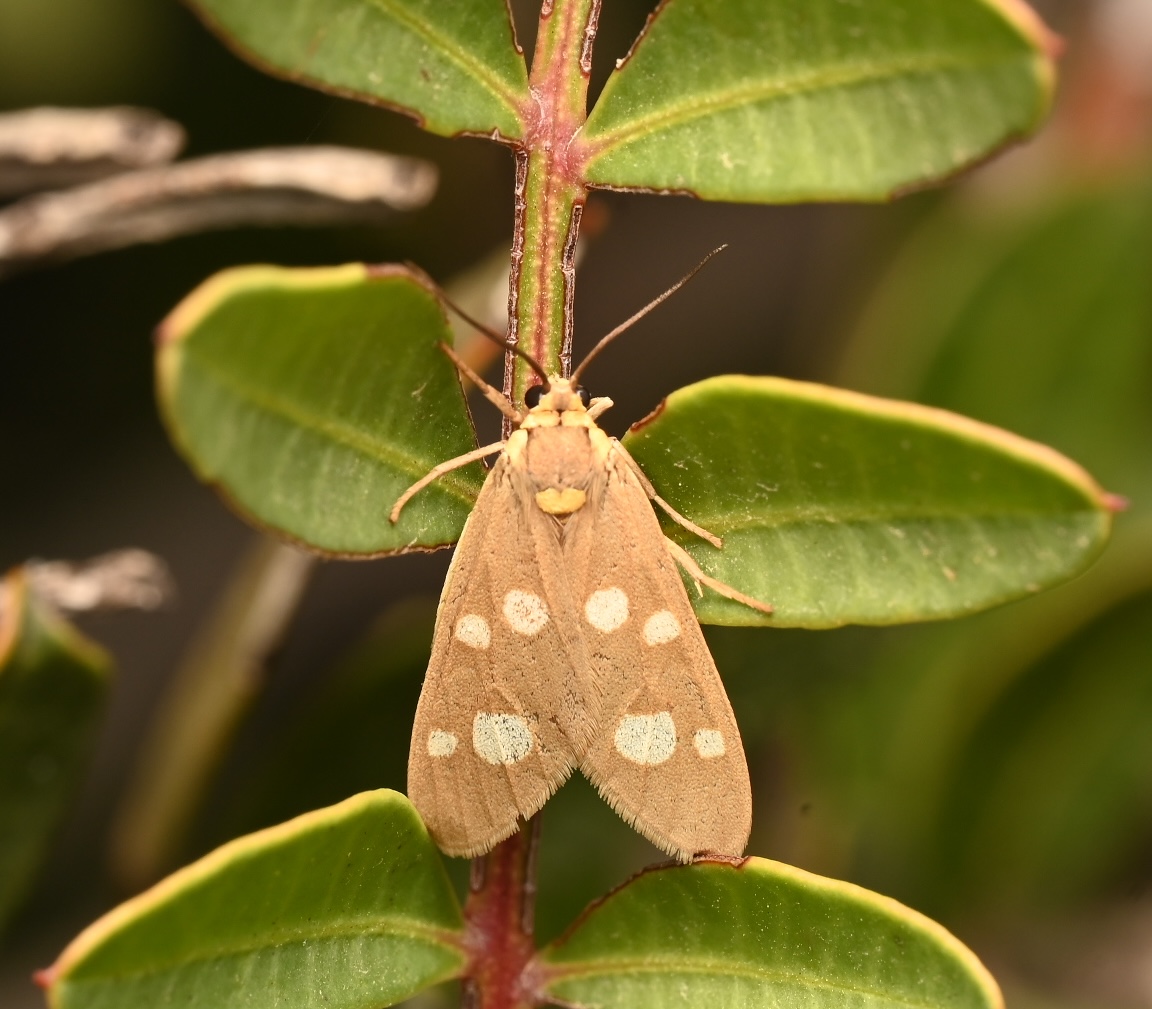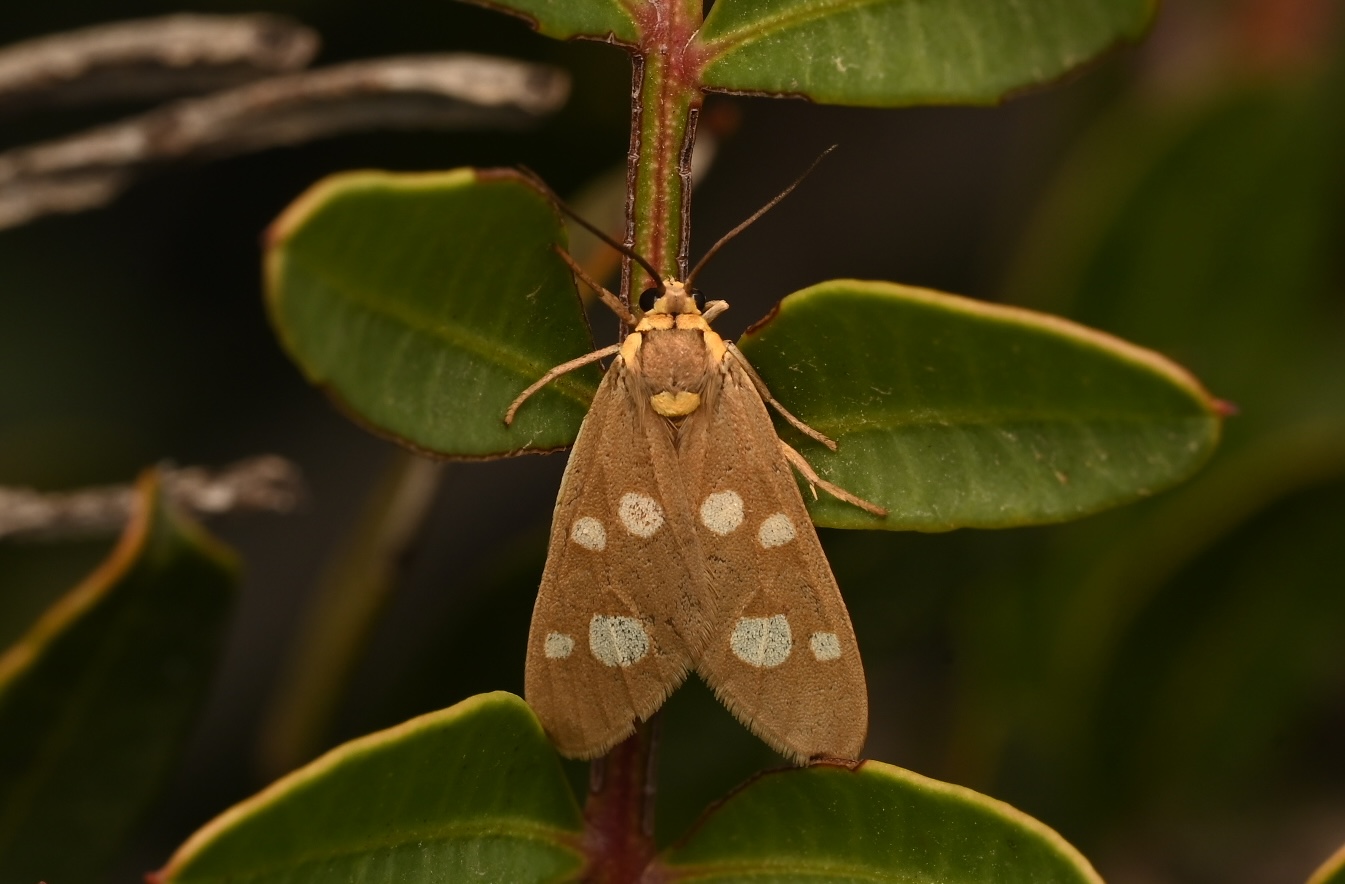
Tiger moths, a subfamily of the Erebidae family, are well known for their impressive defensive strategies. Some species can produce ultrasonic clicks that interfere with bat echolocation, while others store toxic compounds from their host plants to deter predators. Dysauxes famula is a small, day-flying tiger moth first described in 1836. It is a heat-loving species with a wide distribution, ranging from the Caucasus and Asia Minor to parts of southern and central Europe. Its caterpillars are highly adaptable feeders, consuming a variety of plants such as dandelion and bramble, and can even survive on mosses, lichens, and leaf litter. I spotted this moth resting on a tree on a sunny afternoon in Spetses, Greece.