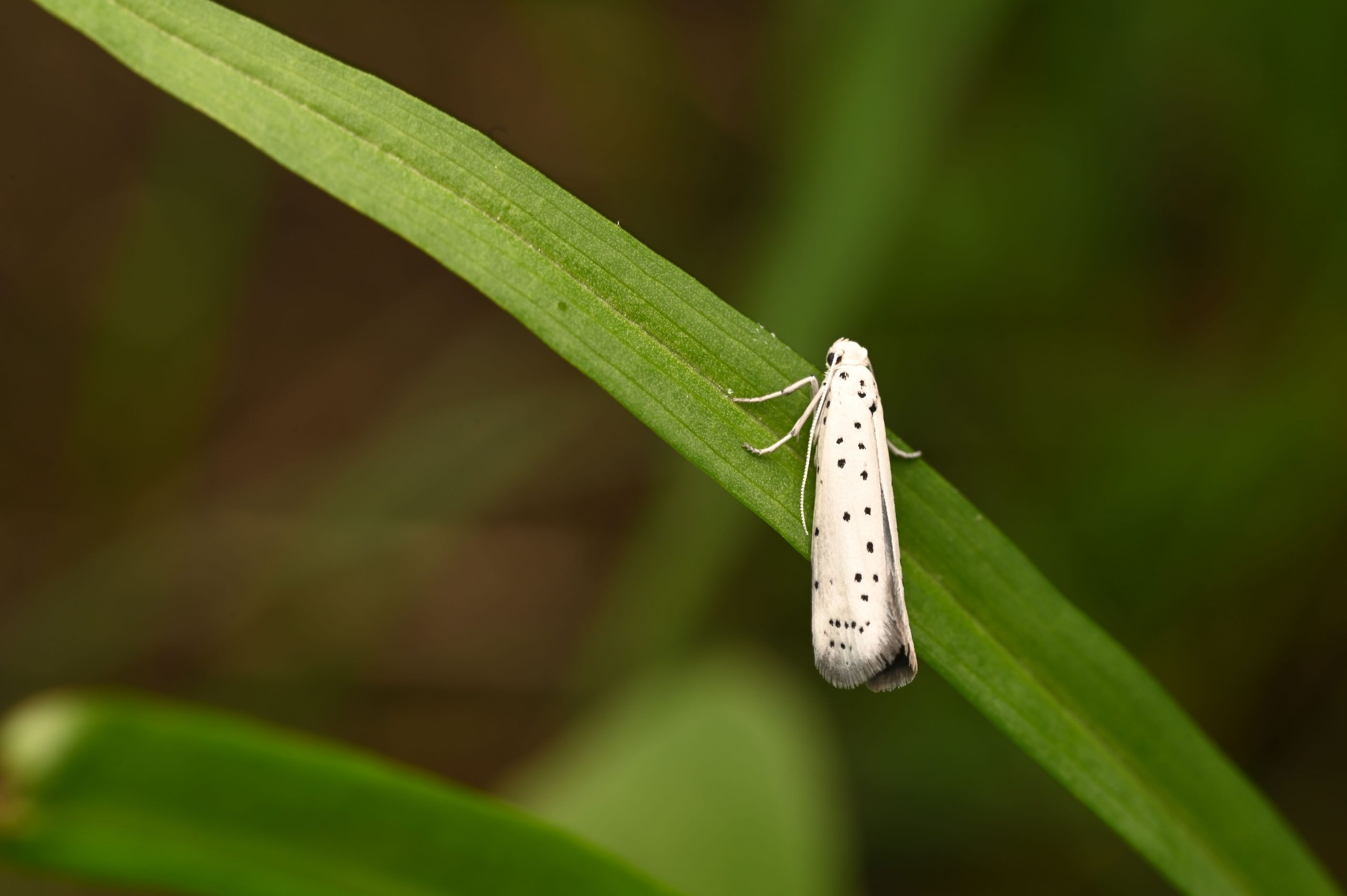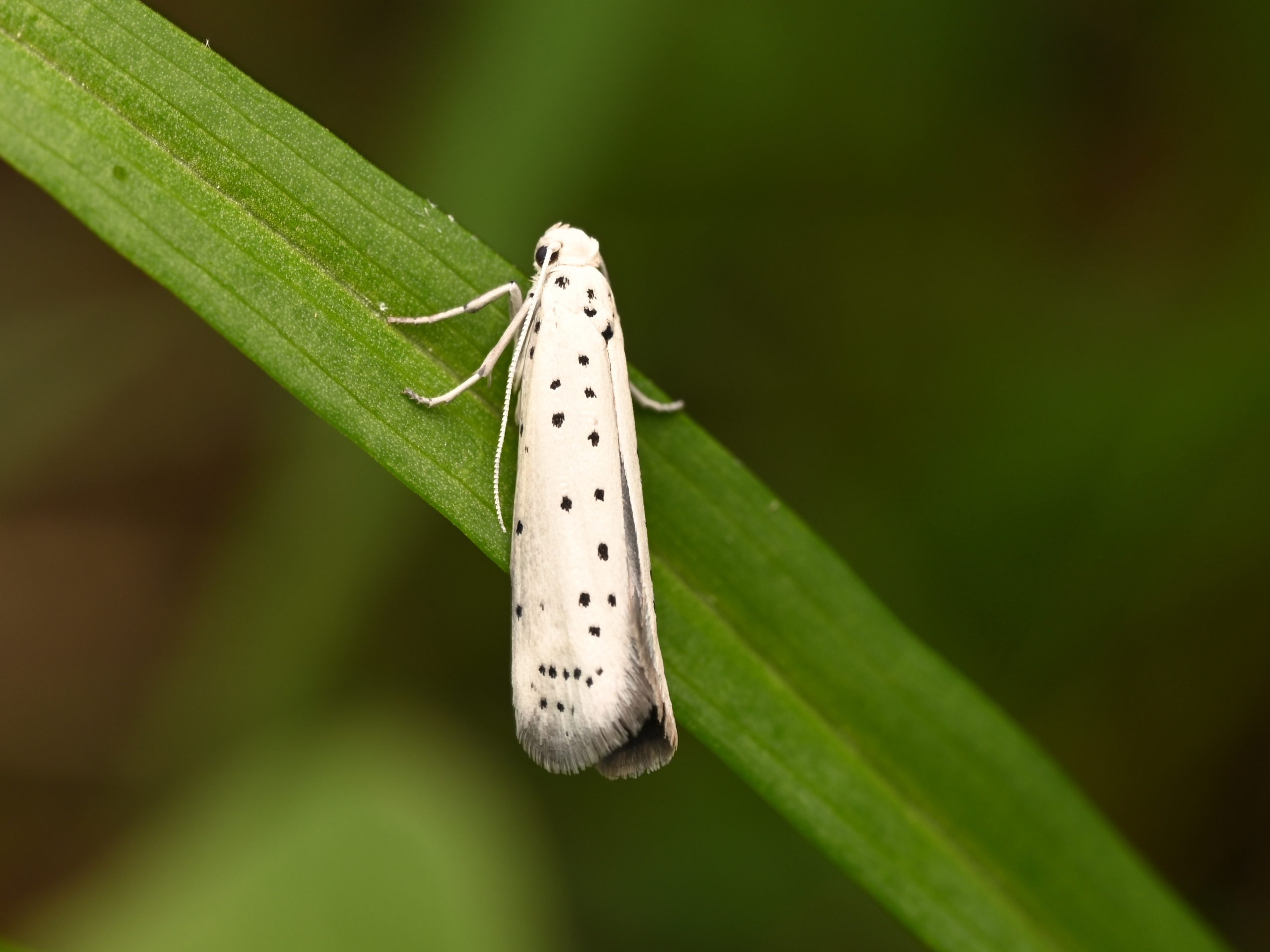
I stumbled upon this ermine moth (Yponomeuta spp.) during a walk near my home in Järfälla, Sweden. A tiny white shape caught my eye as it drifted down from the canopy, looking initially like a stray petal or a fallen seed. A photographer’s instinct made me pause; after a brief search through the undergrowth, I spotted the moth nestled in the grass. Capturing such a minute subject presented a real challenge, particularly under the dim, challenging forest light. I only managed a few frames before the moment passed, but fortunately, the gamble paid off. The stark contrast between the moth’s delicate, dotted wing patterns and the vivid green grass created a beautifully balanced composition. Beyond their individual elegance, ermine moths possess a fascinating—and sometimes notorious—social life. Their larvae are famous for weaving massive, silken “communal webs” that can envelop entire trees, housing hundreds of caterpillars at a time. While a mesmerizing sight, these mass gatherings can occasionally turn certain species into local pests, defoliating trees and severely stunting their seasonal growth.