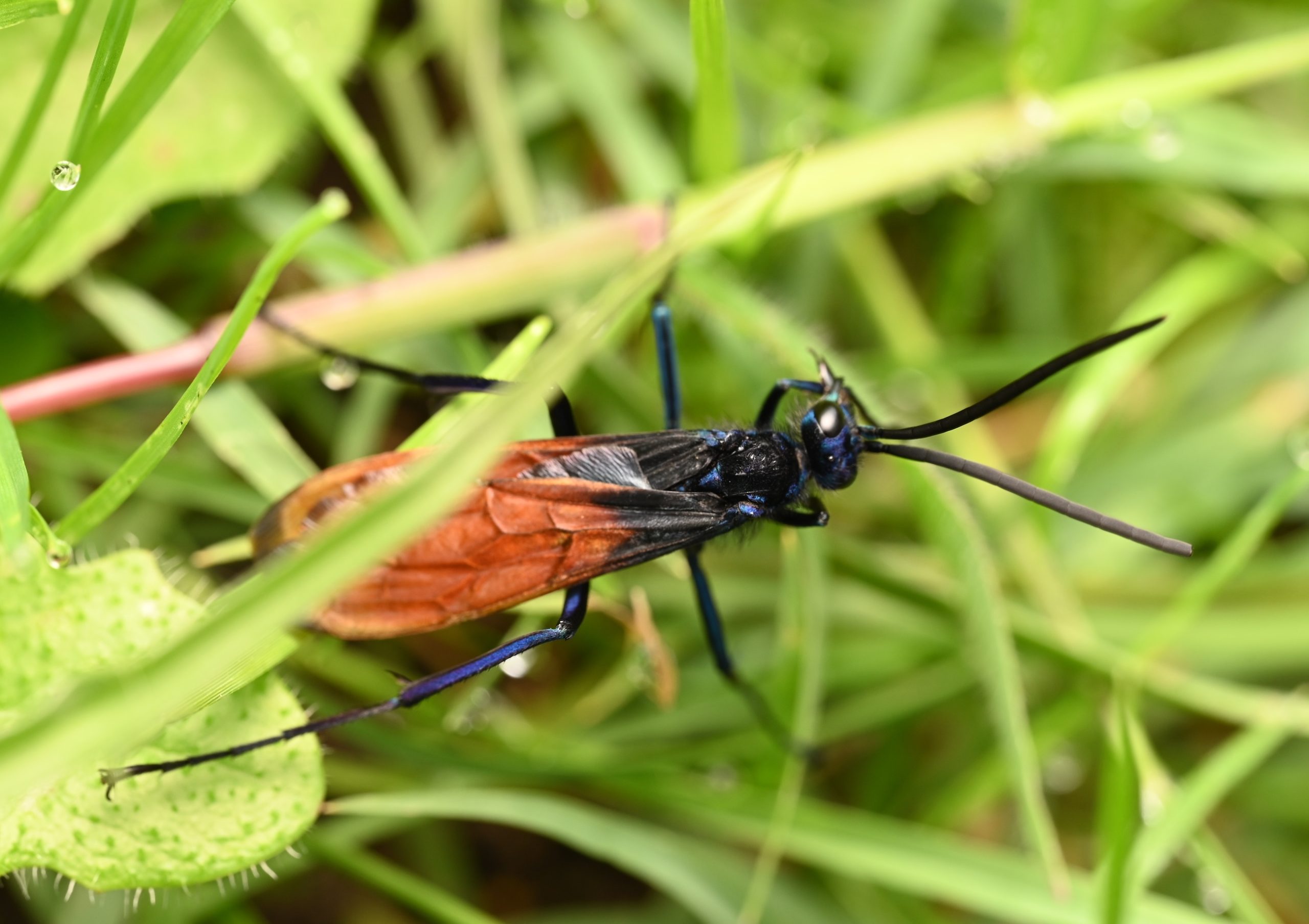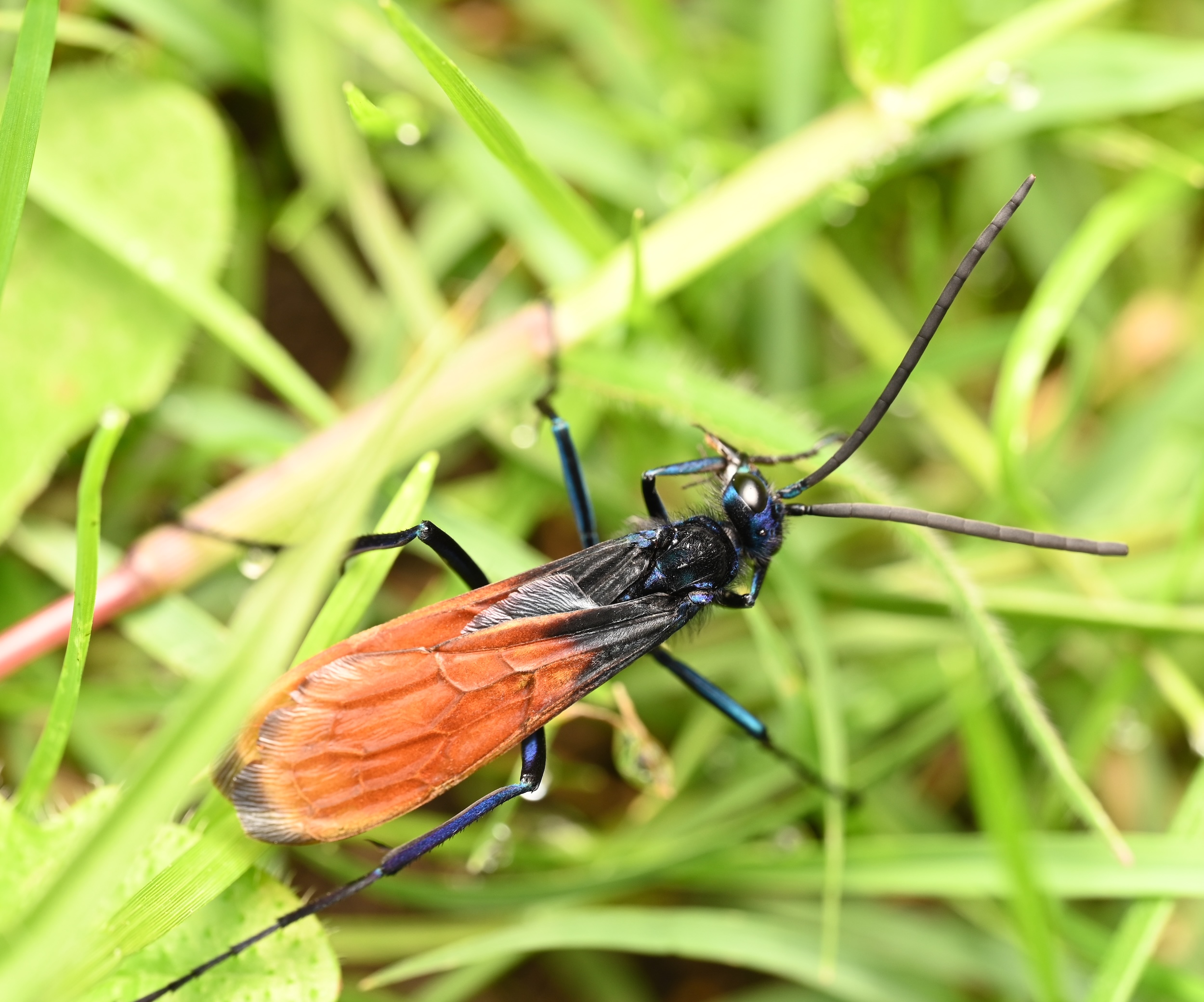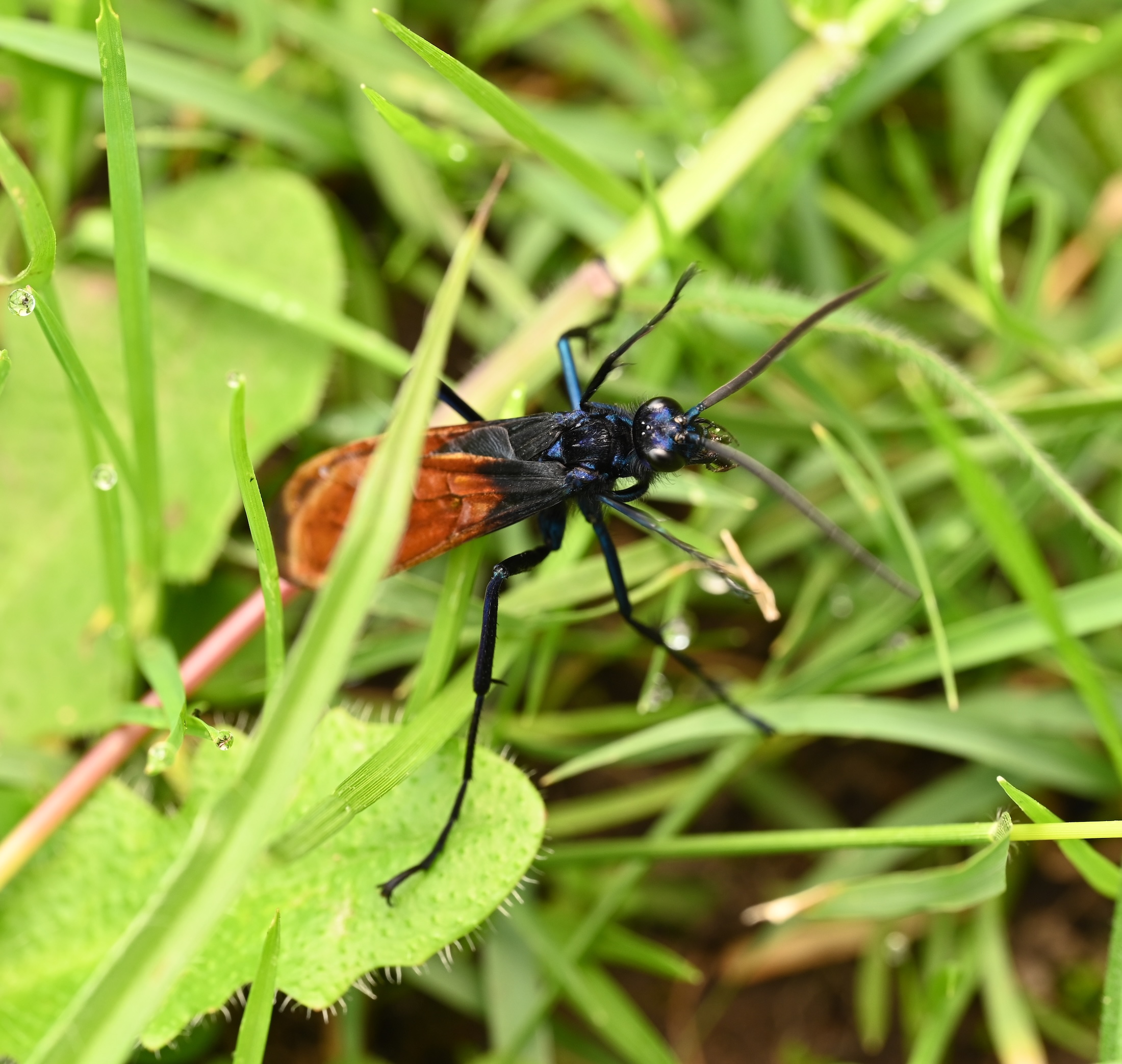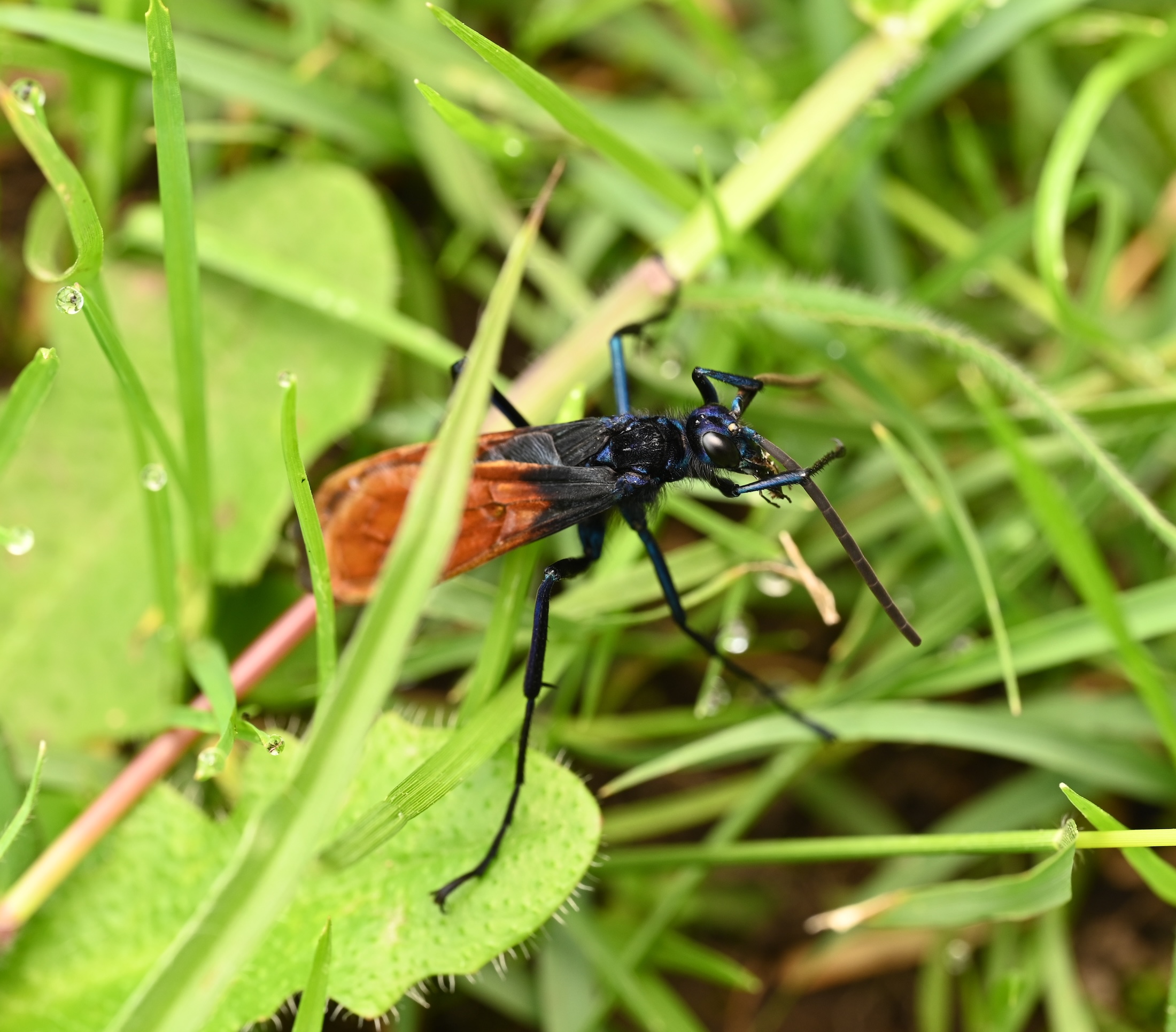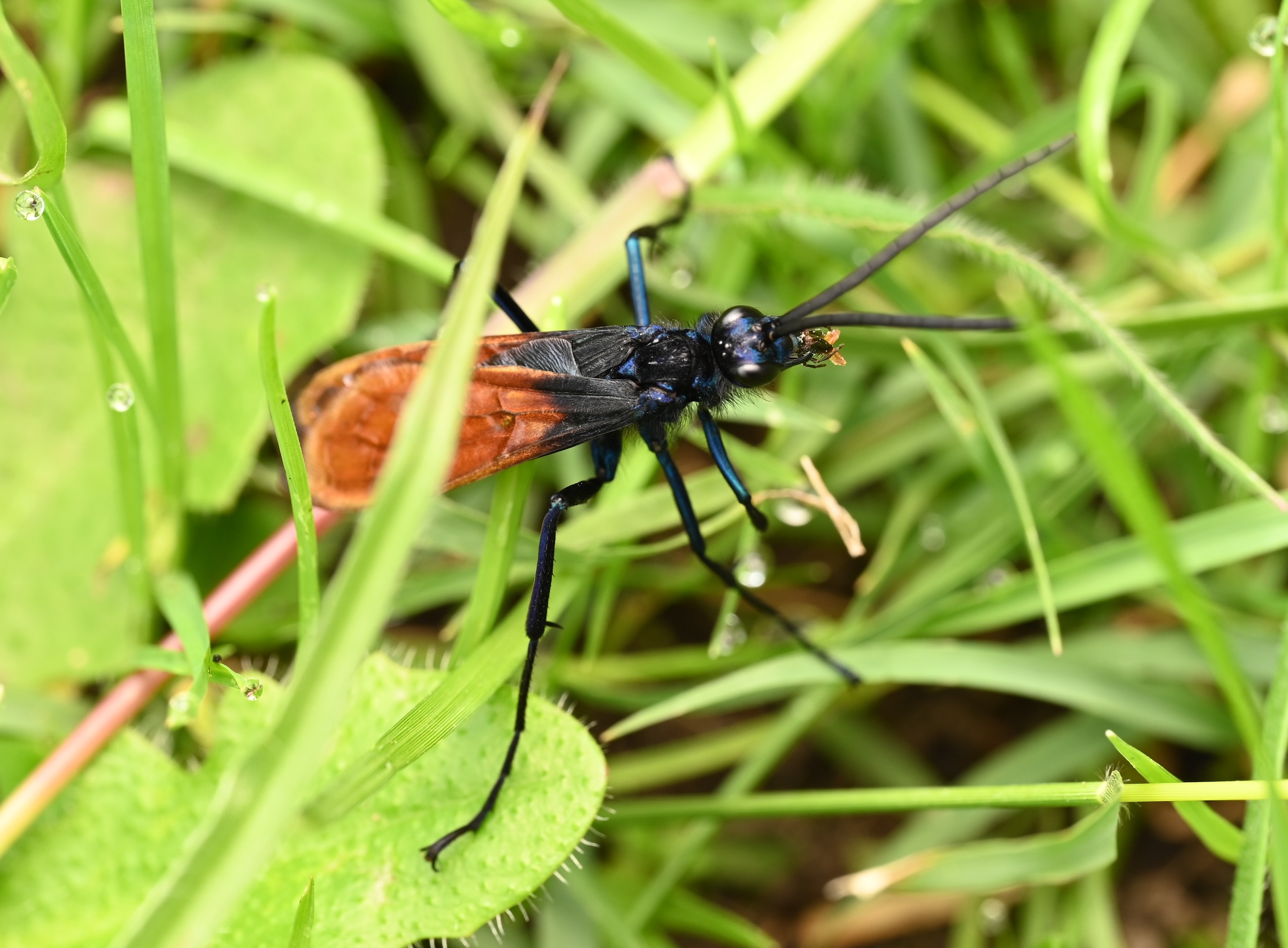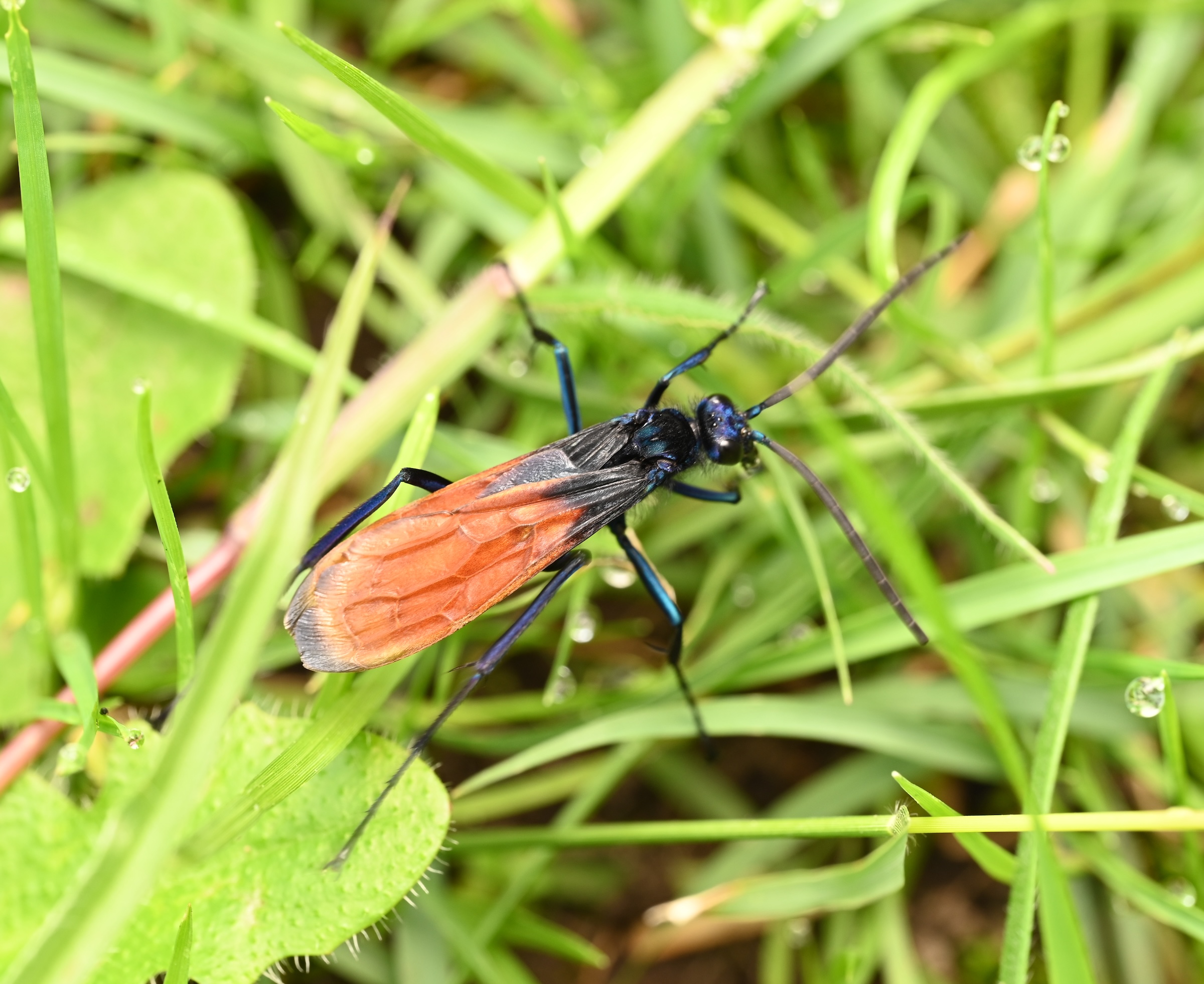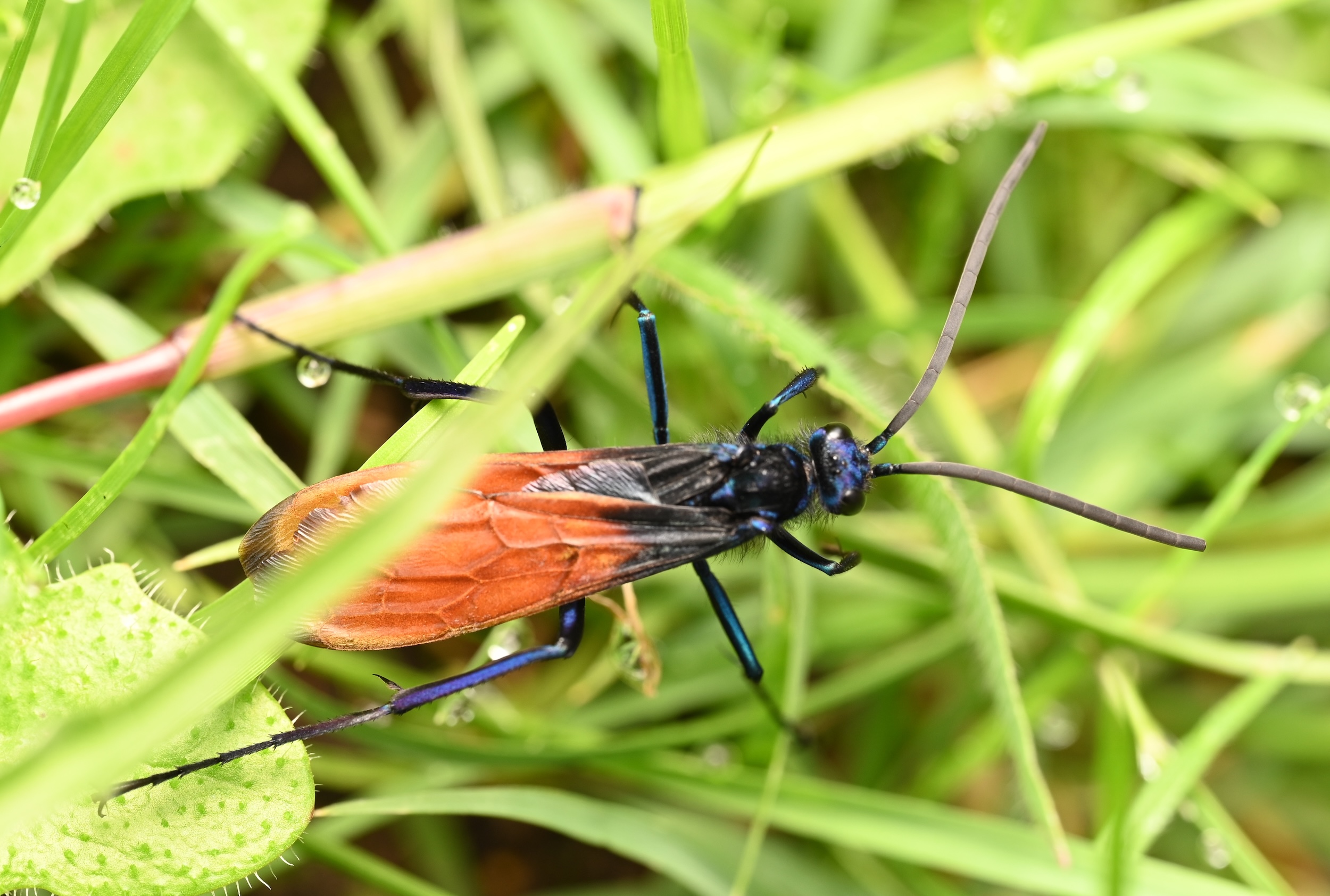
This tarantula hawk wasp (likely Pepsis grossa) is a massive spider wasp (family: Pompilidae) famous for its blindingly painful sting and gruesome, parasitic life cycle. Female wasps use their stinger to permanently paralyze tarantulas—prey several times their own size—before dragging them into a burrow. There, the wasp lays a single egg on the tarantula’s abdomen and seals the chamber. Once it hatches, the larva burrows inside the spider to feed on its tissues, deliberately avoiding vital organs to keep the host alive for several weeks until pupation. To deter predators, the wasp displays aposematic (warning) coloration: a steel-blue to blue-black body contrasted by striking, rust-orange wings. Any predator or careless human who ignores this warning will instantly regret it; rated a maximum 4.0 on the Schmidt Sting Pain Index, its sting is second only to the bullet ant. Justin Schmidt famously described the pain as “blinding, fierce, shockingly electric,” advising victims to simply lie down and scream. I encountered this beautiful wasp, completely unaware of its macabre habits, in the protected forest of La Perla on the coast of Ecuador.