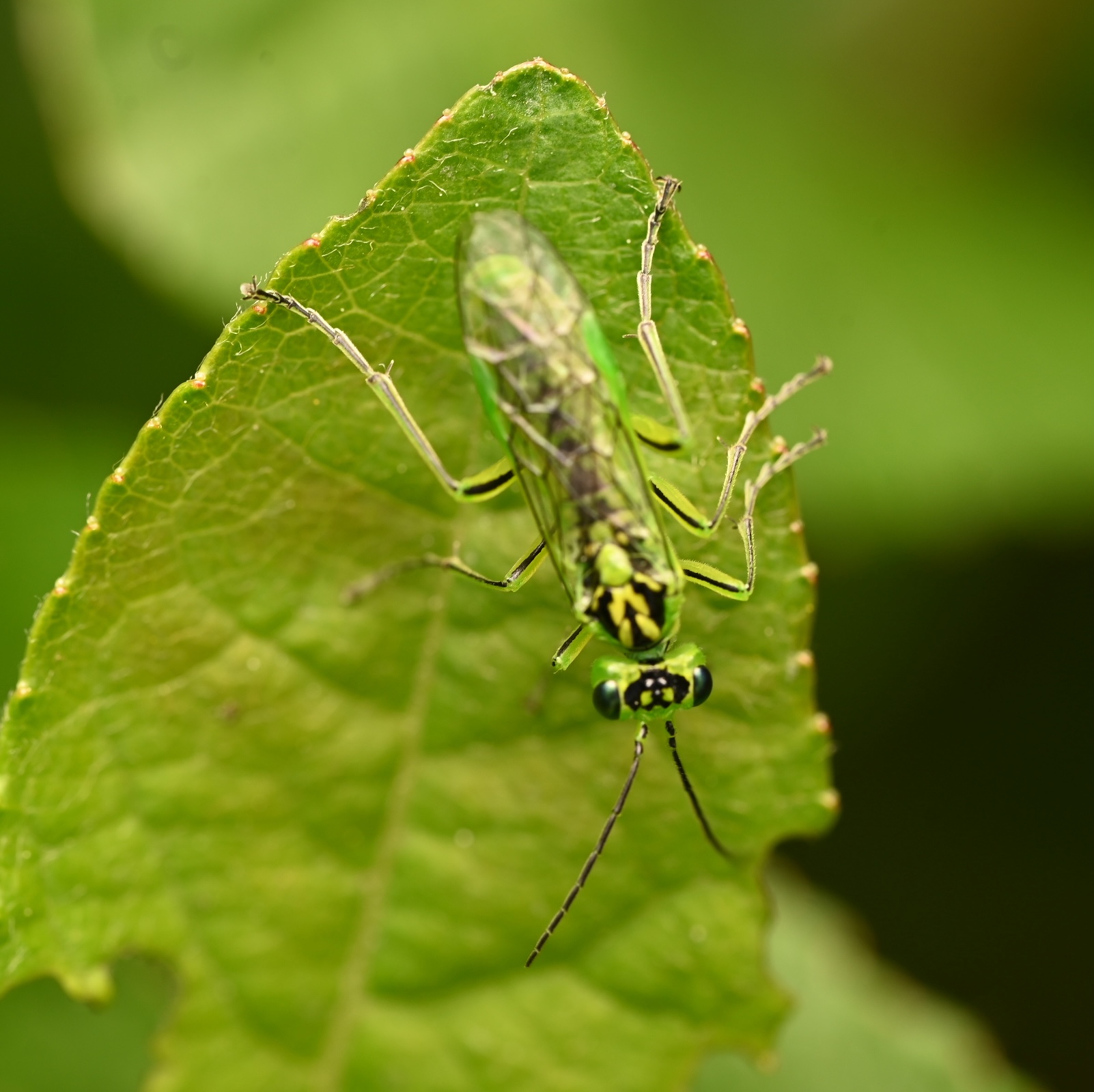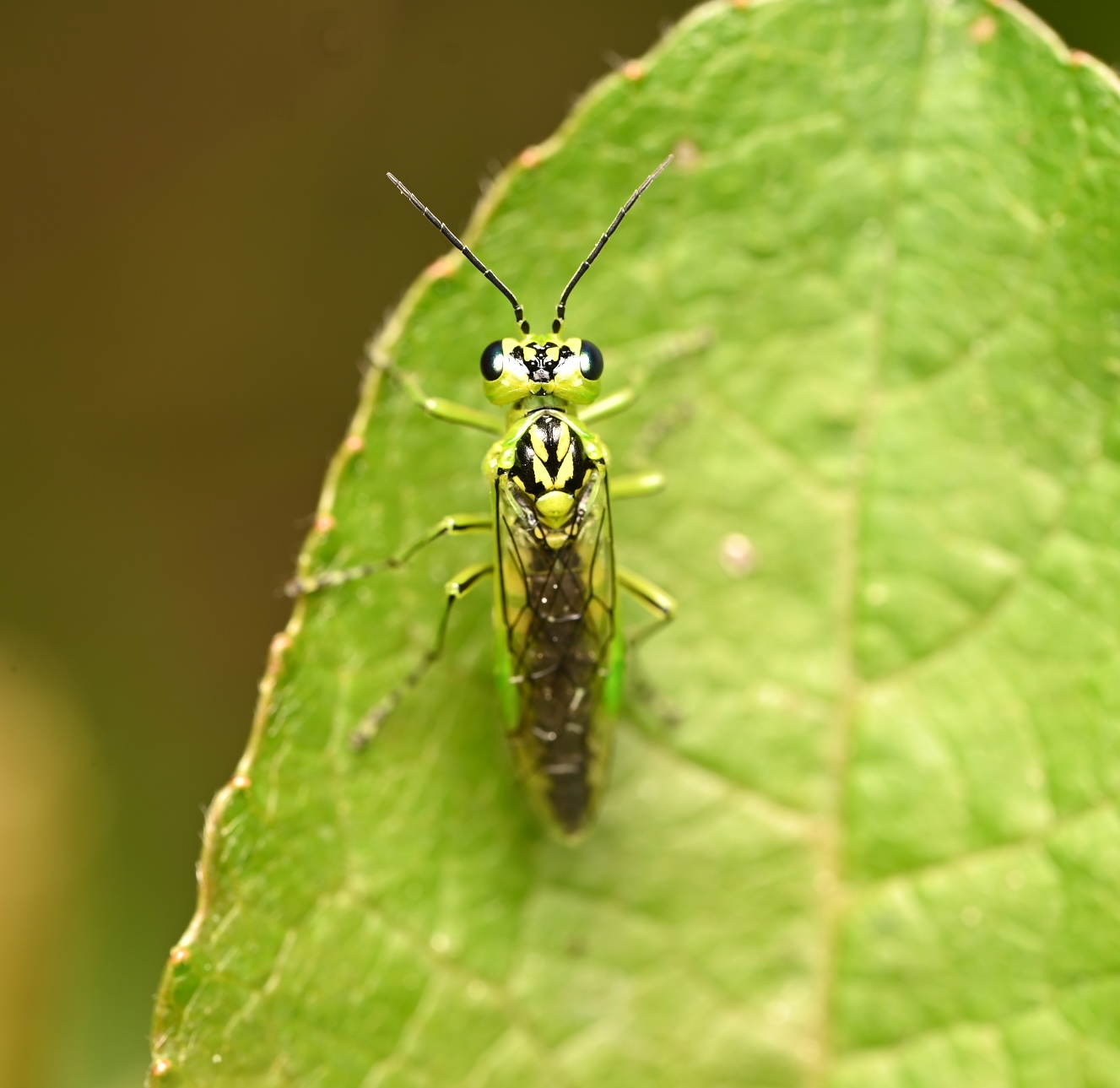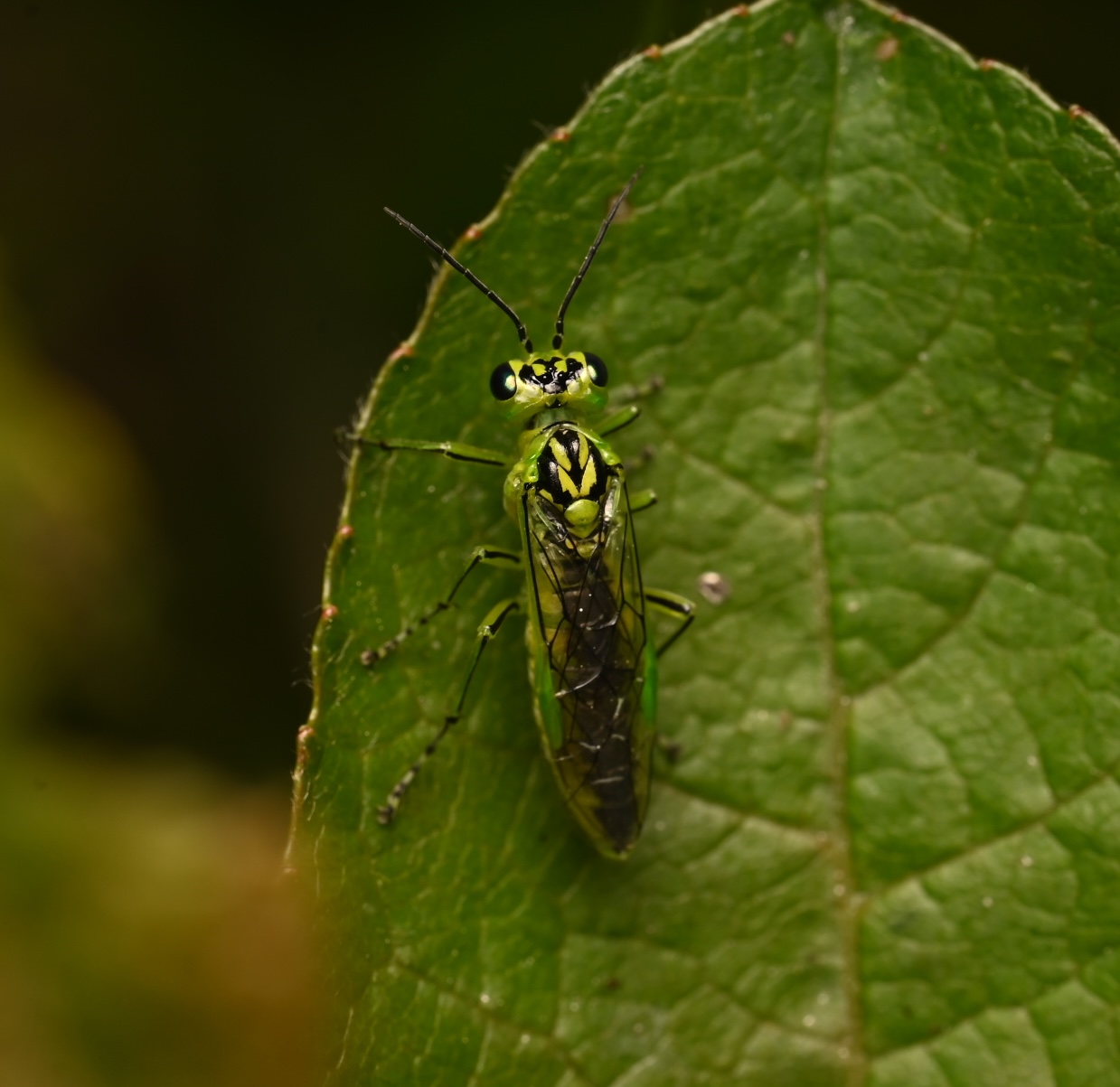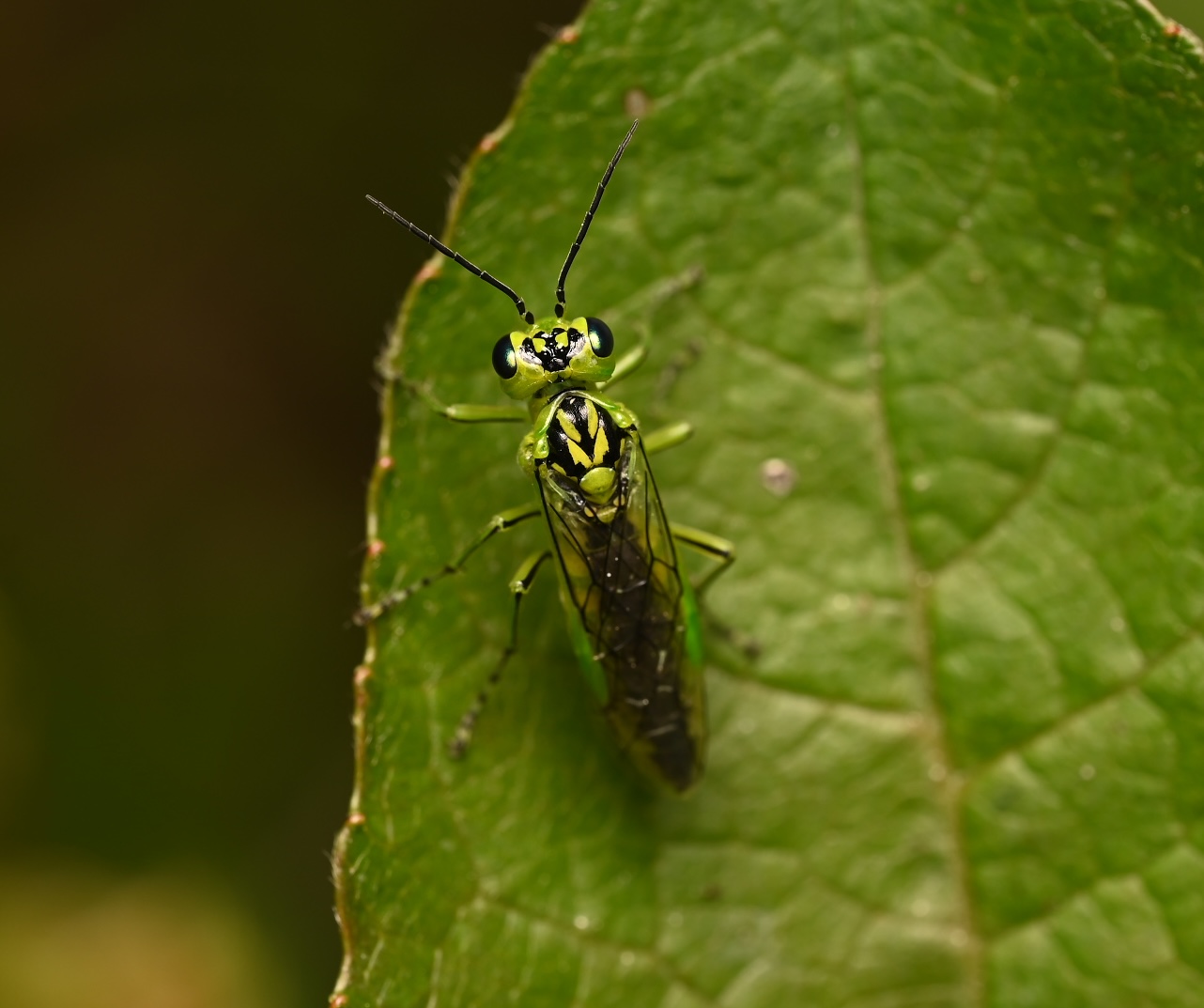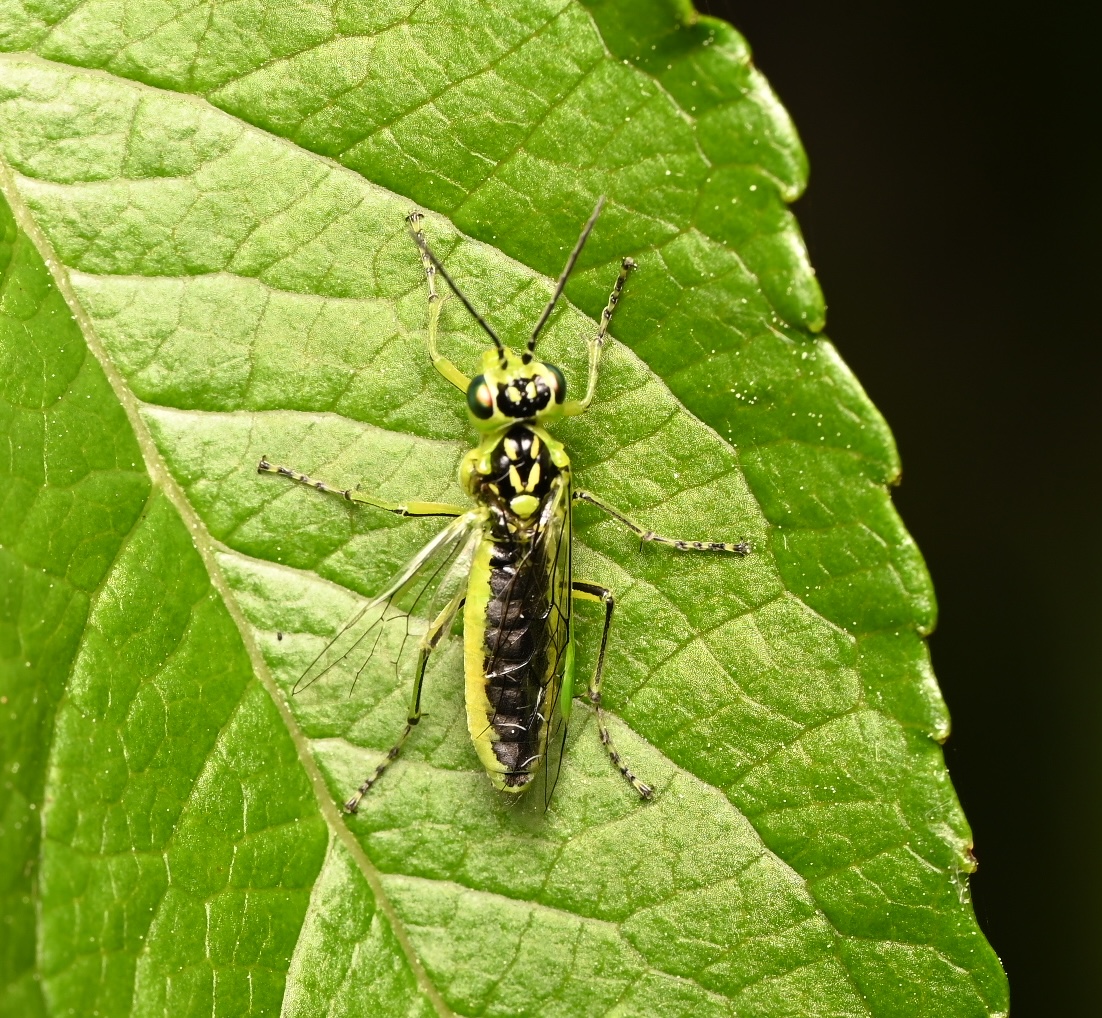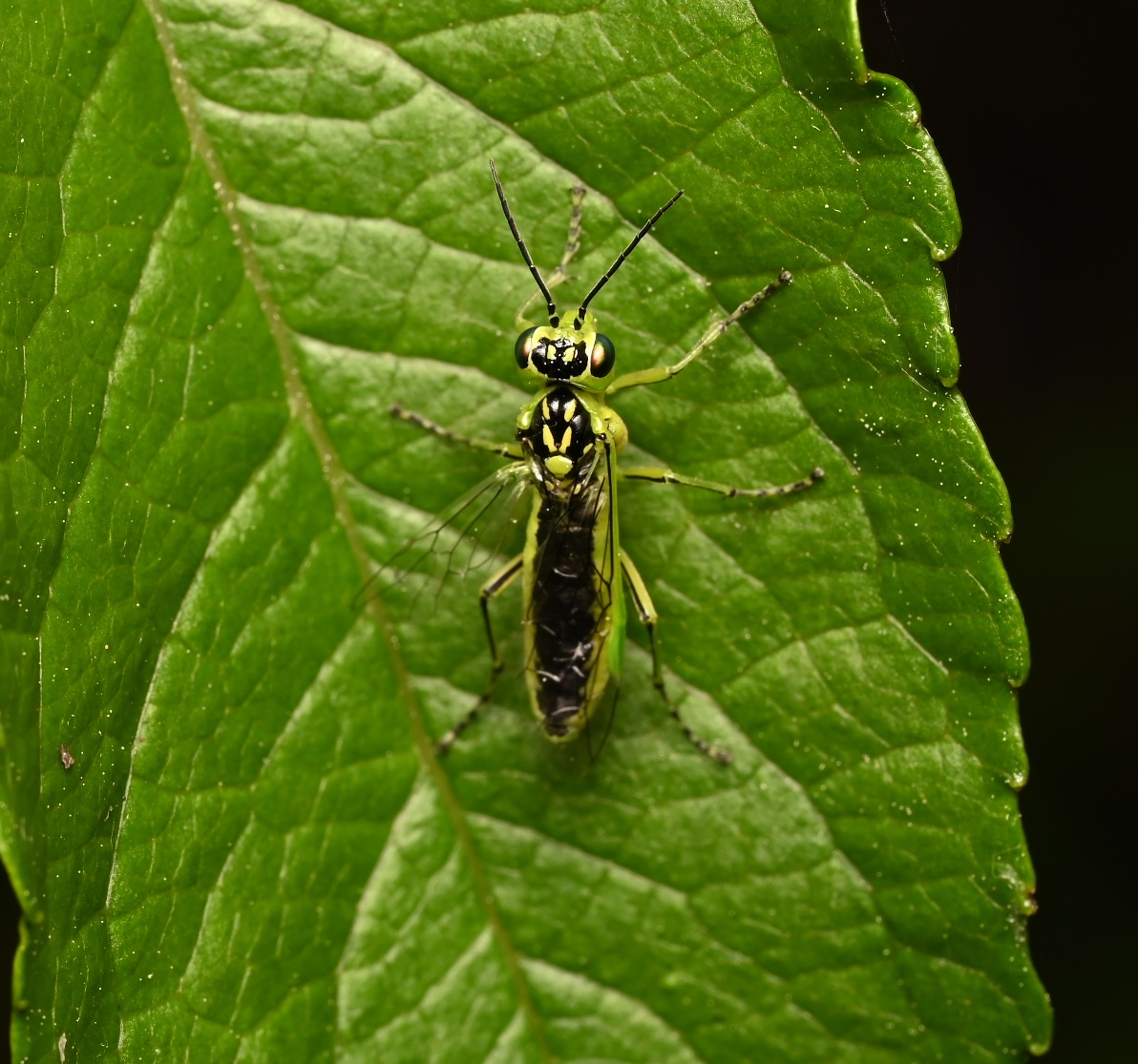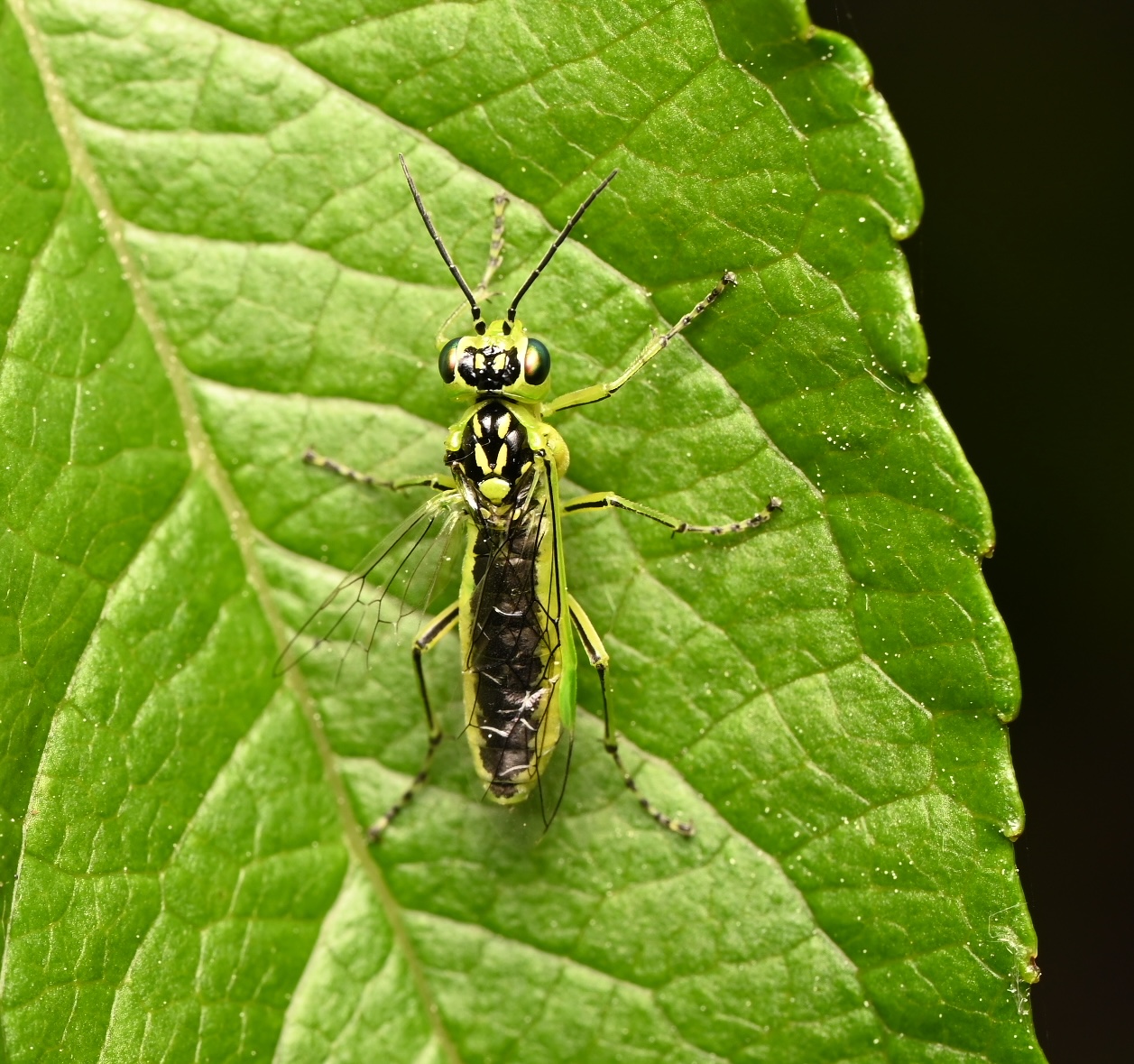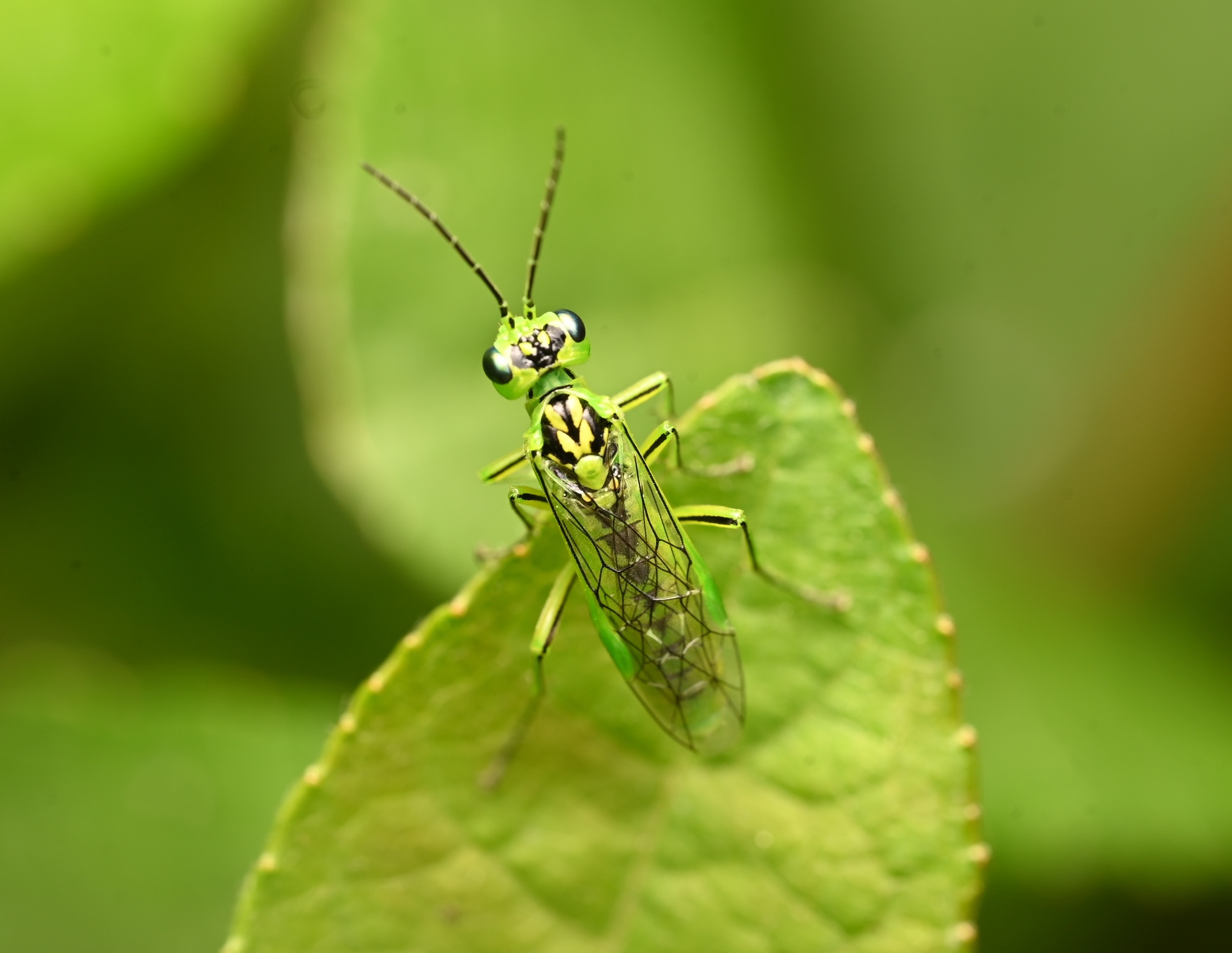
Meet the broad-striped rhogogaster (Rhogogaster scalaris), a vibrant, lime-green insect widely distributed across Europe. While the adults are mostly diurnal, active between May and July to hunt small insects and forage for nectar, the caterpillar-like larvae are nocturnal. They are polyphagous, meaning they munch on the leaves of a broad variety of plants, such as willow, alder, rowan, meadowsweet, and even bracken. Adult sawflies lack the characteristic “wasp waist” of true wasps, showcasing a broad, robust connection between the thorax and abdomen. When I first encountered this spectacular insect in a forest in northern Sweden, its huge, dominating eyes and translucent body caught the evening light so beautifully that it looked like a small green elf stepped straight out of a fairy tale. That single, magical encounter officially cemented sawflies as one of my favorite insect groups.