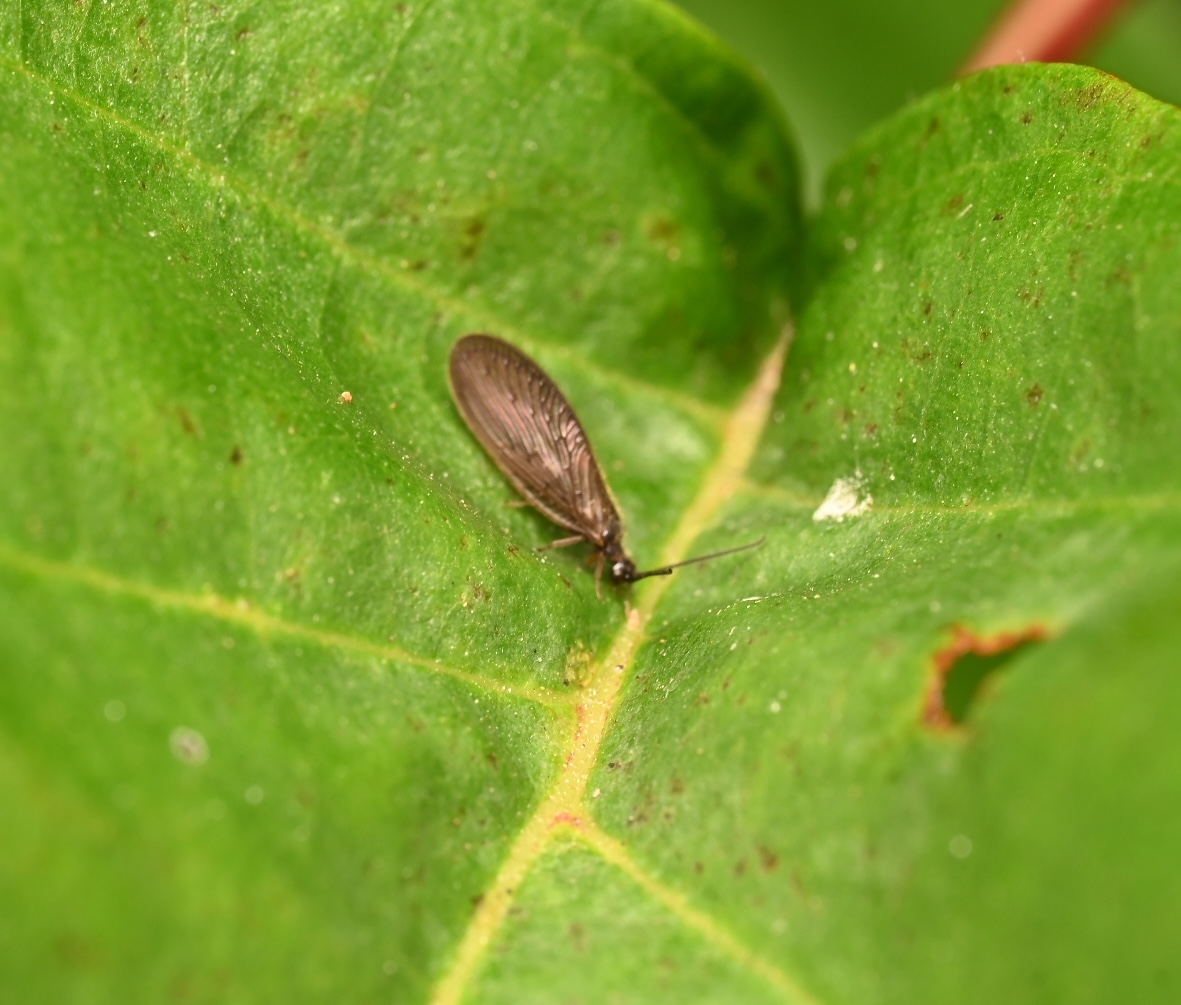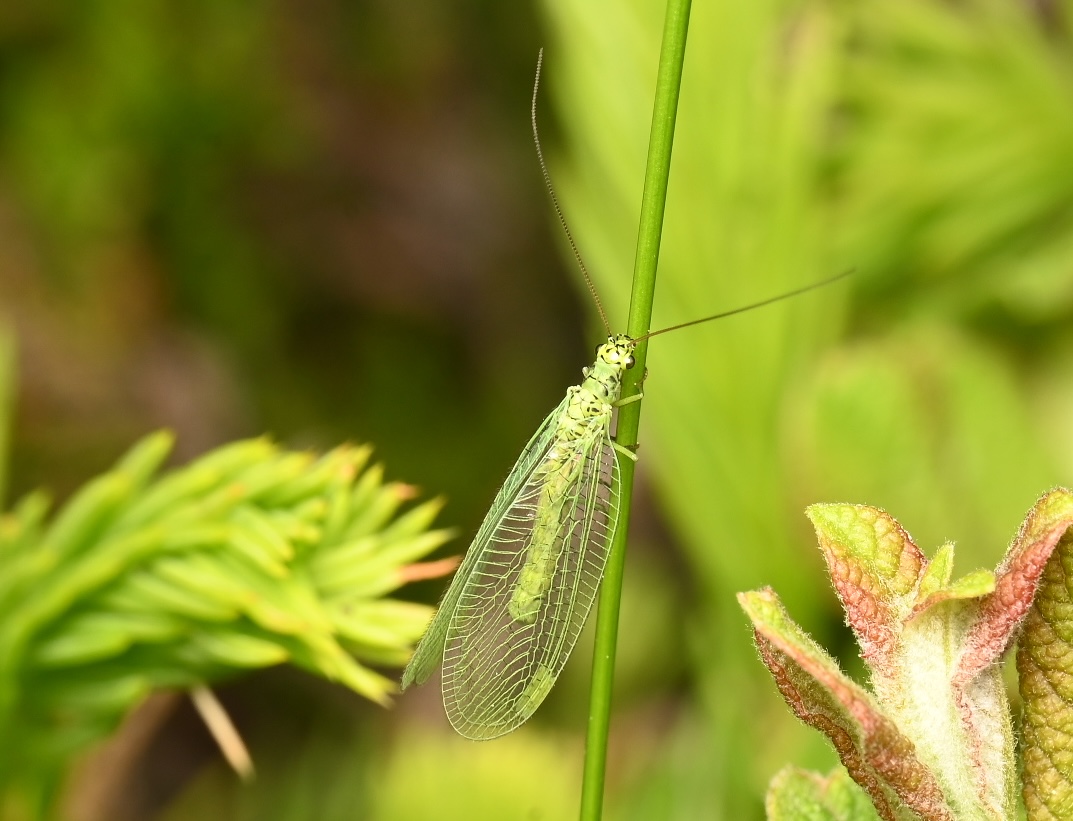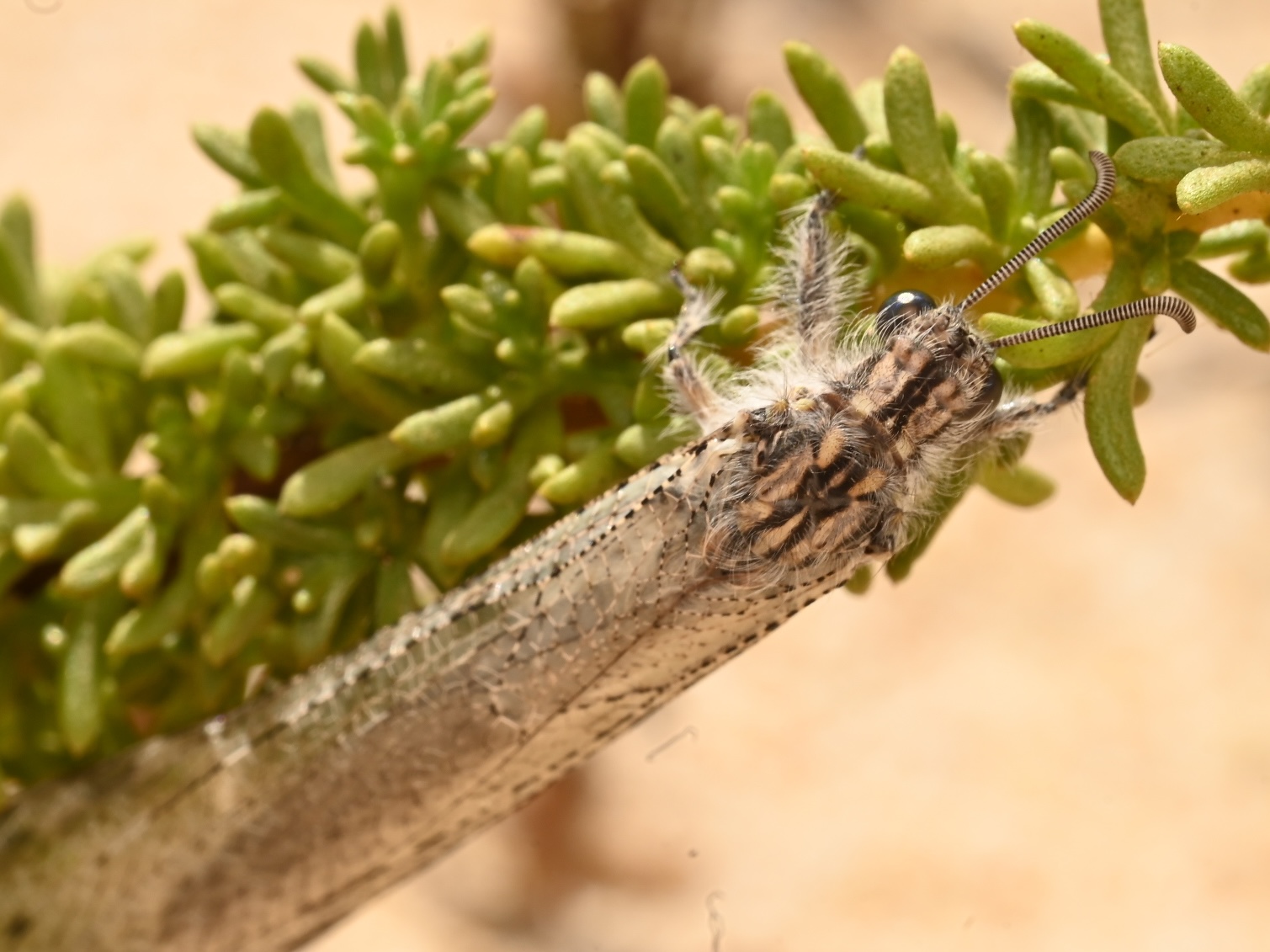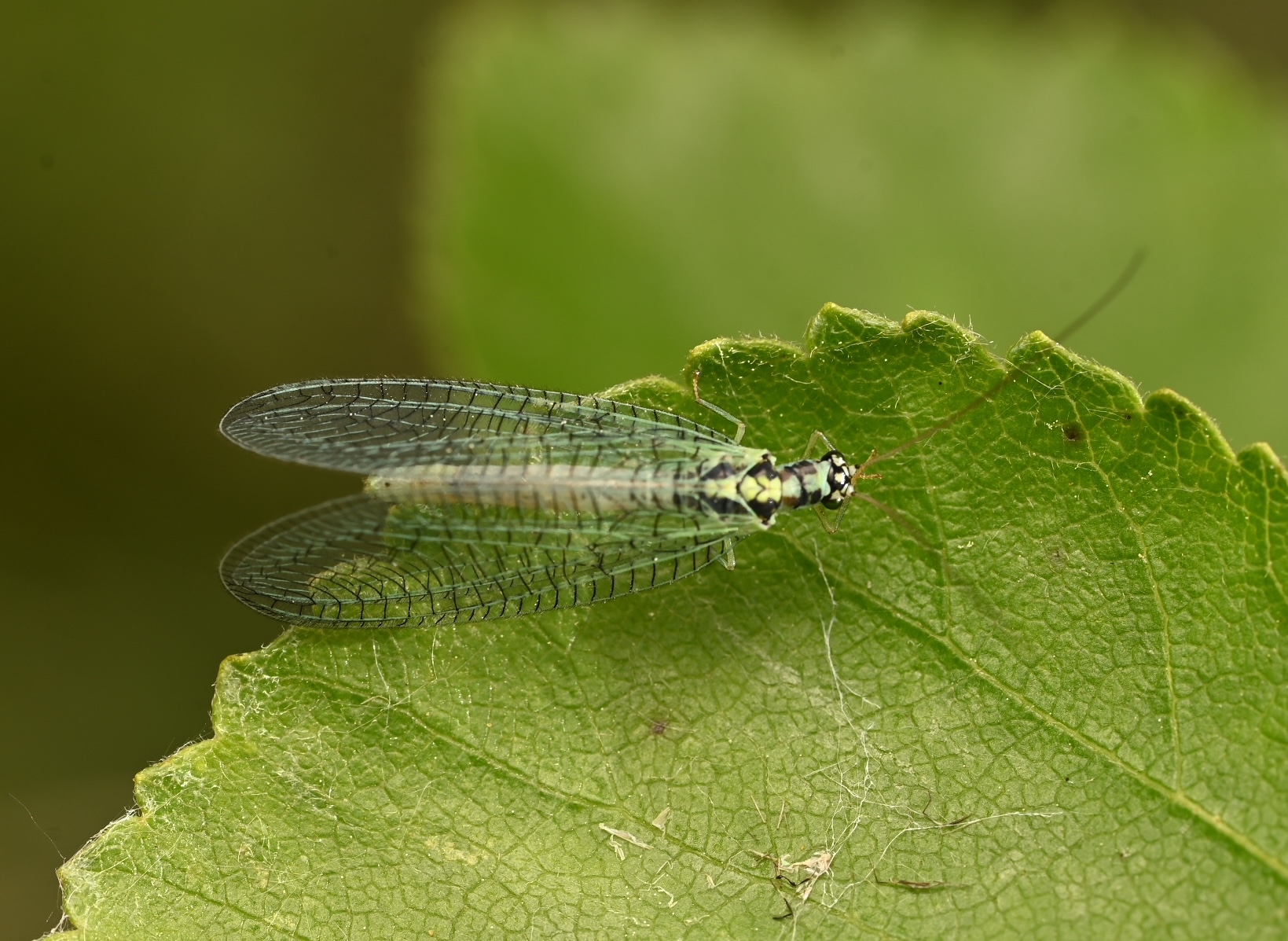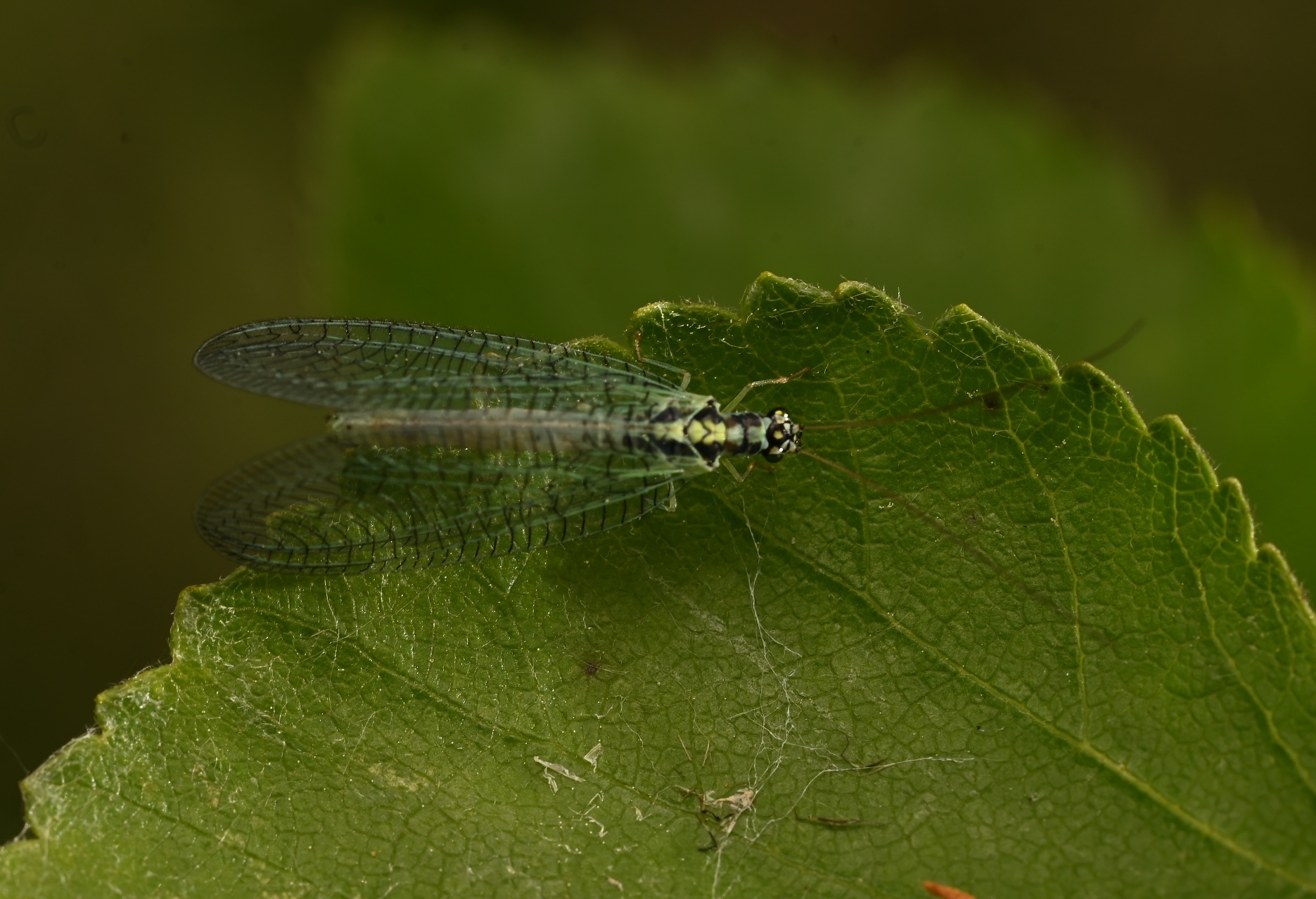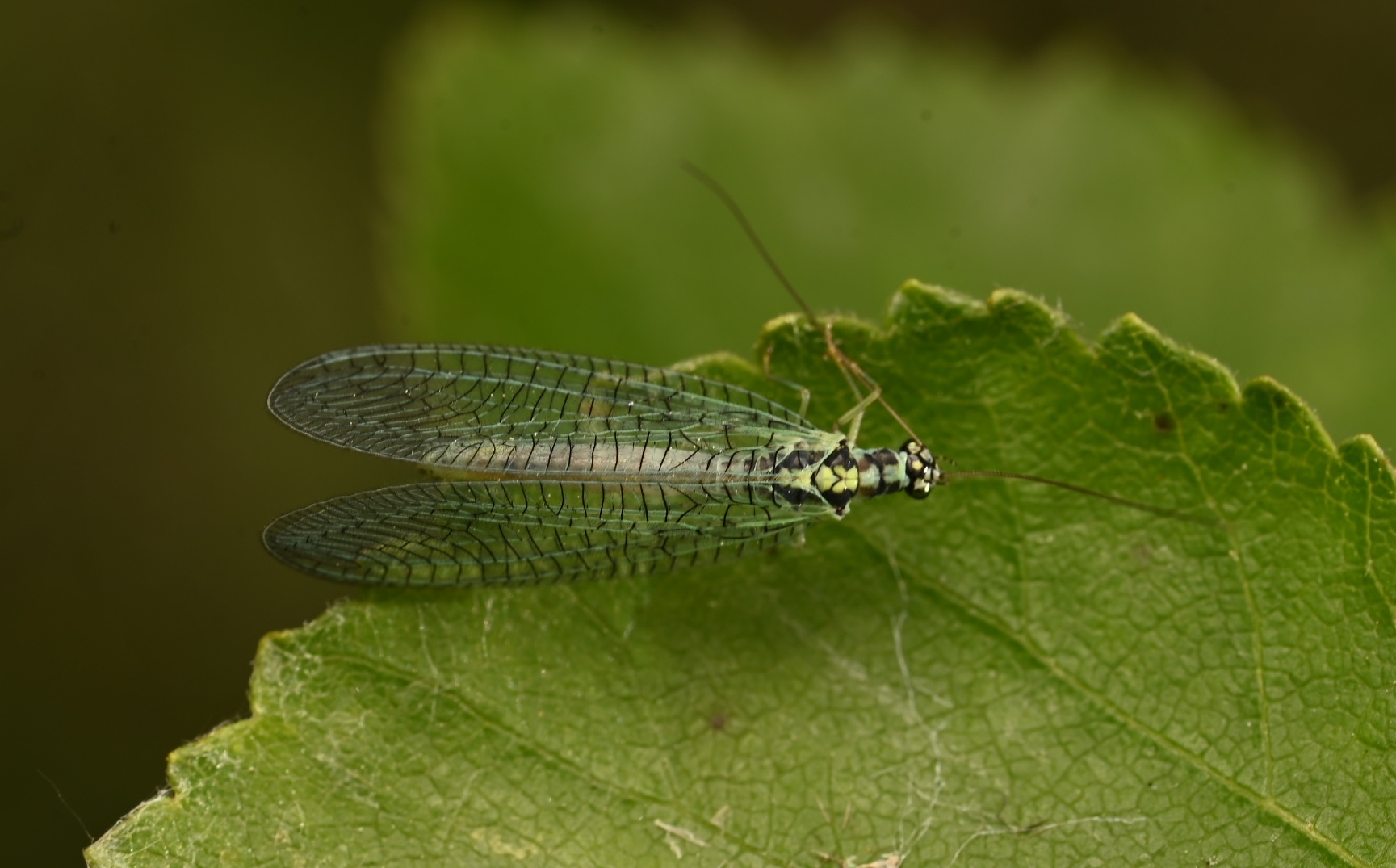
Meet the pearly green lacewing (Chrysopa perla), a striking European insect celebrated for its iridescent, jewel-like eyes, intricate webbed wings, and voracious appetite for garden pests. Its larvae are such relentless hunters that they are widely nicknamed “aphid lions”—a single individual can consume up to 400 aphids a week by injecting them with paralyzing enzymes. To protect her future brood, the female deposits her eggs on the undersides of leaves, securing each one to the tip of a delicate, 6-to-8 mm silken stalk to keep them out of reach of their hatched siblings. While most adult lacewings strictly sip nectar, Chrysopa perla remains a partial predator, actively hunting aphids and mites while retaining a foul-smelling chemical defense to ward off larger threats. I encountered lacewings in various sizes several times during my long bicycle tour along the Baltic coast in June 2026. Because they are incredibly skittish and prone to taking flight at the slightest vibration, securing a few clean, tack-sharp frames required an immense amount of stealth and patience.