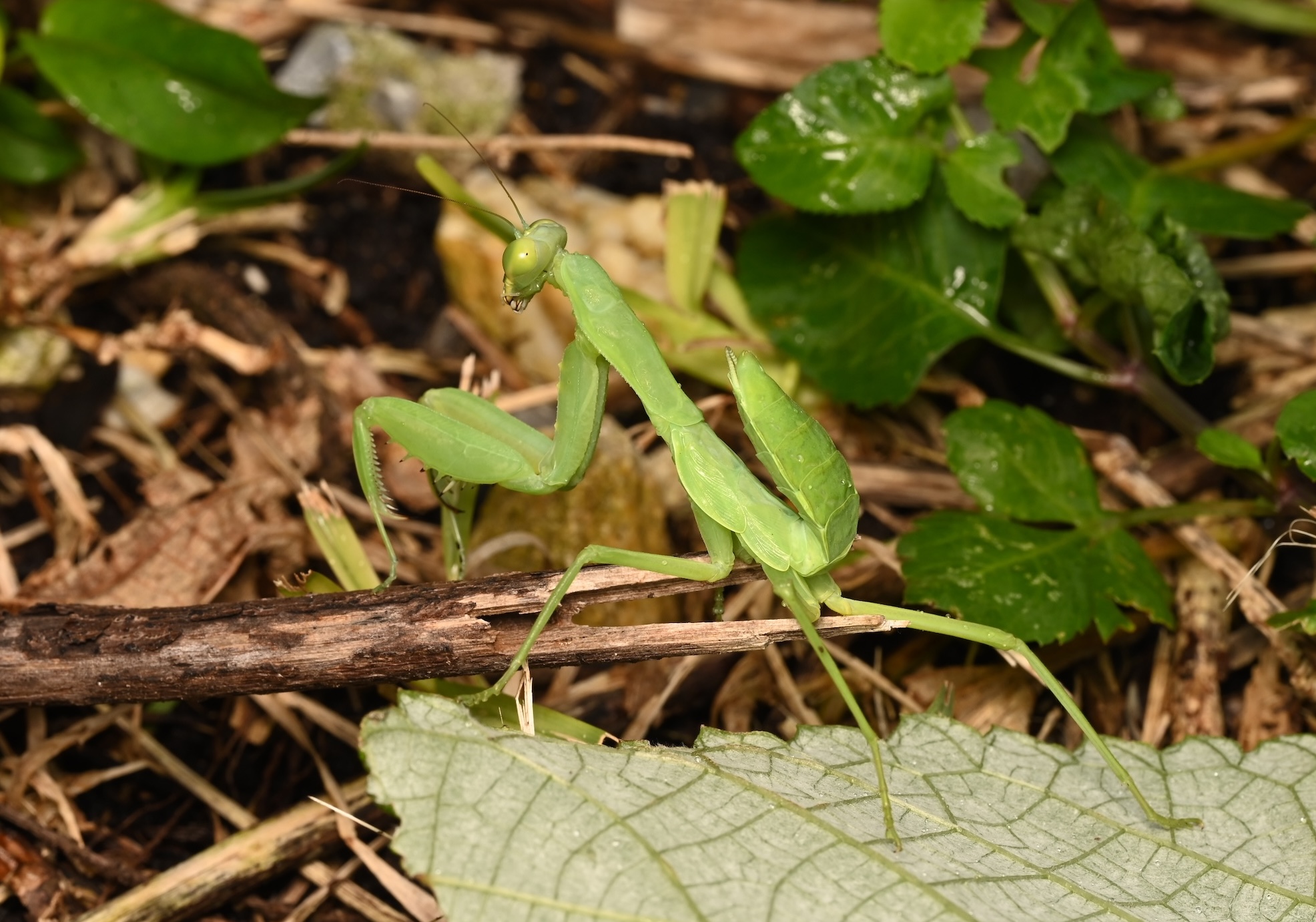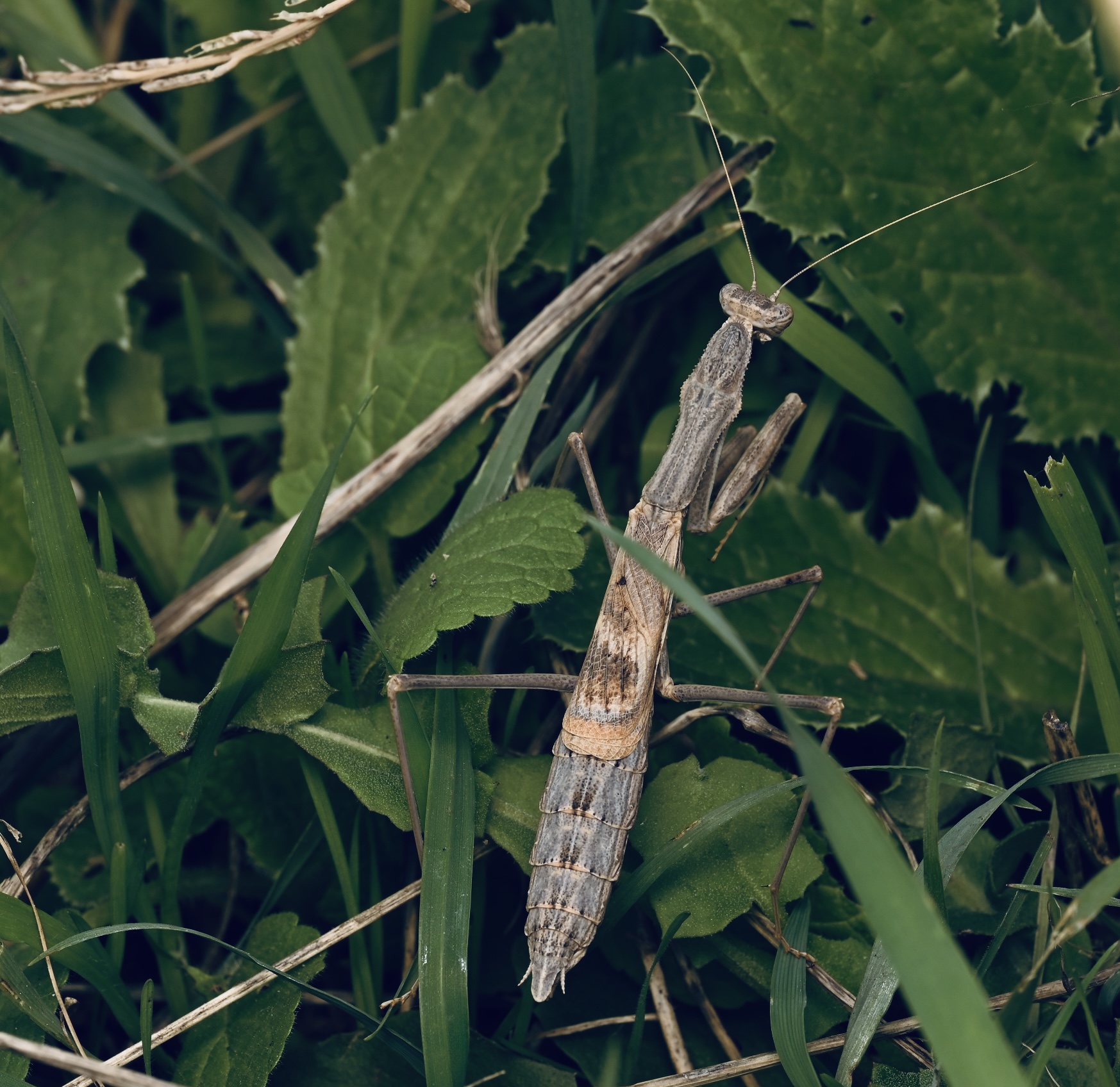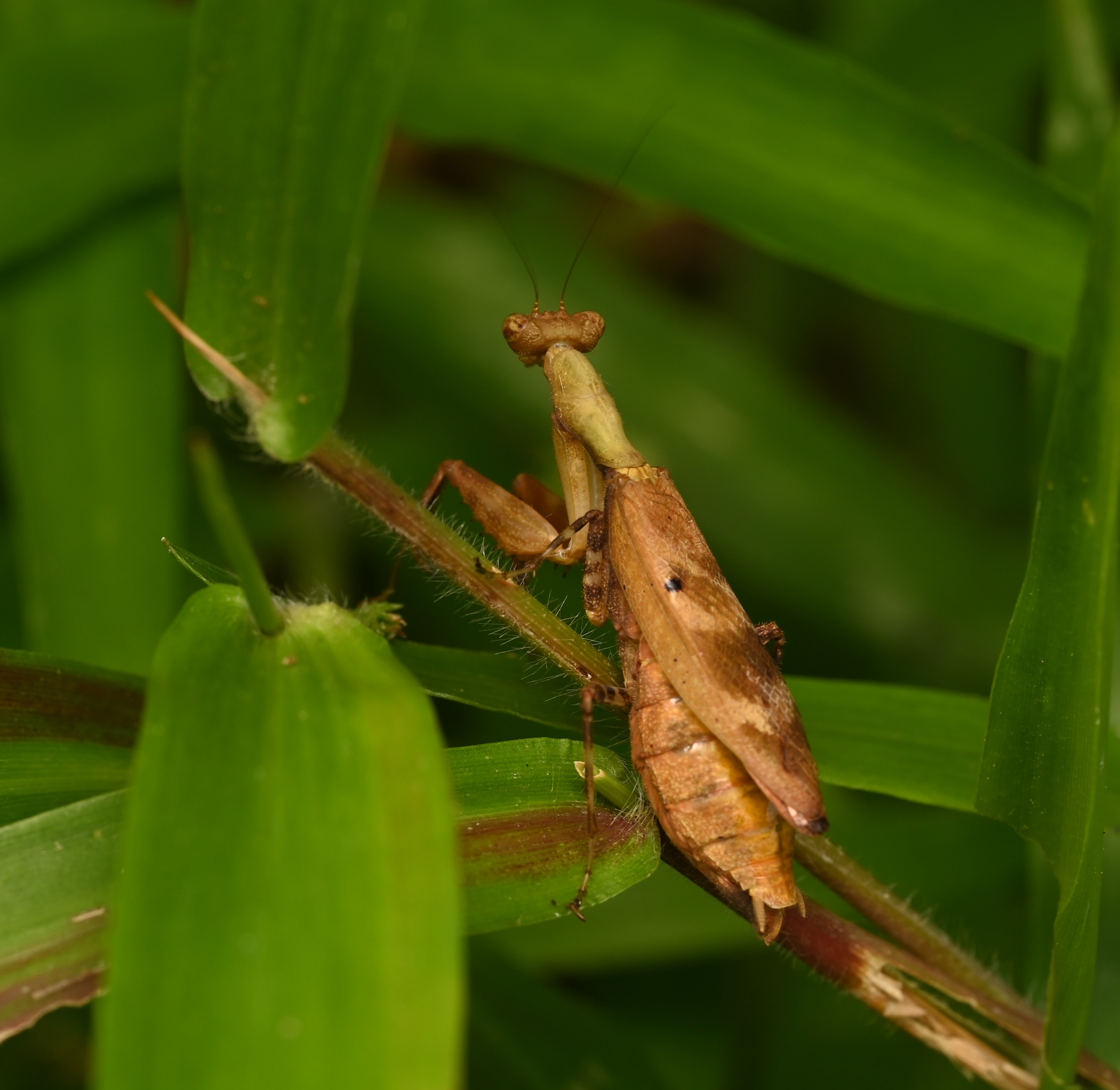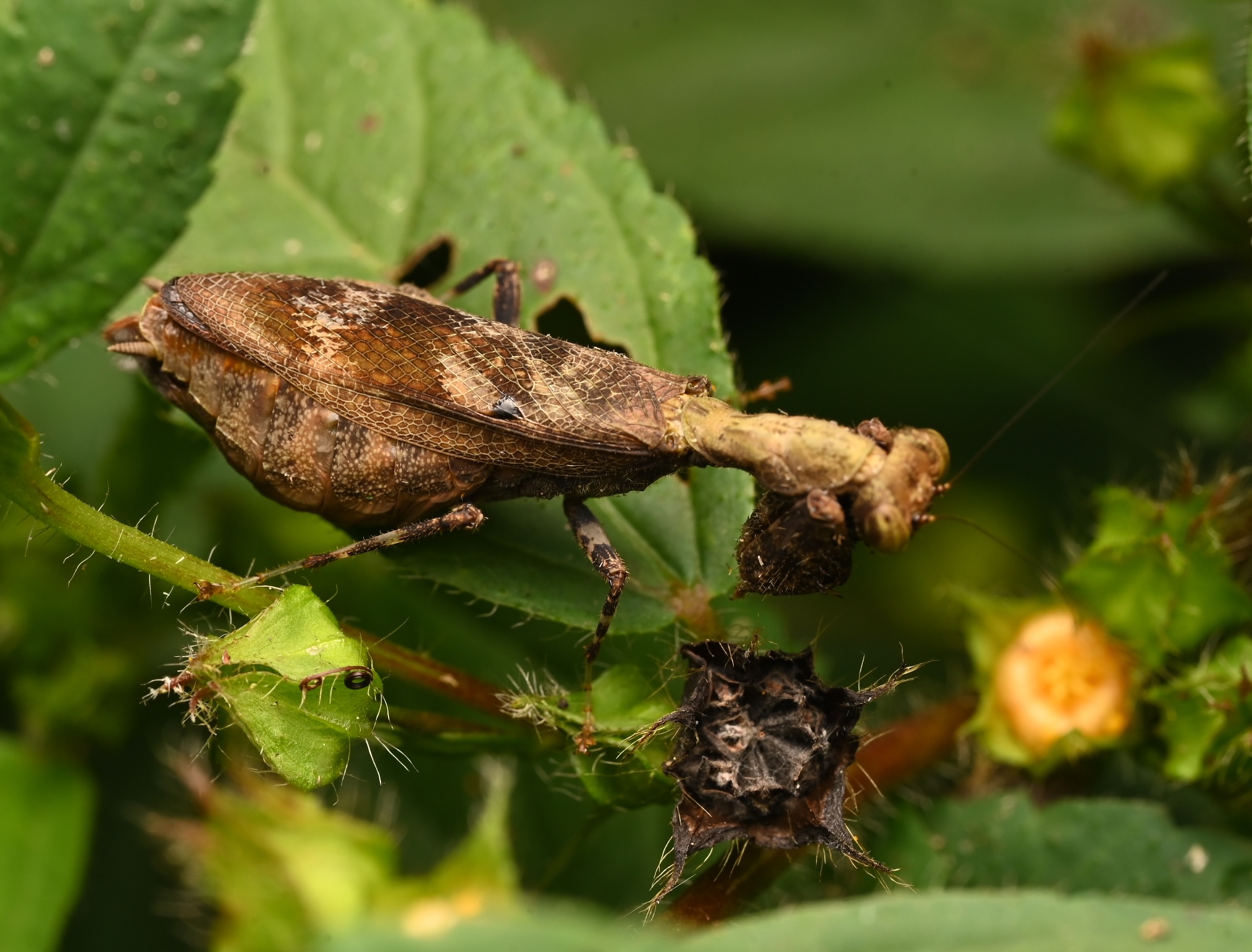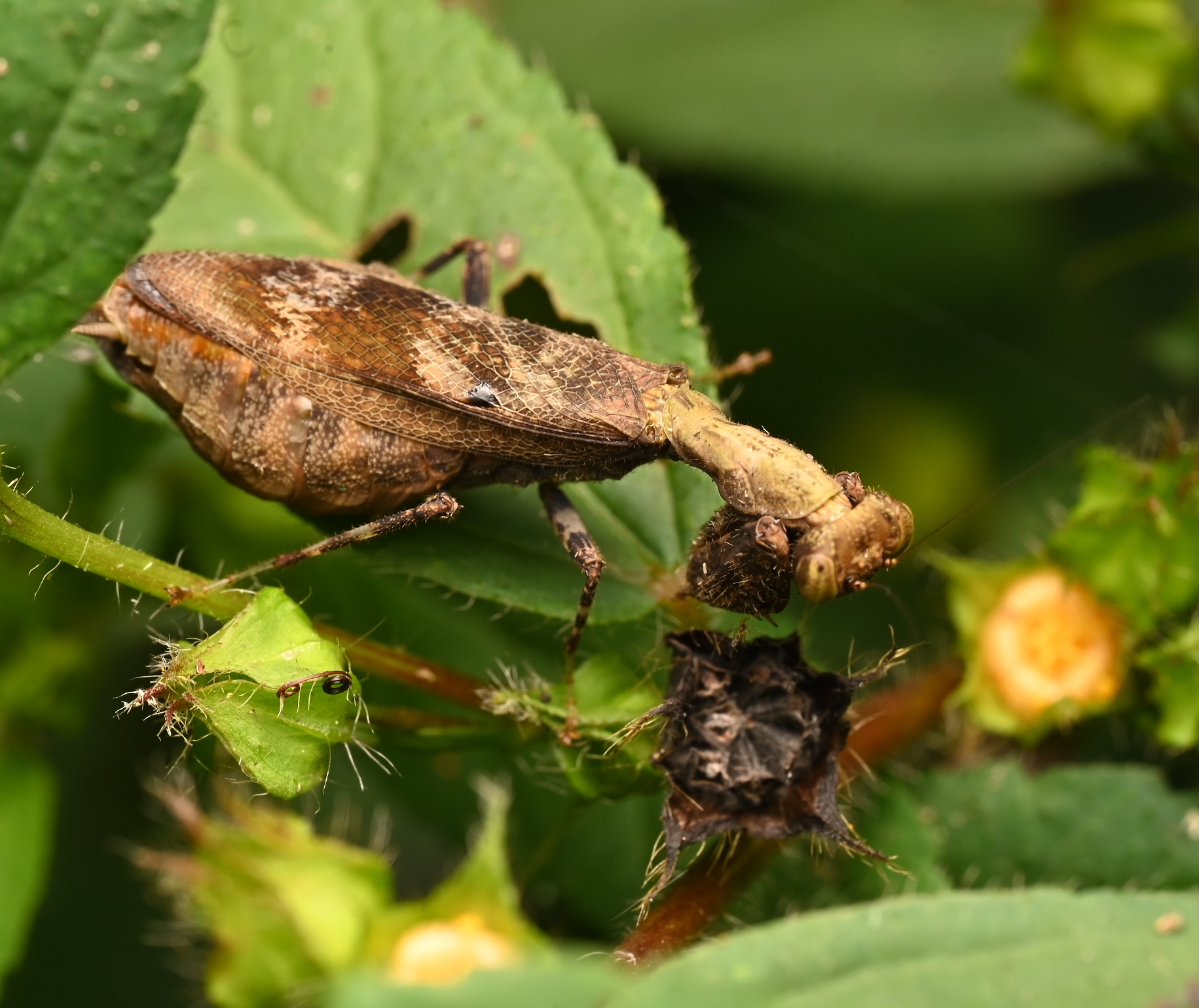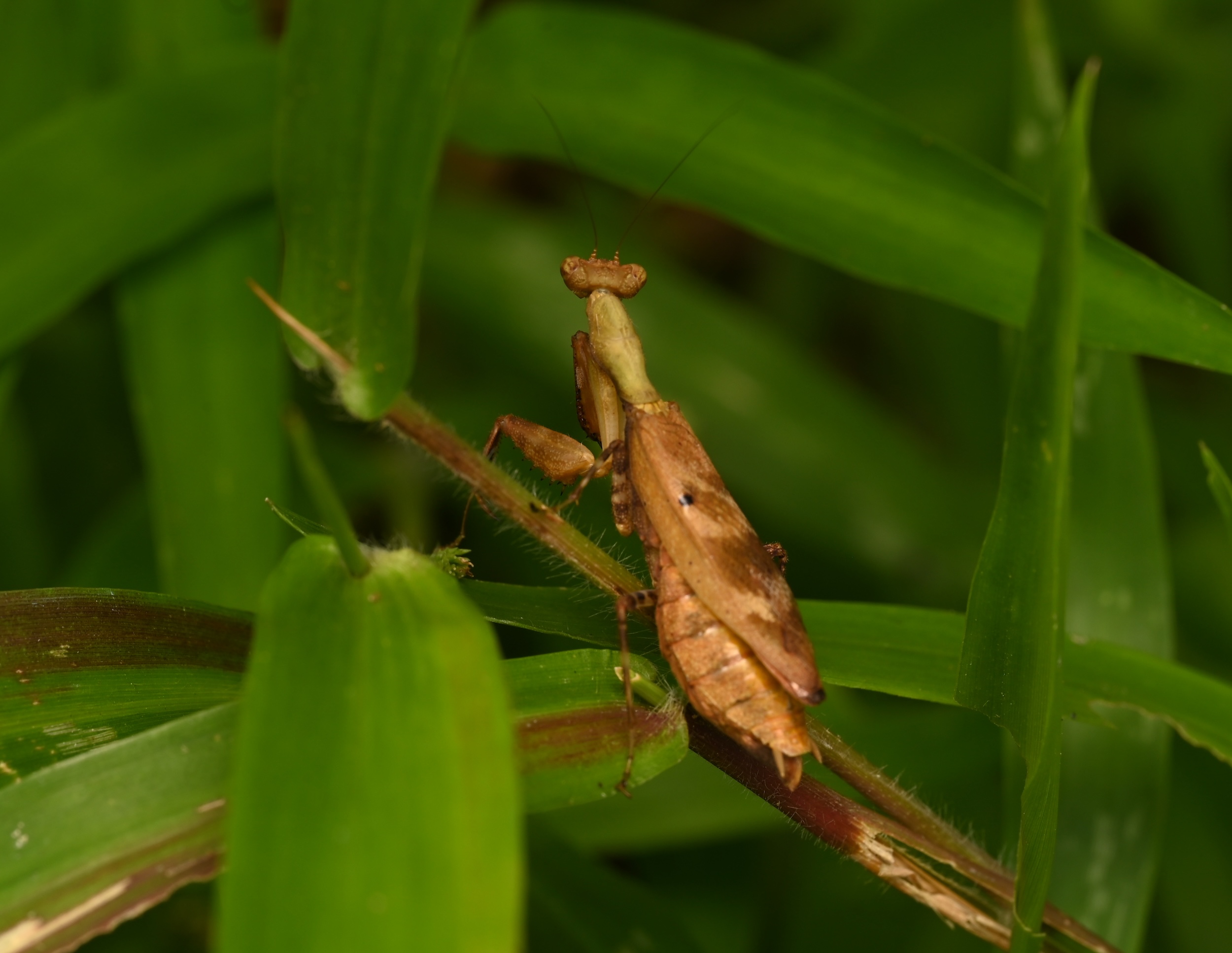
Praying mantises (family Mantidae) belong to the largest family within the mantis order (Mantodea), which historically contained only this single group before closely related families were recognized. Distributed worldwide across temperate and tropical habitats, most mantises are master ambush predators that feed strictly on live prey. They either camouflage themselves and remain perfectly stationary, waiting for an ambush, or stalk their prey with slow, stealthy movements. Fascinatingly, the foregut of some species extends the entire length of their body, allowing them to store food for later digestion—a major evolutionary advantage for an insect that feeds intermittently. I encountered an adult mantis with a large abdomen, belonging likely to the subtribe Acontistina, twice in the exact same spot within the protected forest of “La Perla” in Ecuador’s Santo Domingo province. Amazingly, these encounters happened exactly one year apart, on the last day of July in both 2024 and 2025. While a single adult mantis rarely lives long enough to span two different years, it was incredible to see consecutive generations of the exact same species claiming the very same prime hunting territory. 🙂