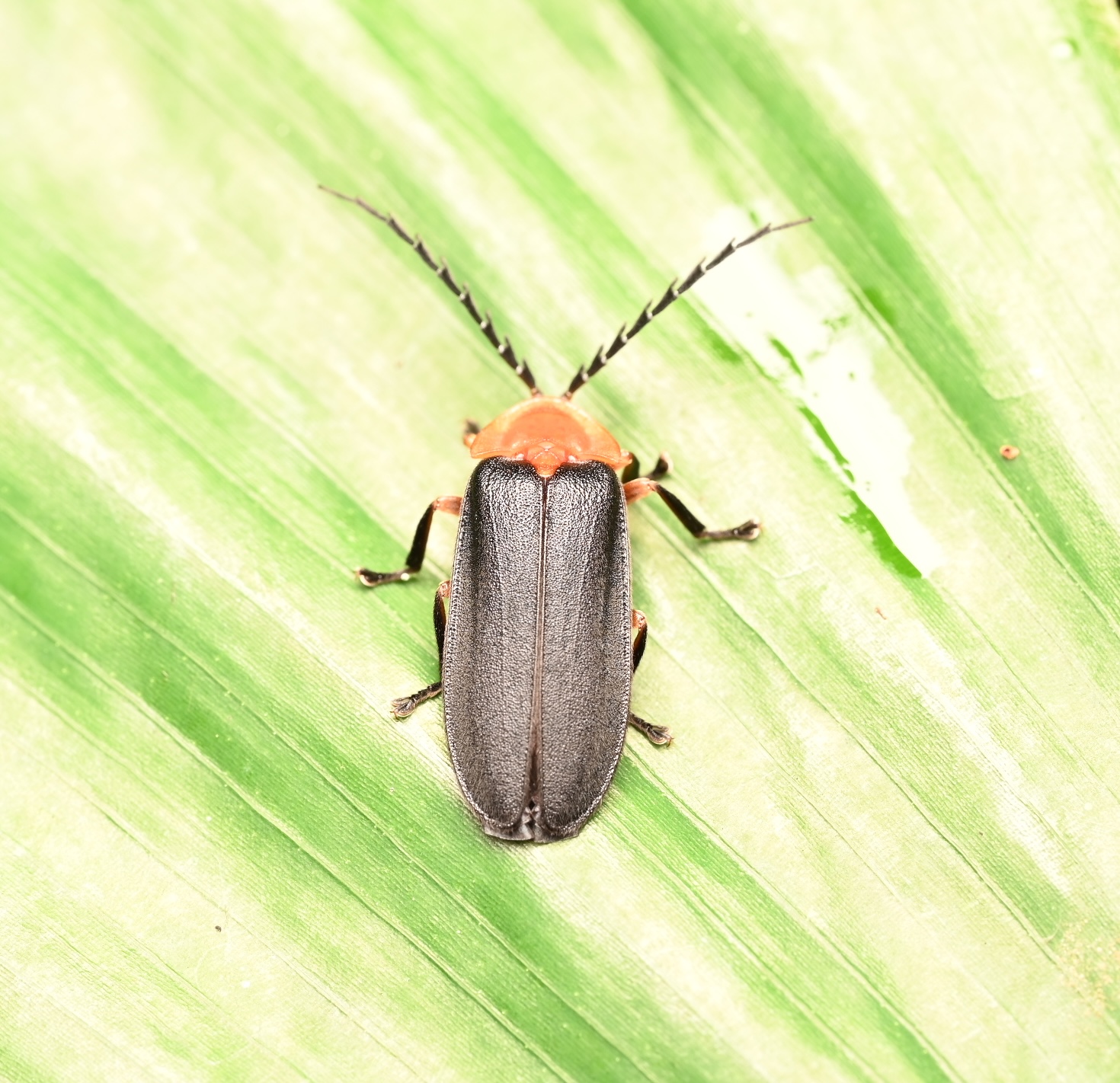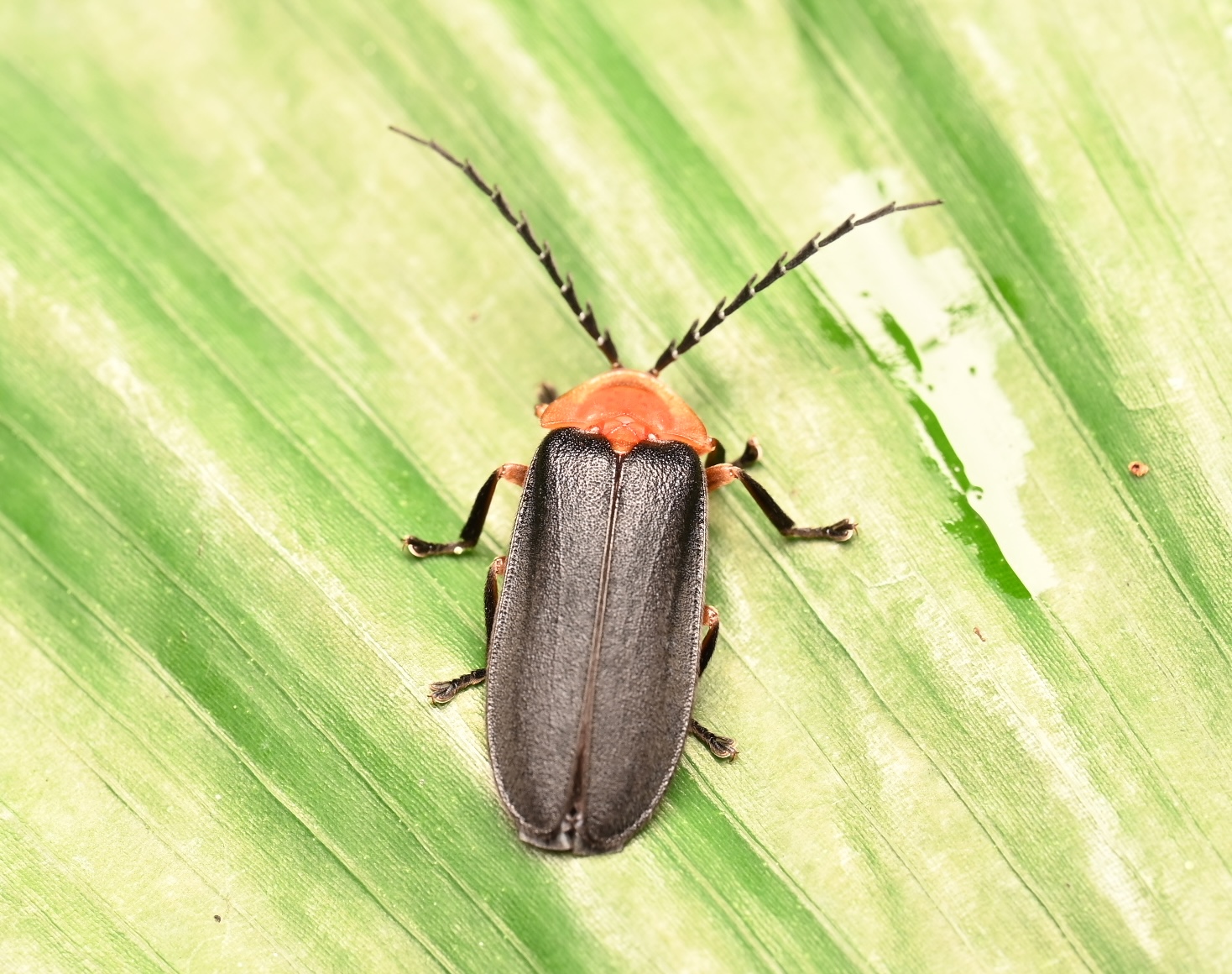
Fireflies (family Lampyridae) are famous for their ability to produce bioluminescence—a stunningly efficient “cold light.” Unlike a standard lightbulb, which wastes up to 90% of its energy as heat, the firefly’s chemical reaction loses virtually no heat at all, making it nearly 100% energy-efficient. They utilize this brilliant internal alchemy to communicate, ward off predators, and dance through the night. Specifically, males of the genus Photinus are renowned for emitting distinct yellow or greenish-yellow flash patterns while in flight to woo silent females waiting below. These radiant beetles thrive in high-humidity environments, making their homes in moist understories, rich leaf litter, and the lush edges of streams where dense, second-growth hardwood forests meet the clearing. I encountered this mesmerizing firefly in a city park in Puyo, Ecuador, a small town located just on the edge between the Andes mountain range and the Amazon forest.