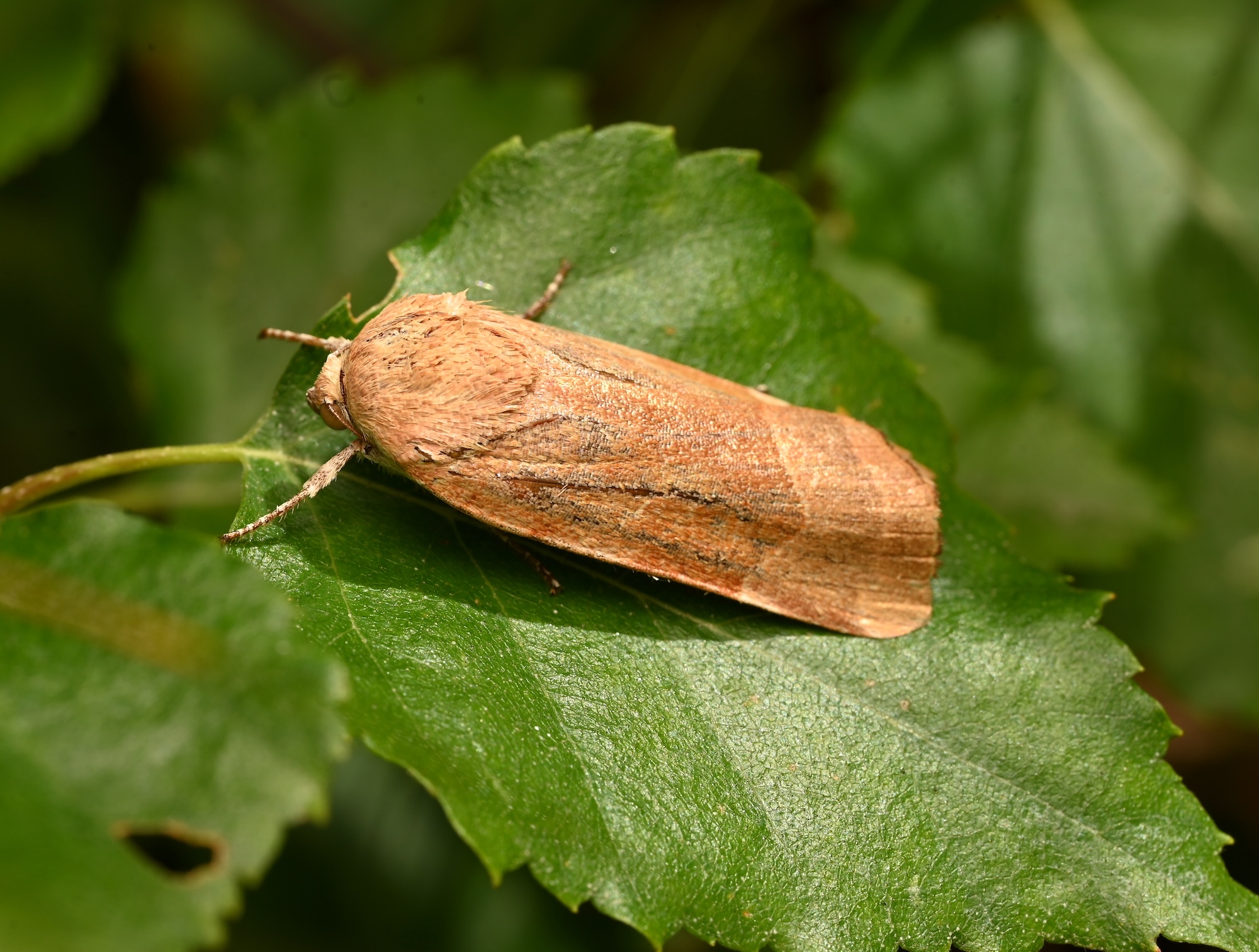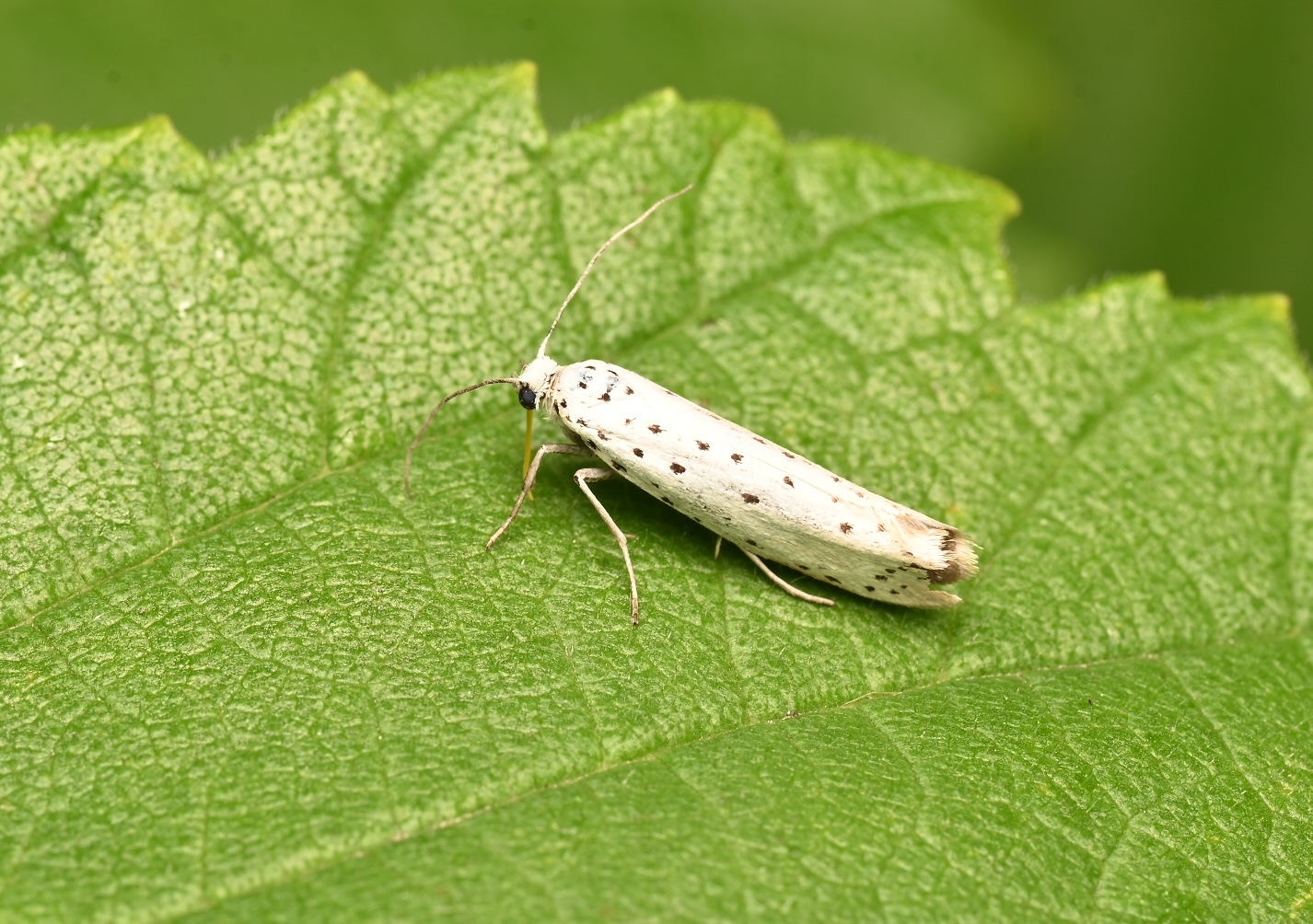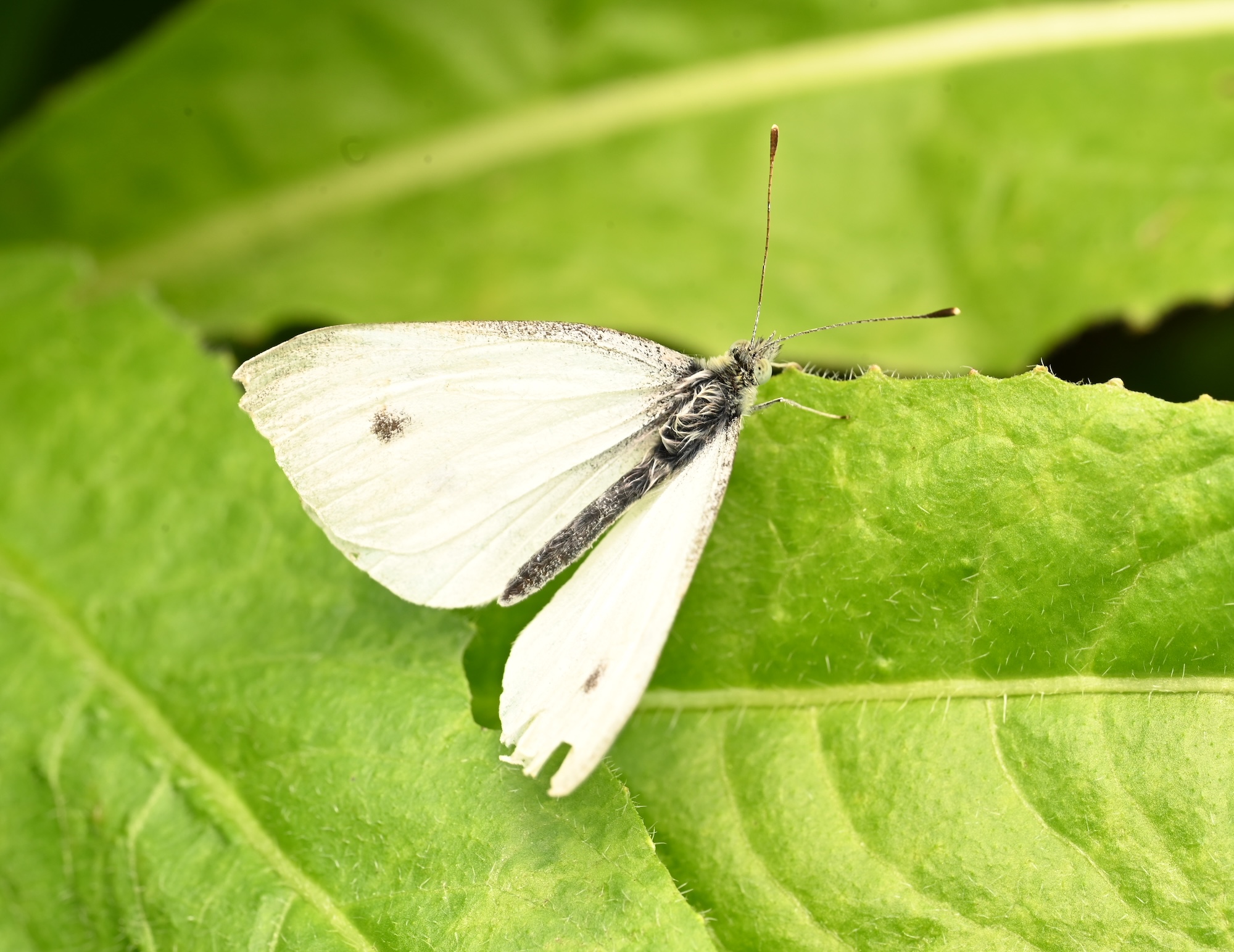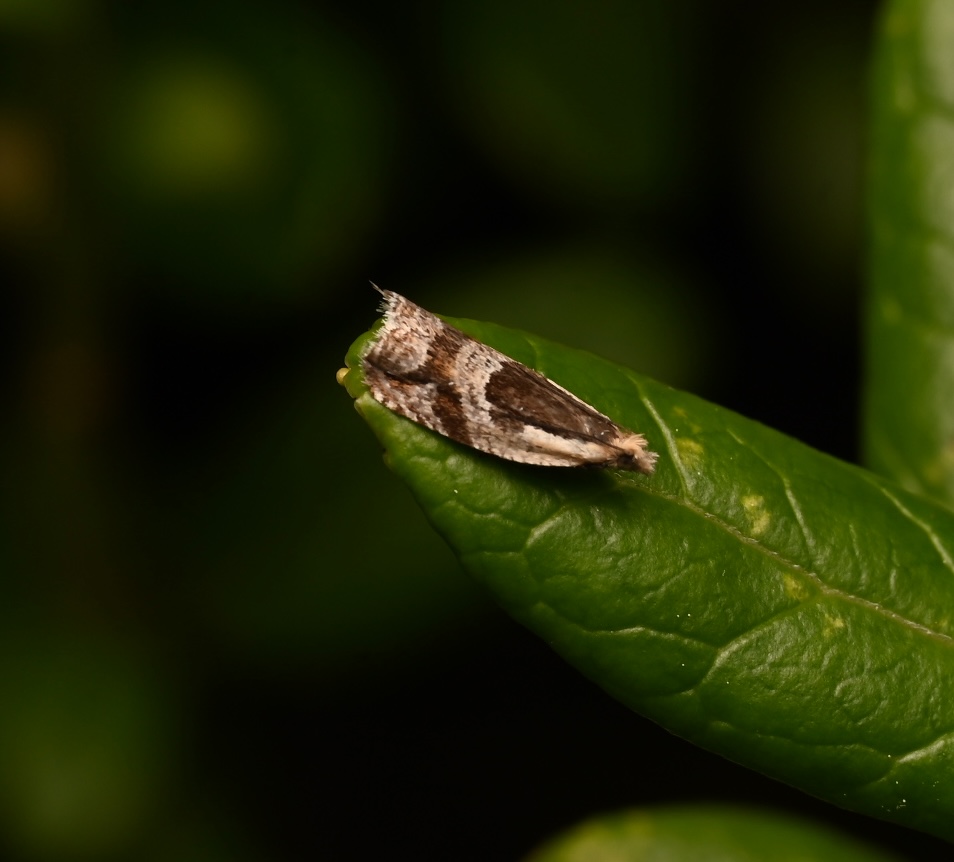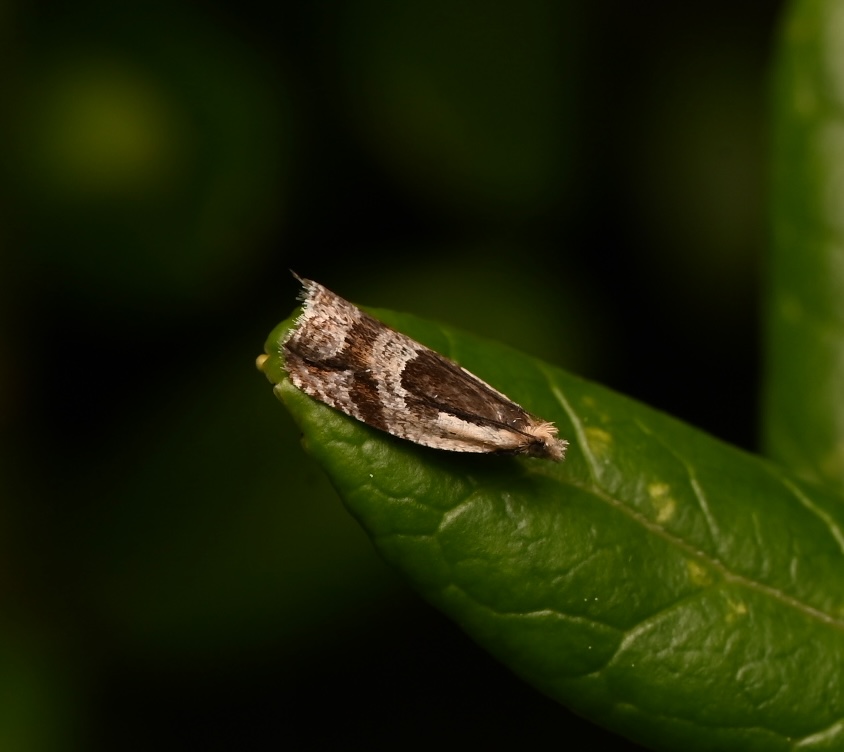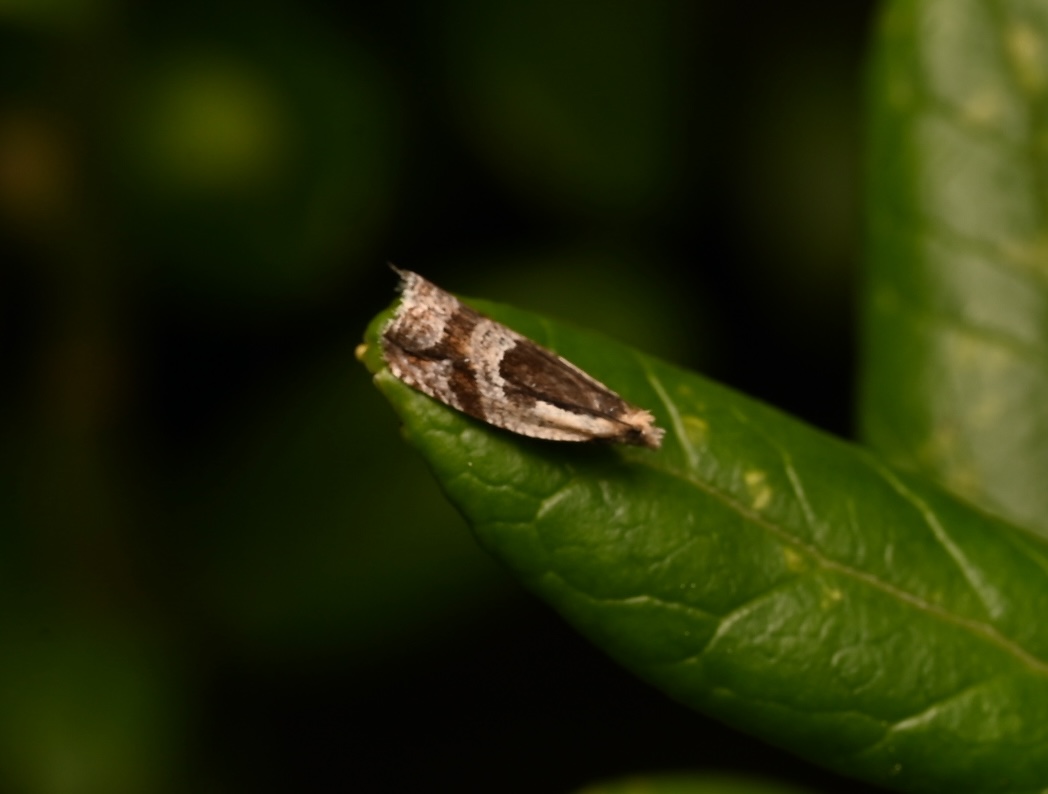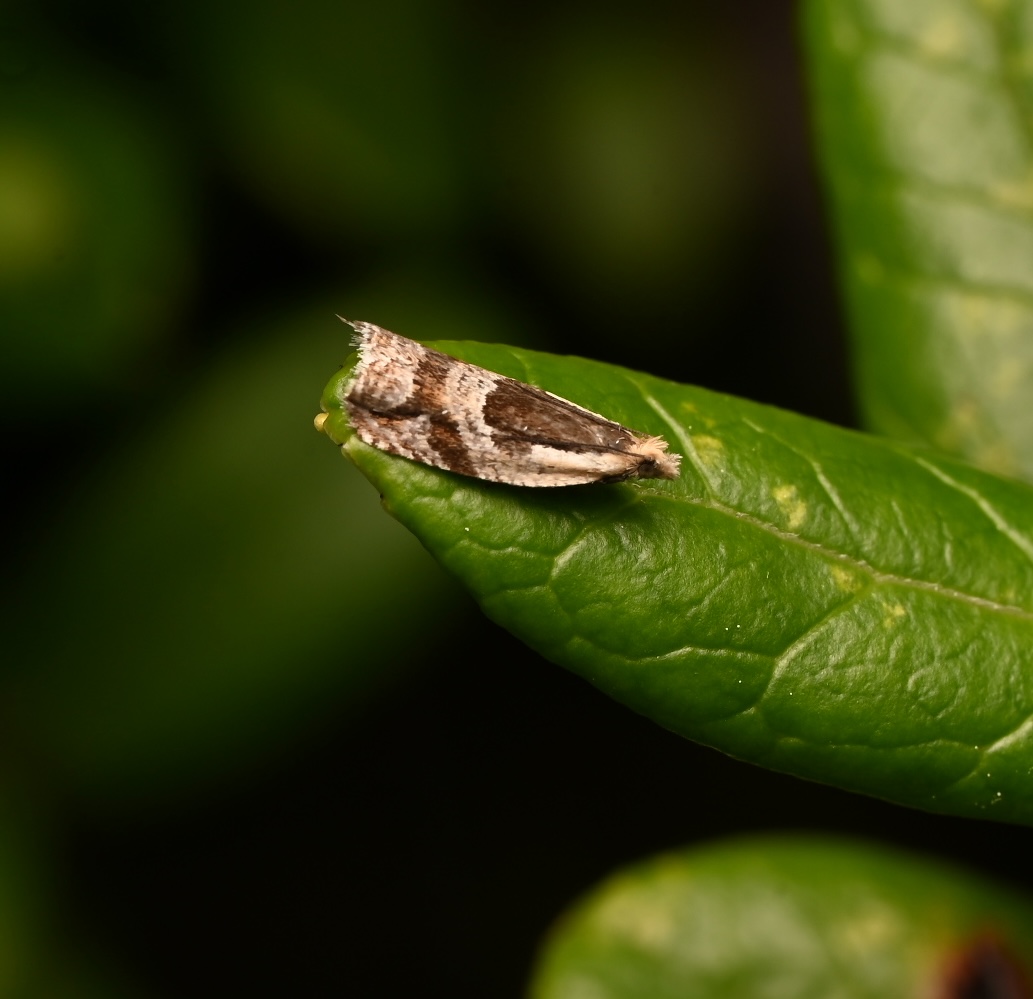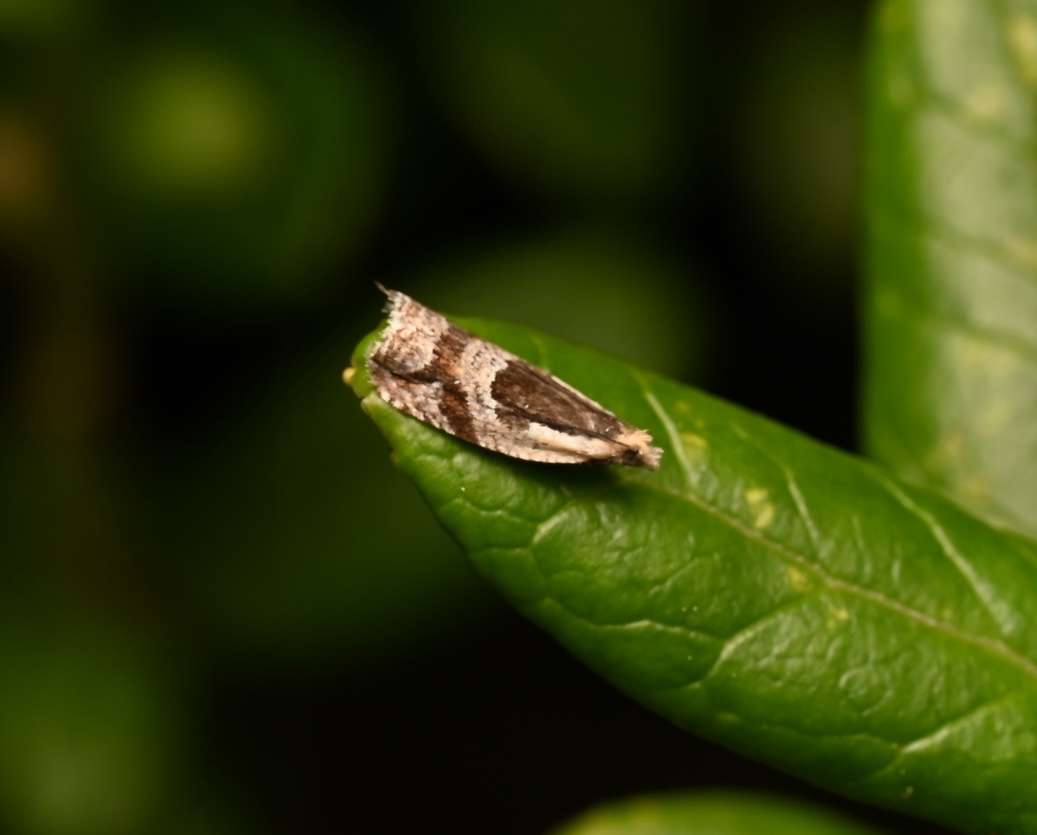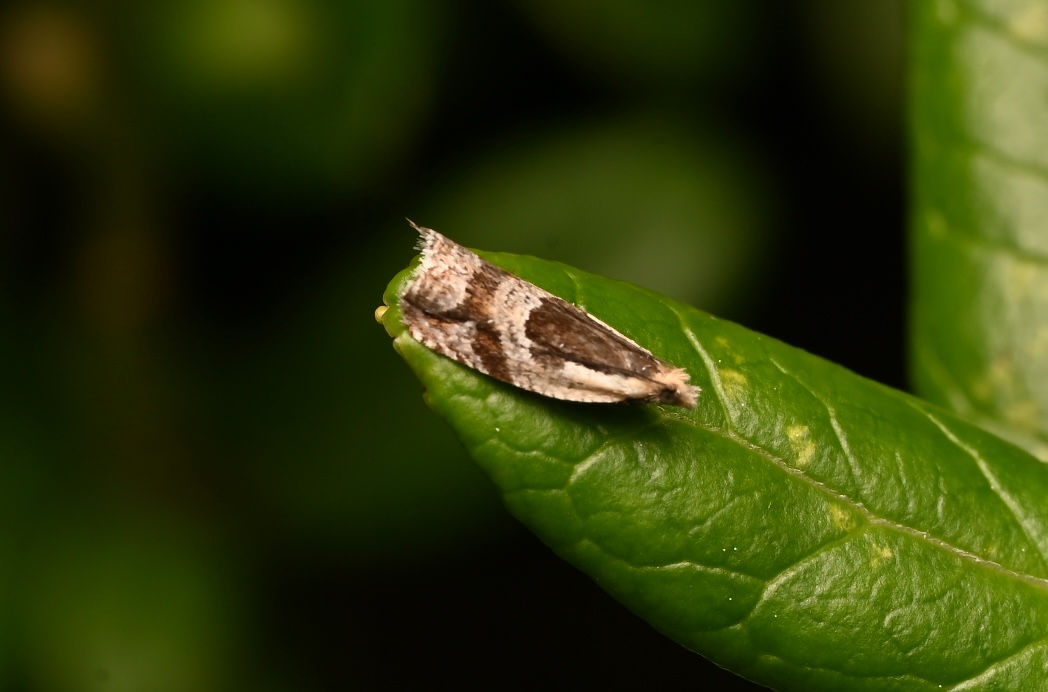
Meet the bilberry roller (Ancylis myrtillana), a master of disguise from the leaf-roller moth family (Tortricidae). Widespread across the Northern Hemisphere, this clever insect thrives in high moorlands and damp heaths. It is easily recognized by its specialized forewings, which feature distinctly curved, hook-like (falcate) tips. At rest, this unique shape allows the moth to mimic a dried, curled leaf, hiding in plain sight from hungry predators. As their name suggests, the larvae feed almost exclusively on bilberry (Vaccinium myrtillus) and bog bilberry (Vaccinium uliginosum). Using fine silken threads, the caterpillars fold, roll, and tie host leaves into tight, protective tubes, safely munching on the plant tissue from within. While warmer southern European climates can spur up to five generations a year, northern populations keep things brief with just one or two. I crossed paths with this cute little master of disguise resting quietly on forest foliage during a rest break on my cycling tour along the Baltic Sea in Sweden.