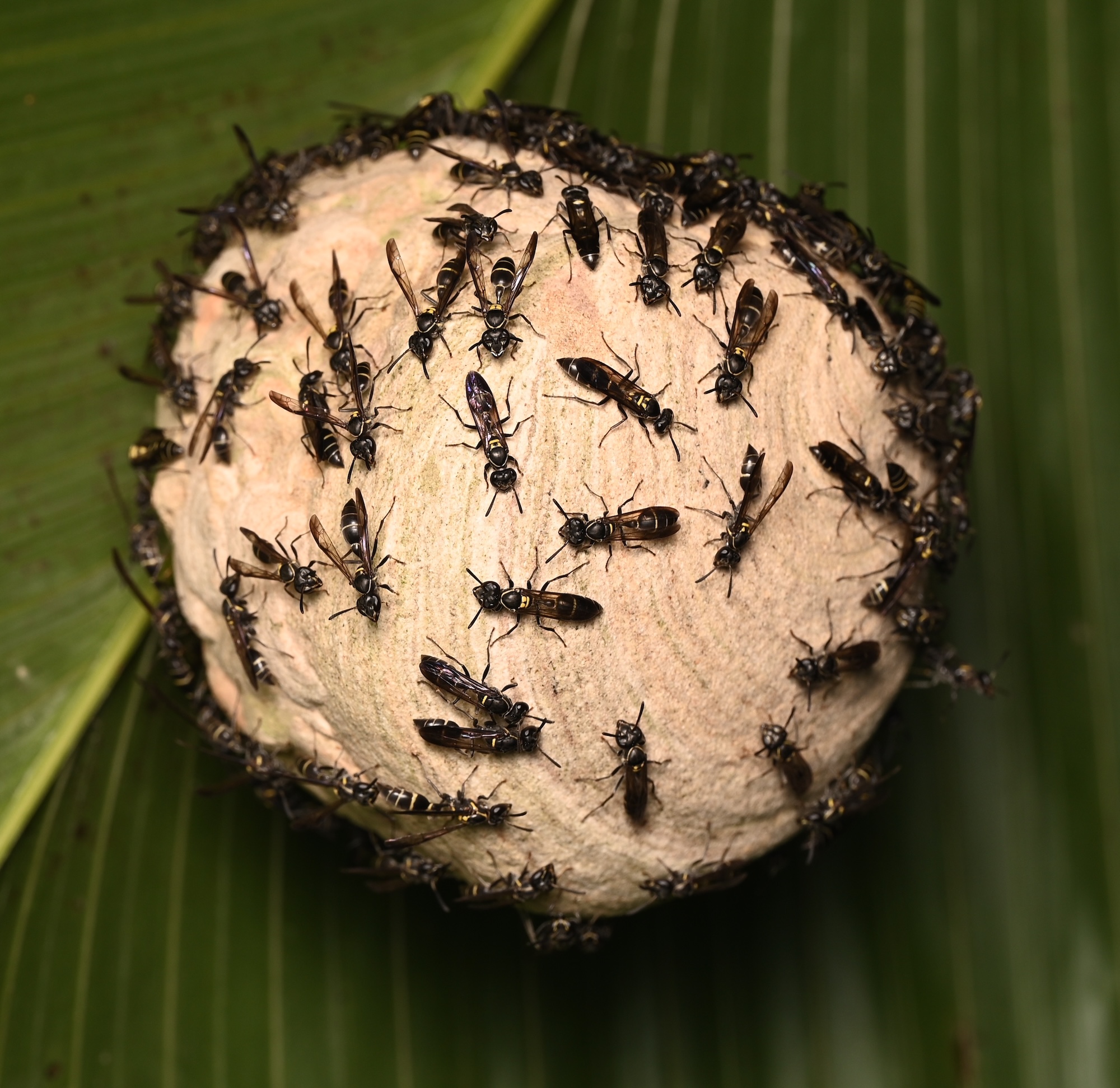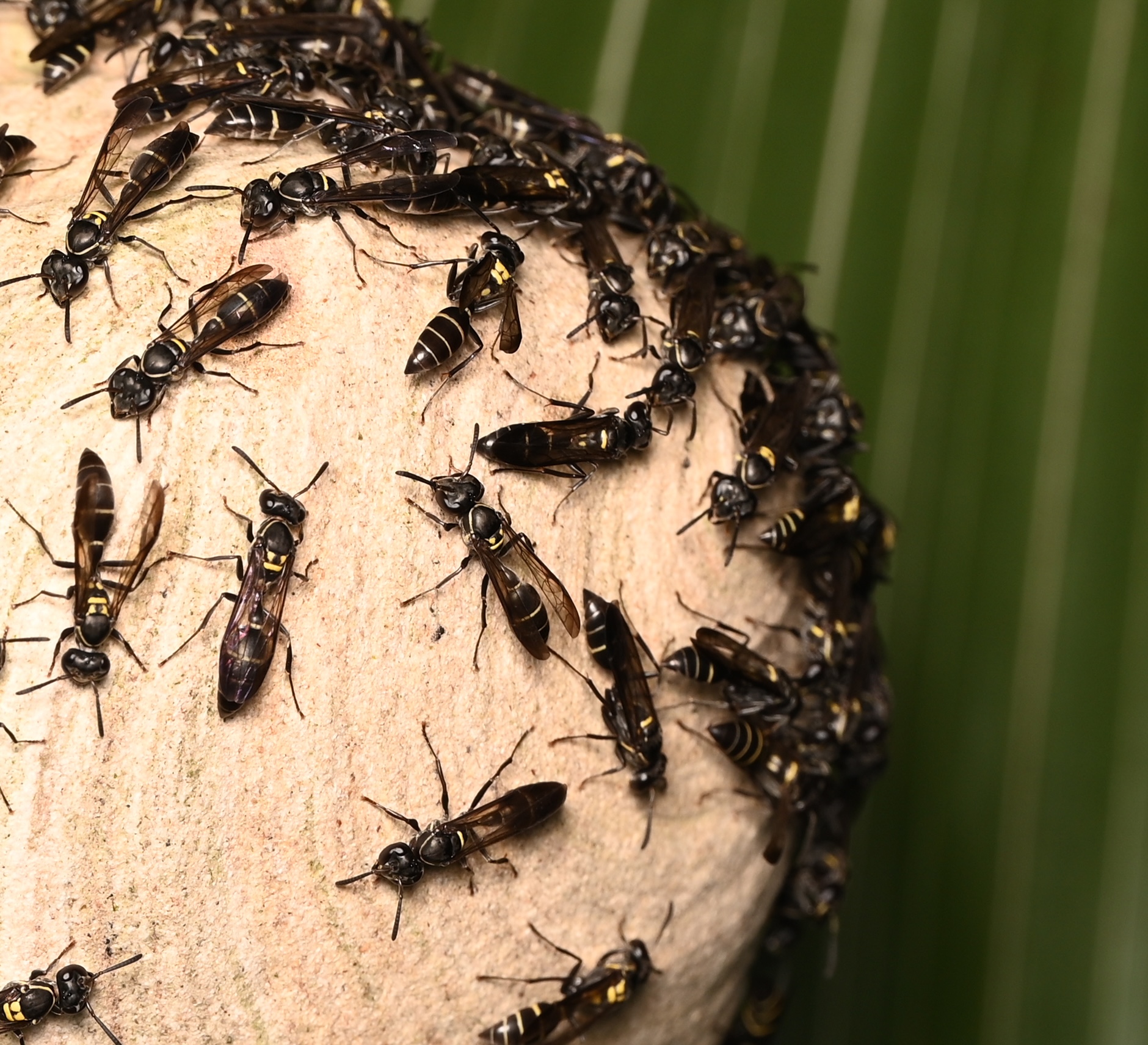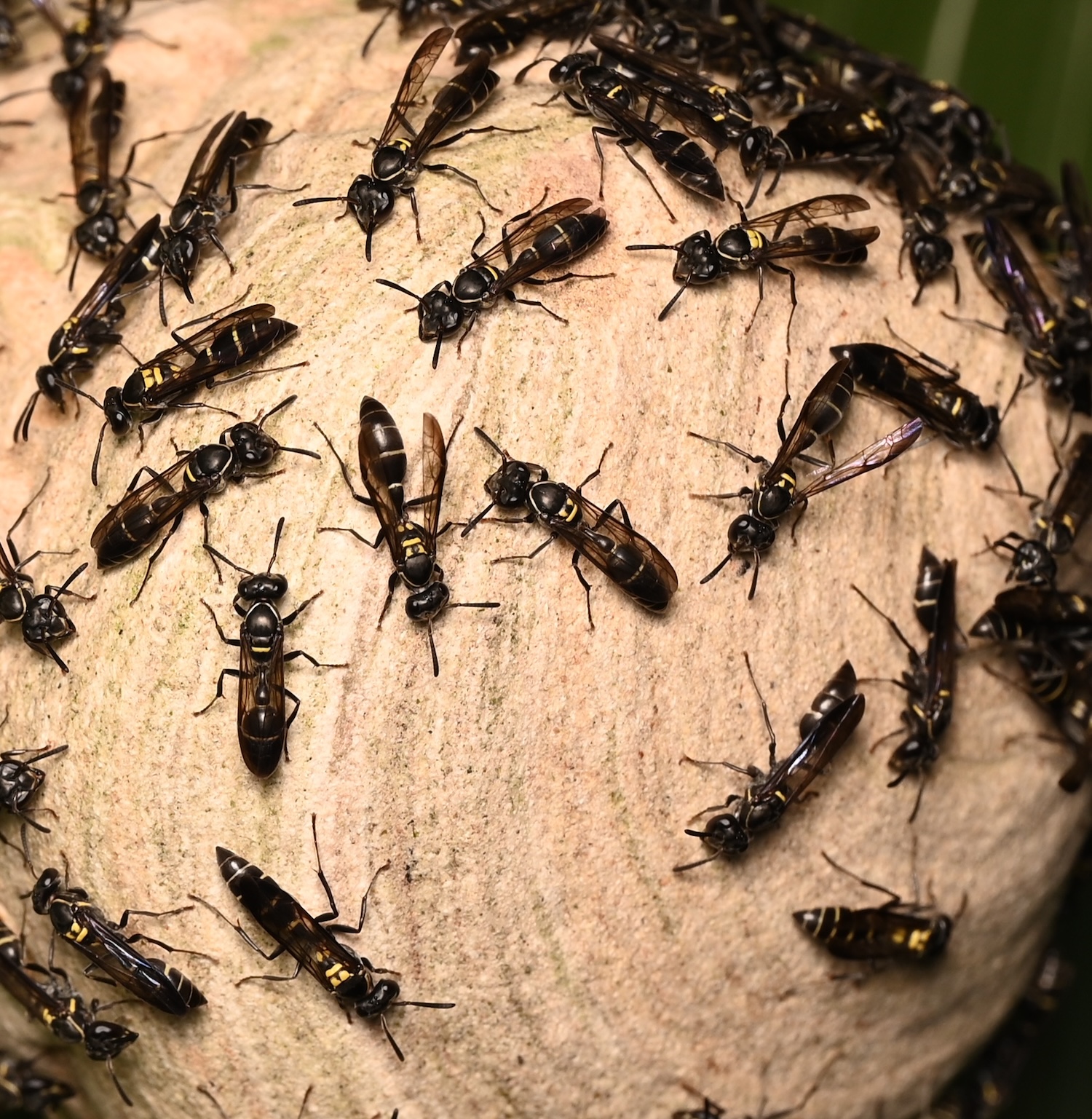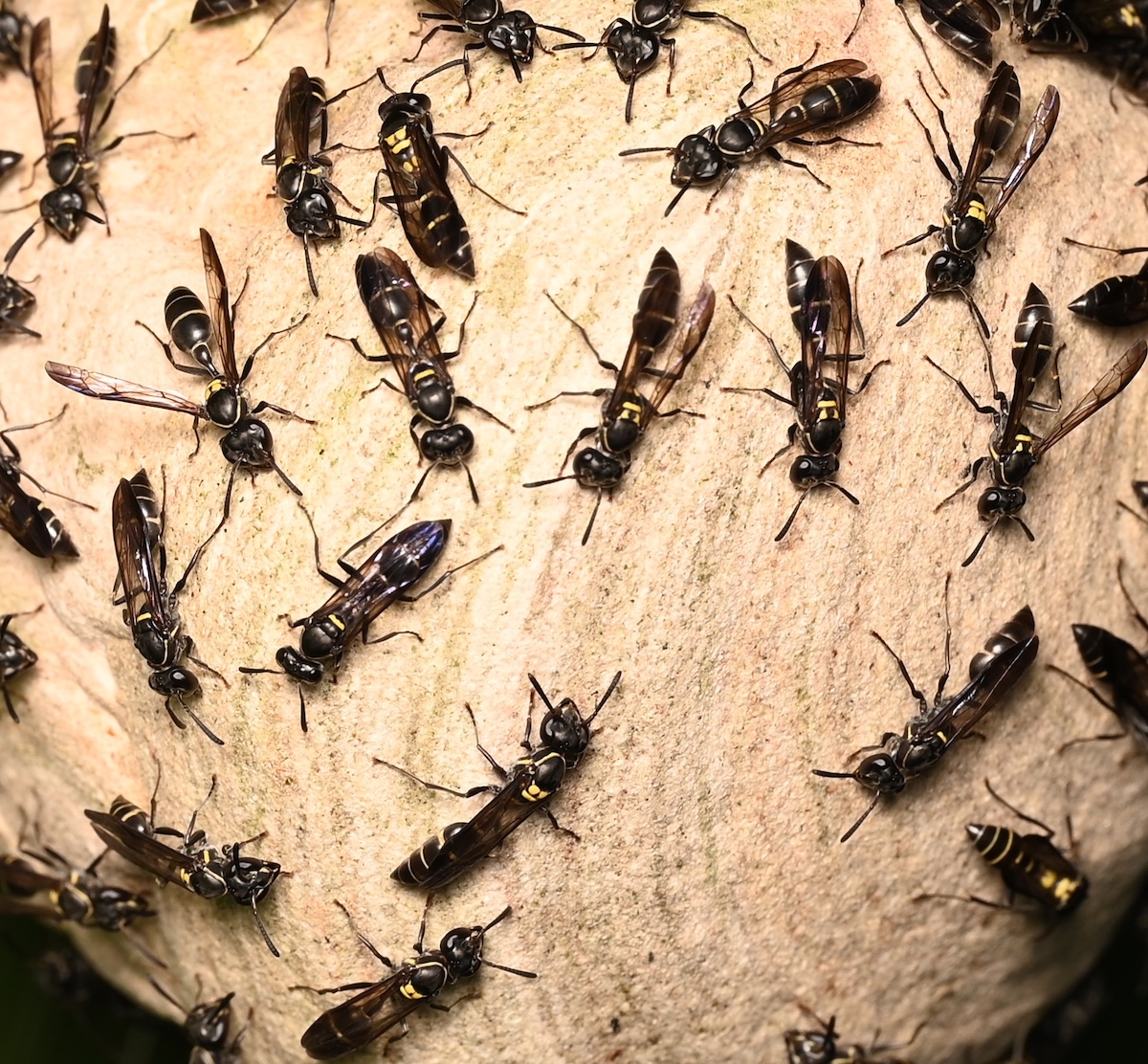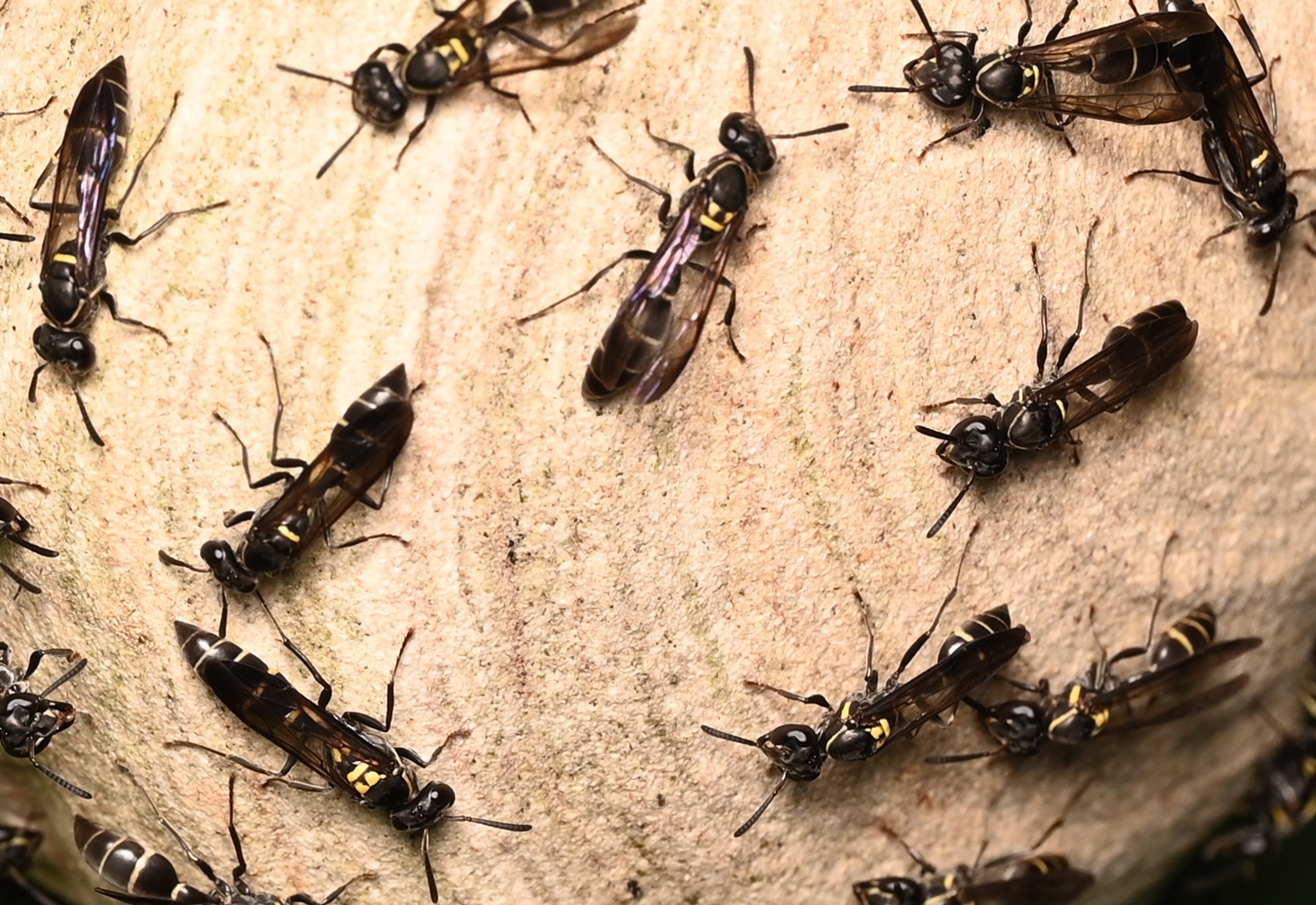
Paper wasps of the subgenus Myrapetra (genus Polybia) are highly advanced, swarm-founding insects found throughout Central and South America. During a walk in the protected forest of La Perla—a precious remnant of the primeval rainforest that once blanketed coastal Ecuador—I came across one of their nests hanging gracefully from a tree. Their homes are true architectural marvels: ultra-light yet remarkably resilient fortresses built from chewed wood pulp mixed with water. Inside, multiple stacked brood combs are sheltered within a thick, insulating paper envelope. Surprisingly, the body patterns of these wasps can vary significantly among individuals from the exact same nest, reflecting their different roles within the colony. Their emergency protocols are equally genius. If a predator or a brutal jungle storm destroys their home, the displaced swarm clusters together on nearby foliage. To launch a relocation, scout wasps that have found a new site communicate by forcefully bumping into inactive nestmates. This physical nudging escalates until the entire colony takes flight, following a freshly laid pheromone trail directly to their new home.