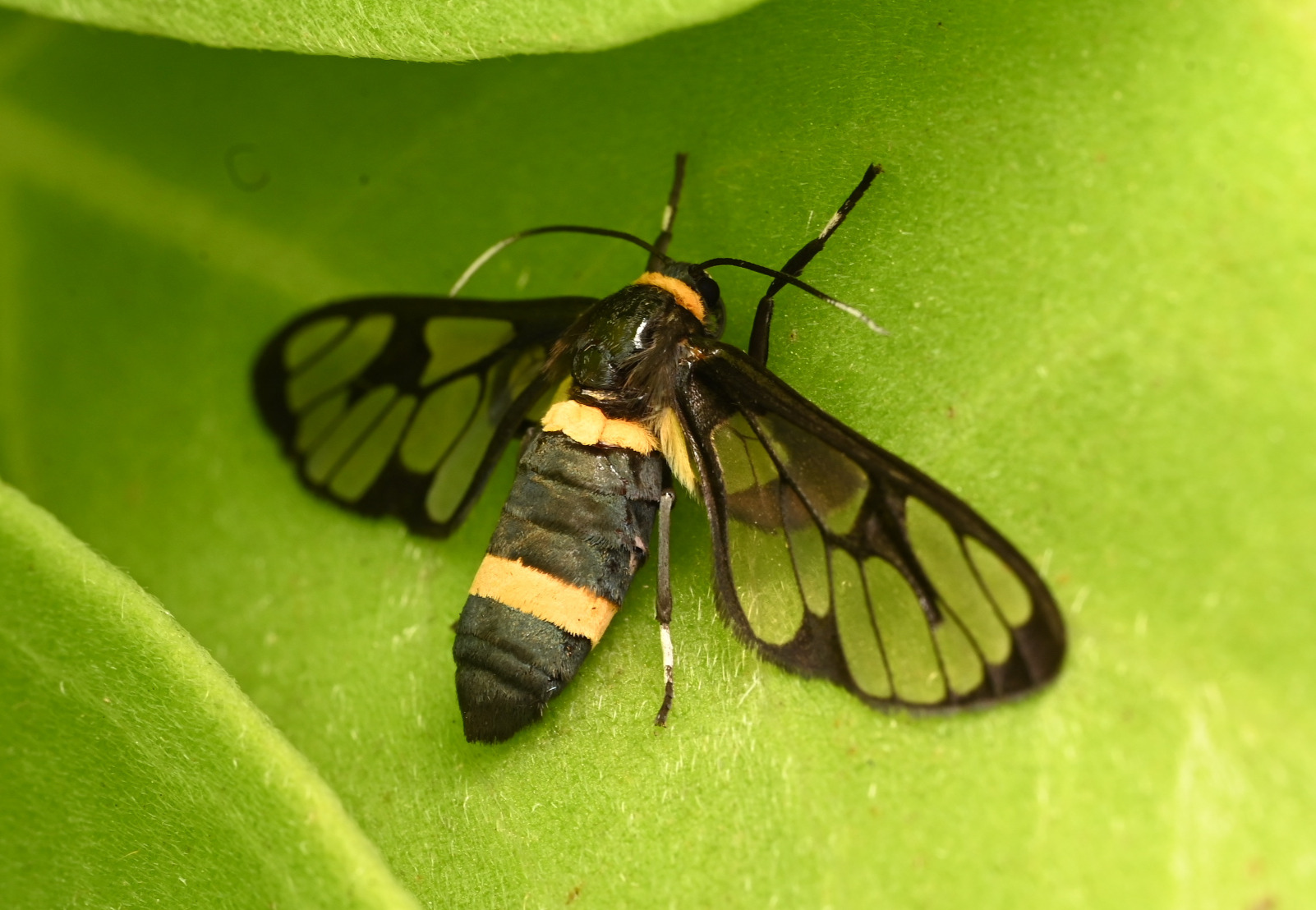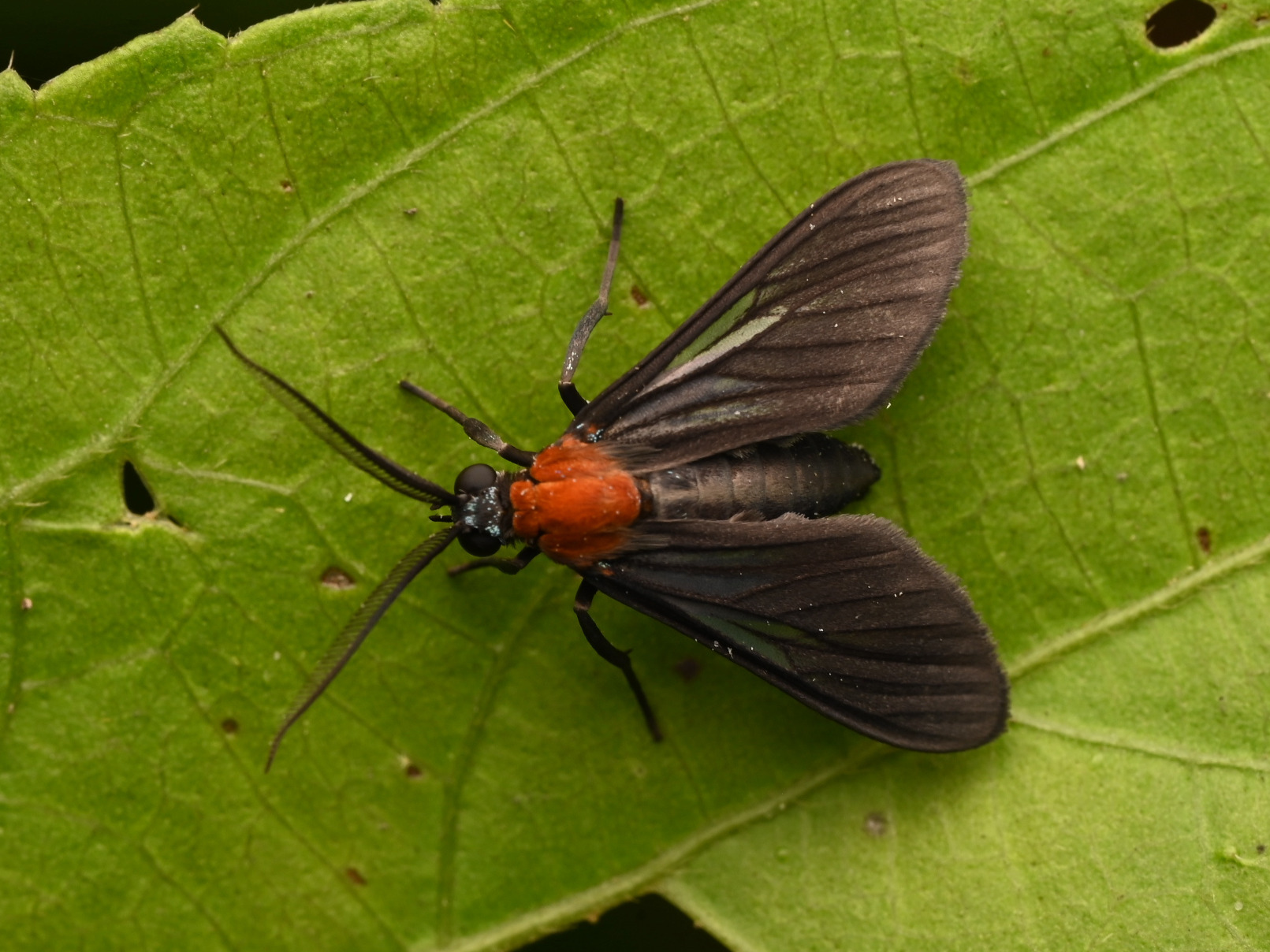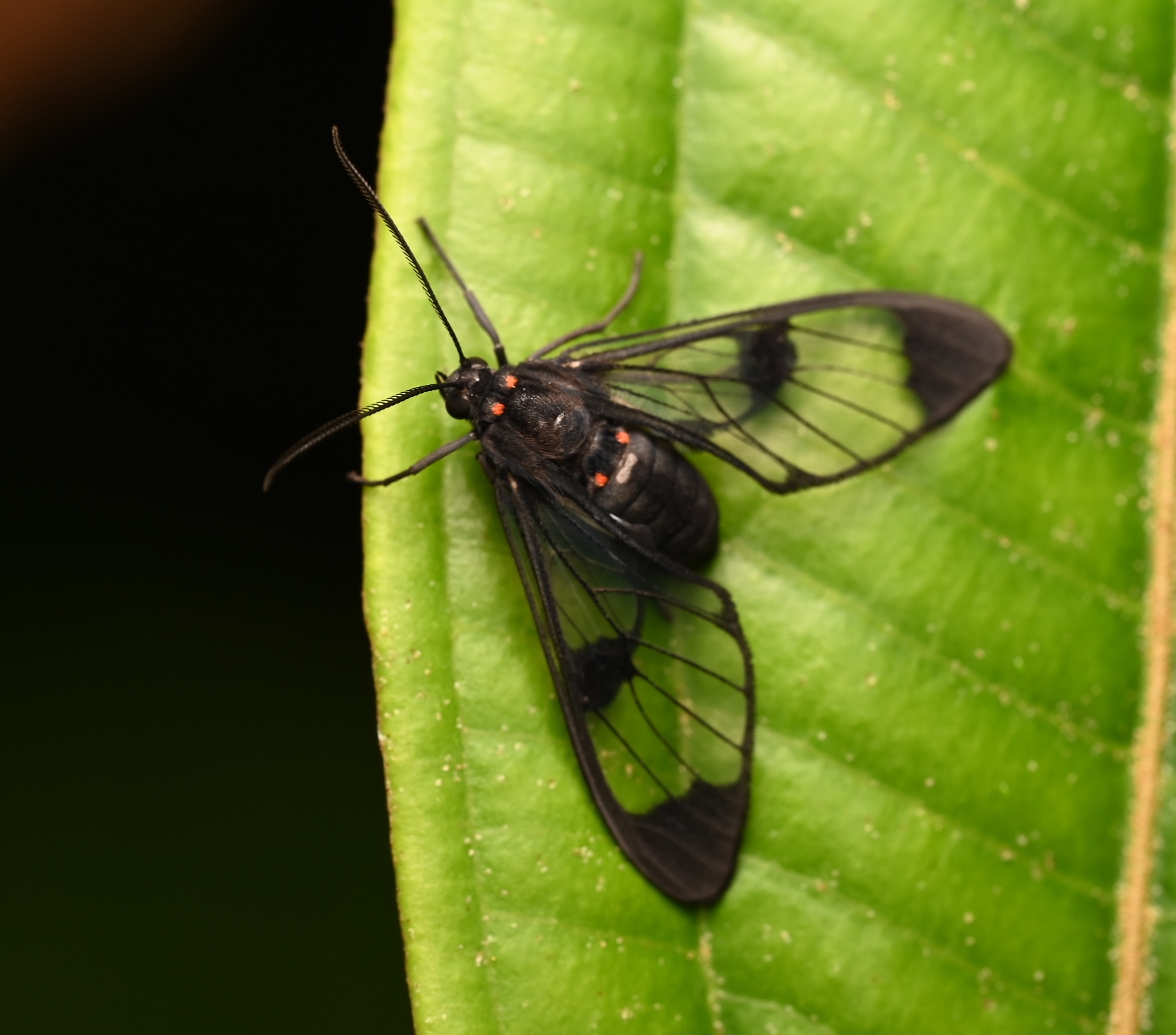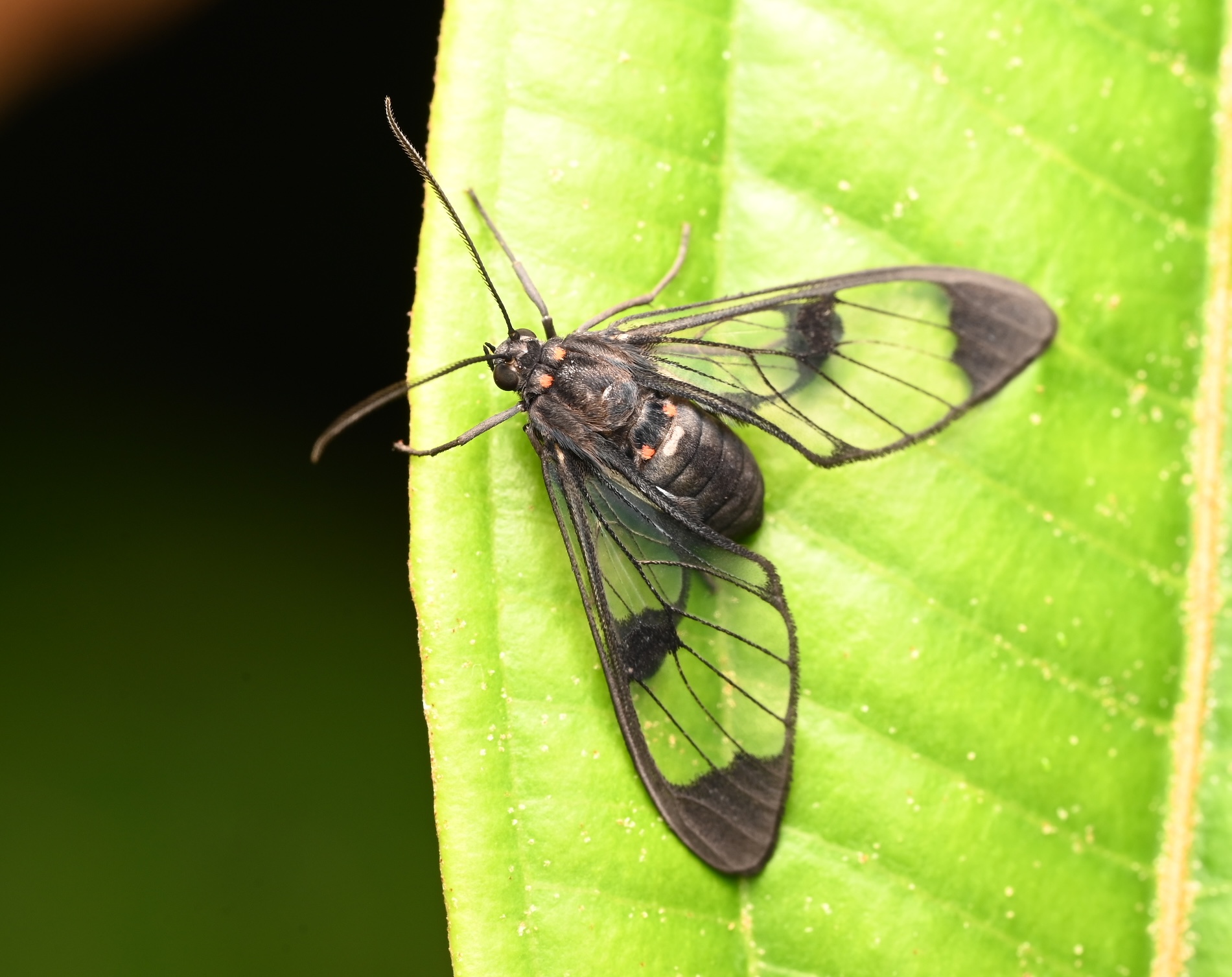
Planusuncus is a newly established genus of Neotropical tiger moths (Erebidae: Arctiinae) designated in 2023 to accommodate several species previously classified under Cosmosoma and Saurita. Belonging to the subtribe Euchromiina, these moths are renowned for their vivid, wasp-mimicking appearances and complex chemical defenses. Their caterpillars purposefully ingest plant toxins like pyrrolizidine alkaloids or cardenolides, storing them in their tissues to deter predators. As adults, they go a step further through a behavior known as “drug-feeding”—actively seeking out withered plants to lap up pyrrolizidine alkaloids. They use these compounds not for nutrition, but to synthesize defensive scents and reproductive pheromones. Alongside this, adults visit flowers for nectar and engage in “puddling” on wet soil or decaying vegetation to absorb minerals. I found this discreetly coloured moth resting on a tree during a visit to a city park in Puyo, a small town right on the edge of the Amazon rainforest.