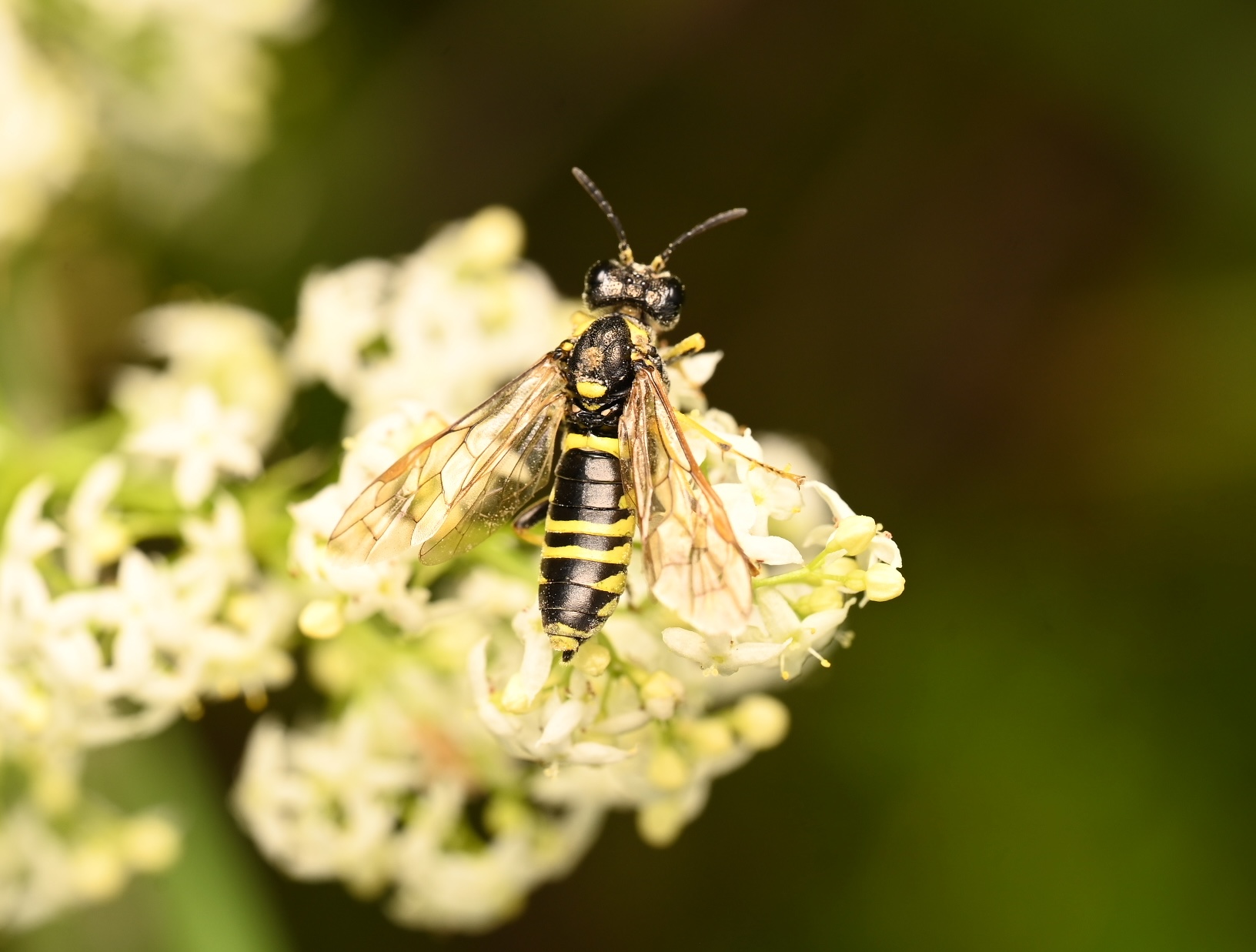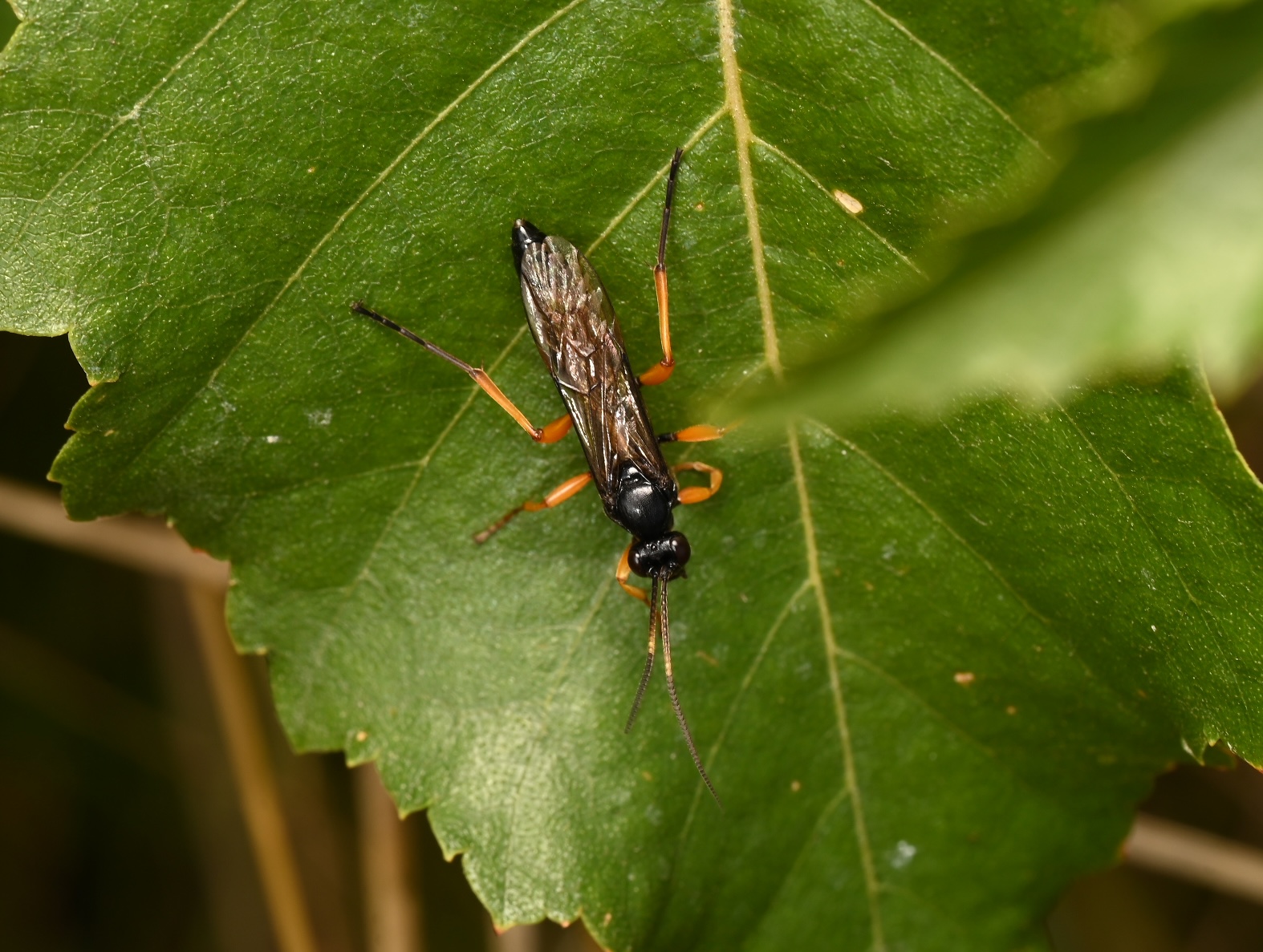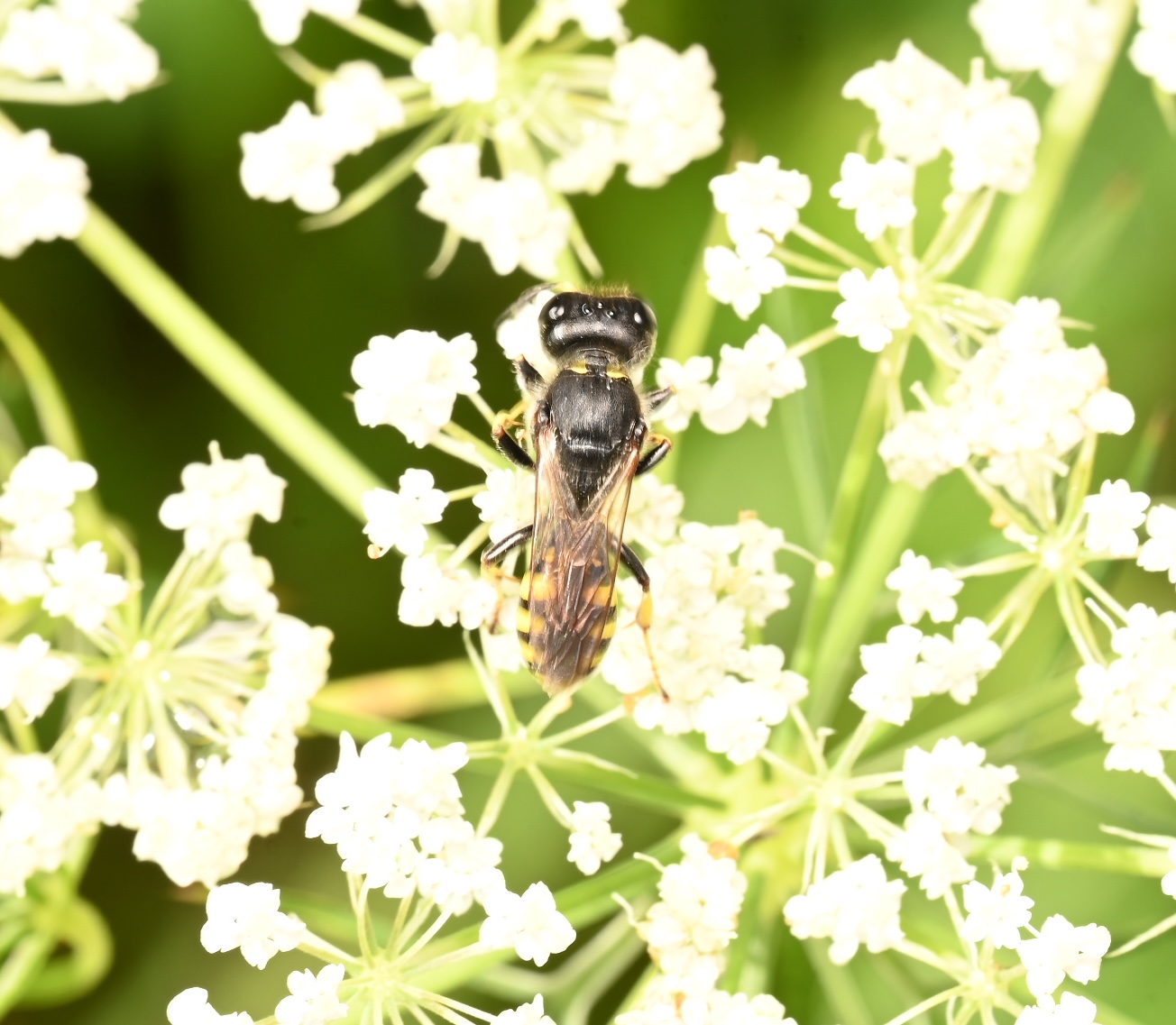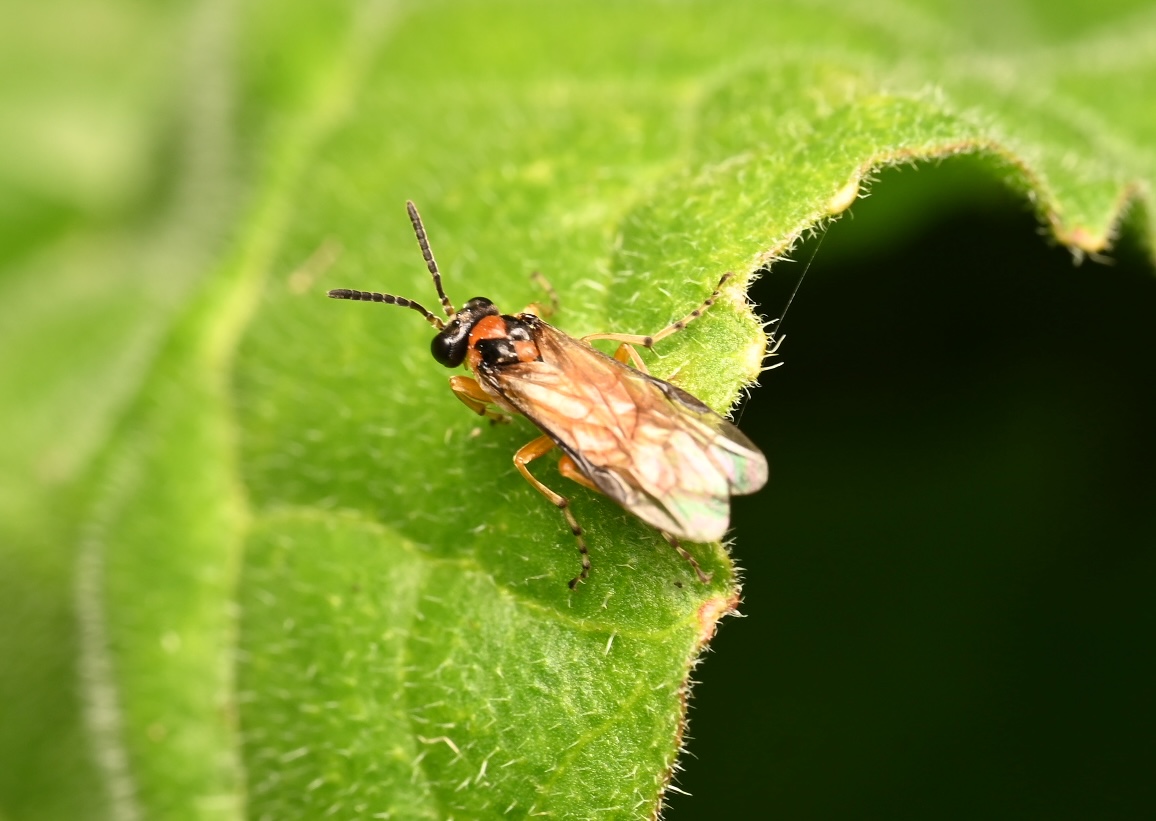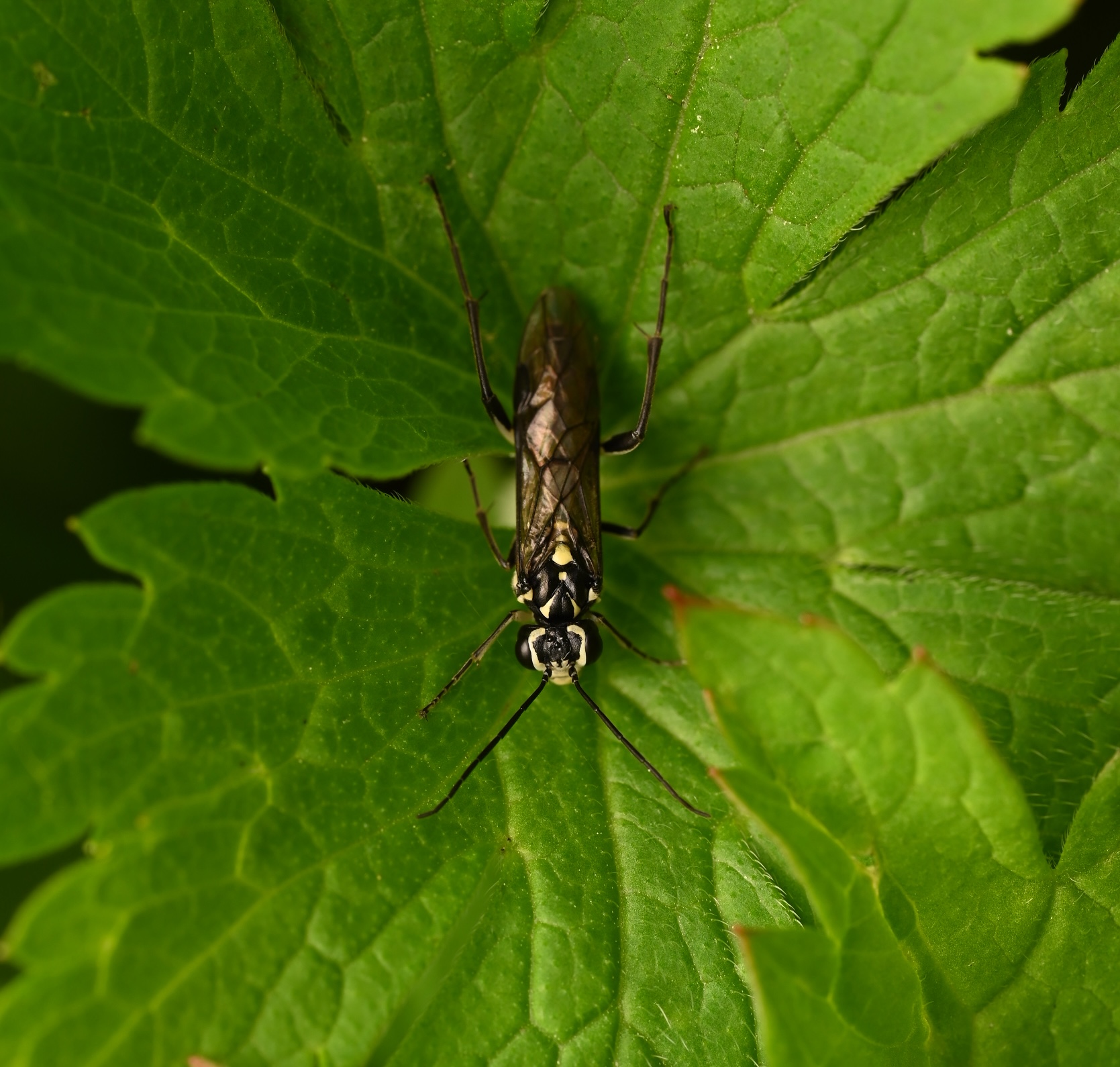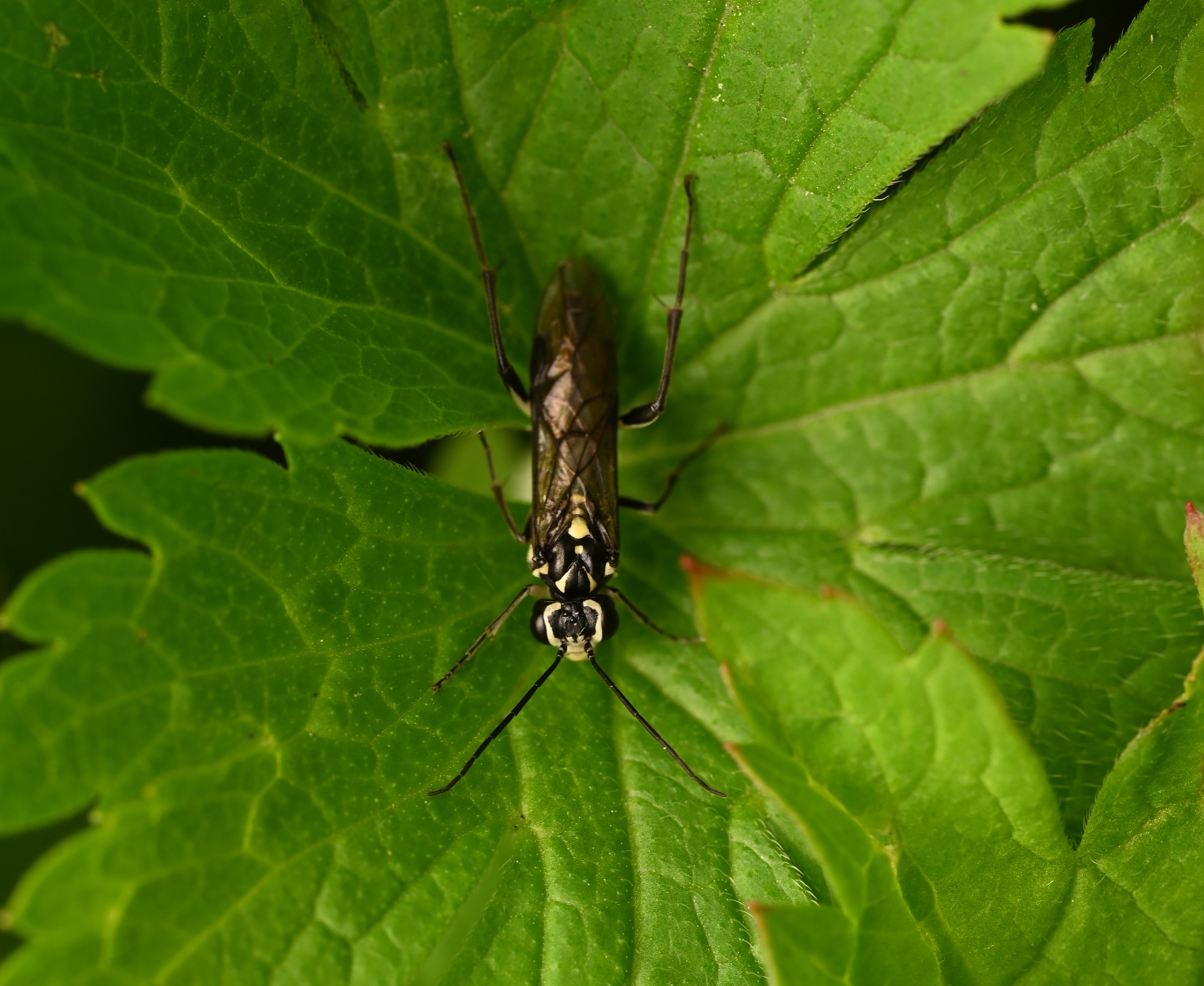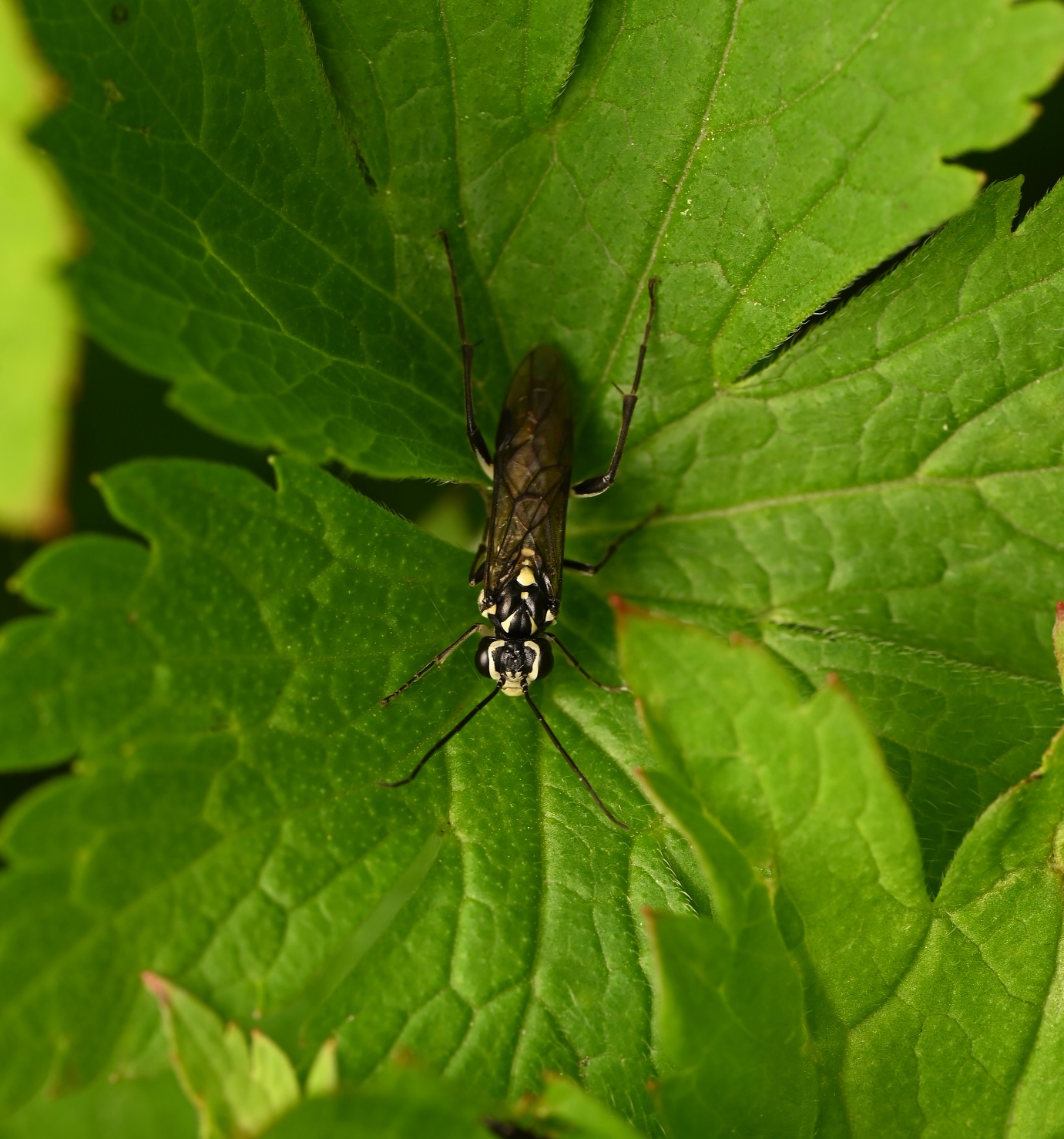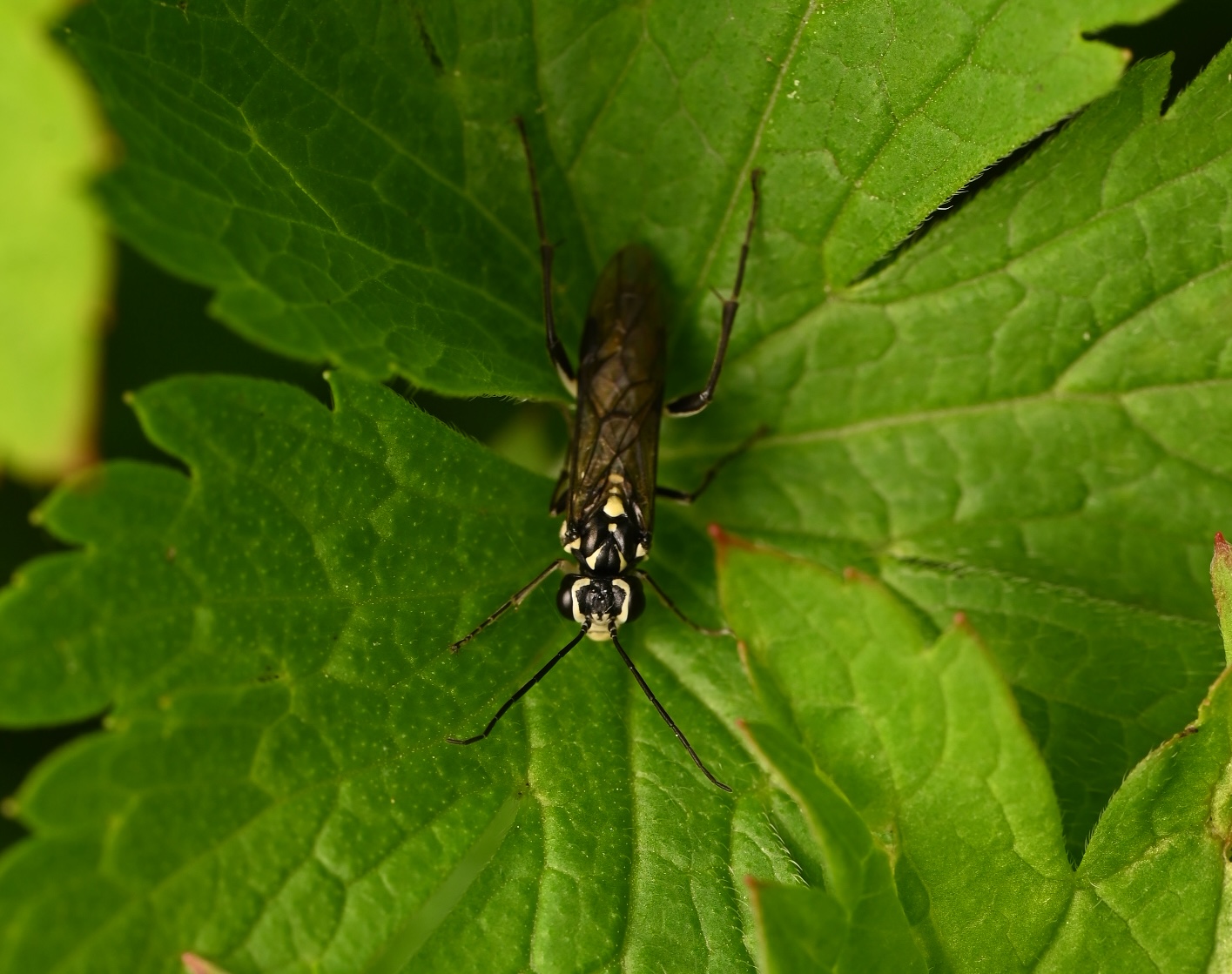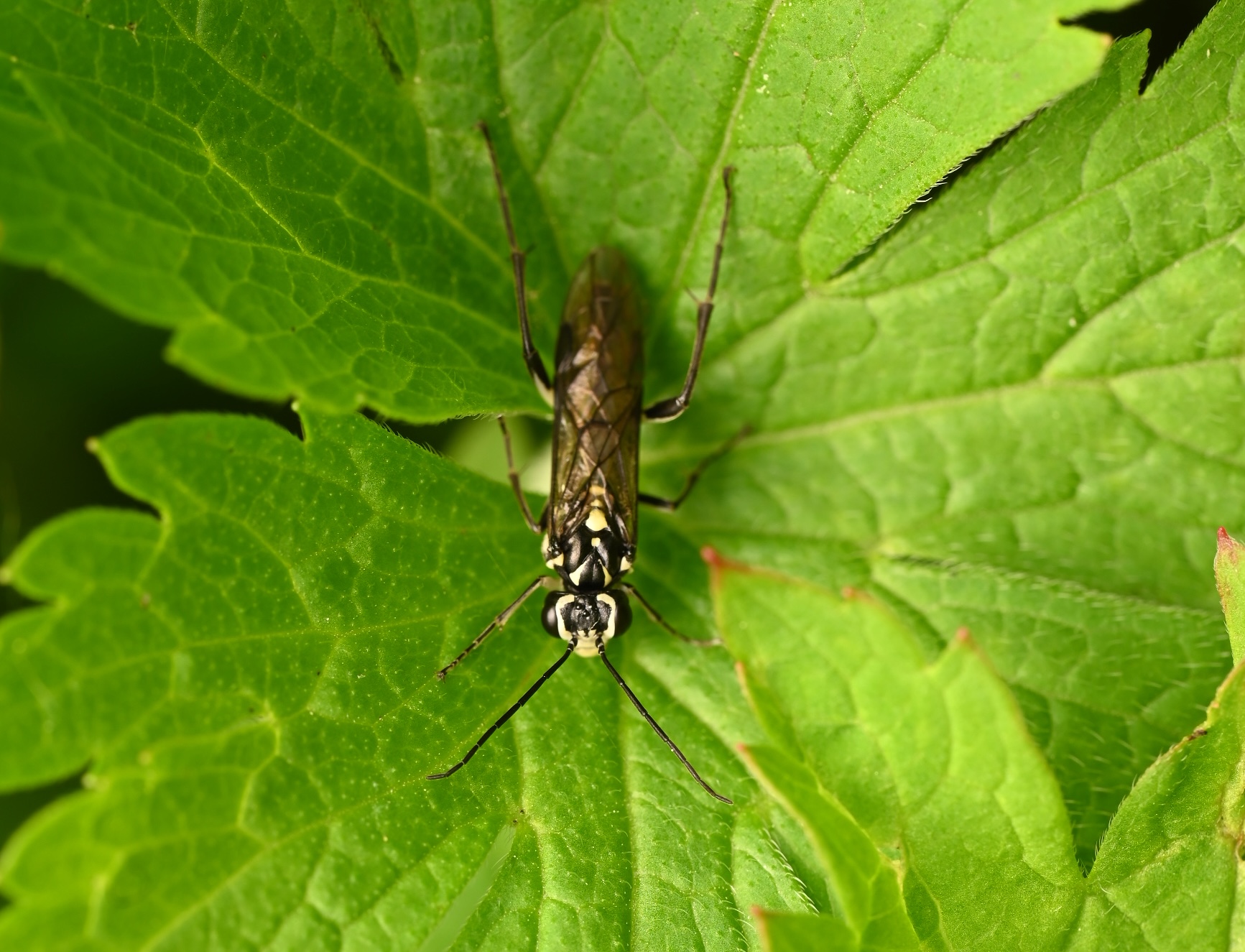
Meet the pied strider (Pachyprotasis rapae), a widely distributed sawfly belonging to the family Tenthredinidae. Frequently observed across European and Asian meadows and woodlands, adults measure 7 to 10 millimeters and sport a highly contrasting black-and-creamy-white pattern. True to their nickname, these “striders” feature incredibly elongated hind legs, with coxae and femurs that extend well past the tip of the abdomen. While the adults fly under the summer sun, their olive-green larvae feed strictly at night to avoid predators. Sawfly larvae are famous for their bizarre survival tactics; when threatened by parasitic wasps, some species can explosively regurgitate a distasteful, oily fluid to repel their enemies. Unlike pest species that target crops, the pied strider relies on wild woodland plants like figwort, goldenrod, and ash leaves. I crossed paths with this elegant, long-legged insect during my bicycle tour through the scenic forests of northern Sweden.