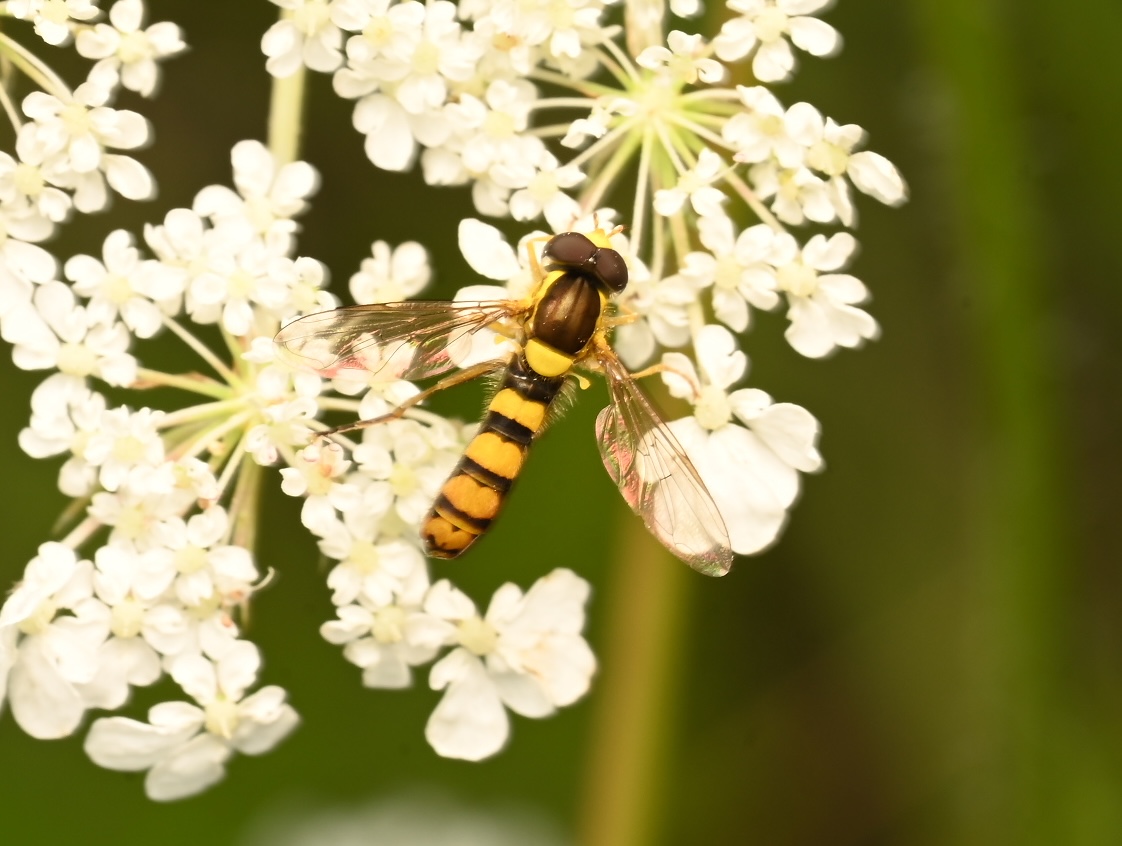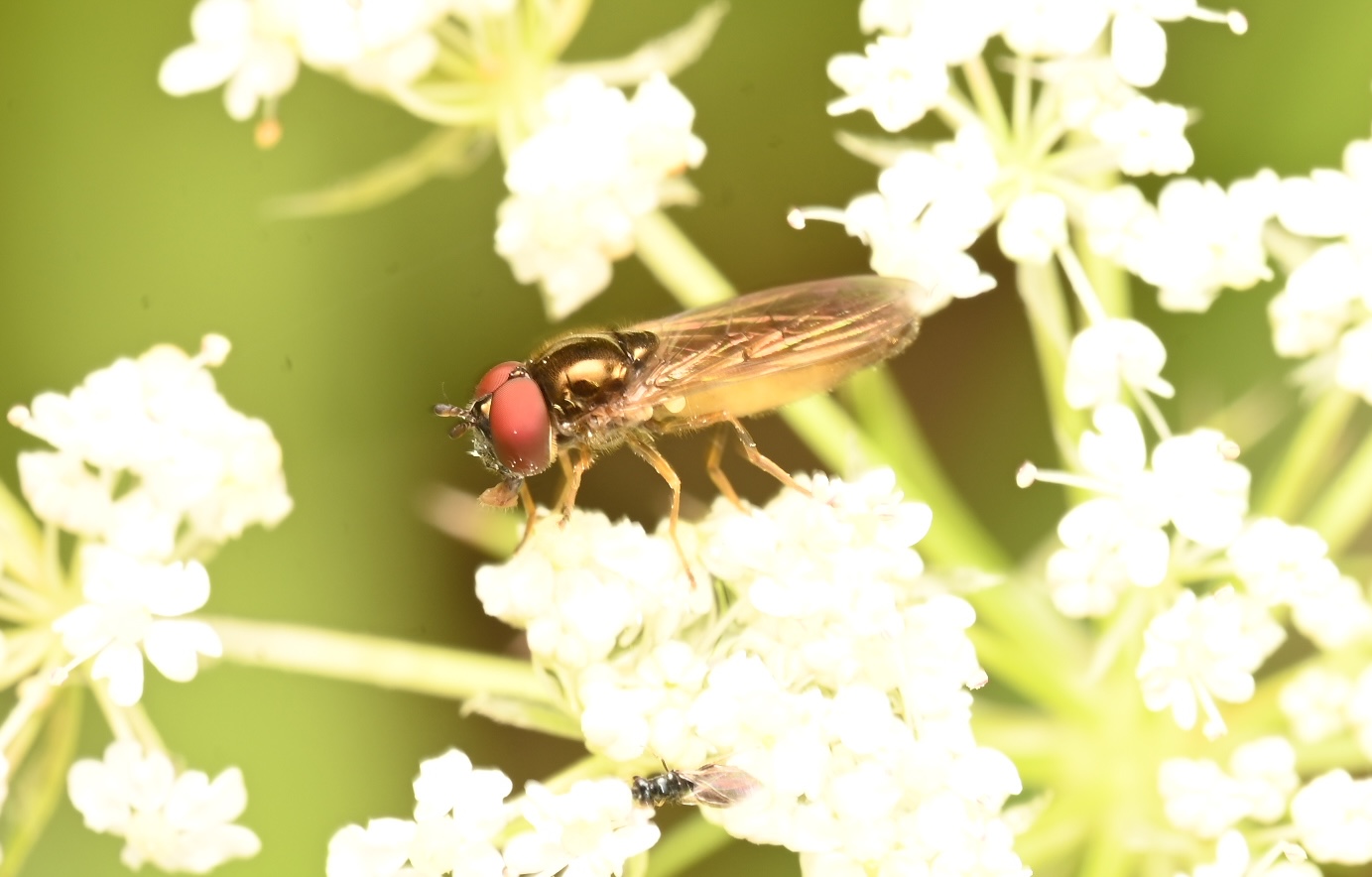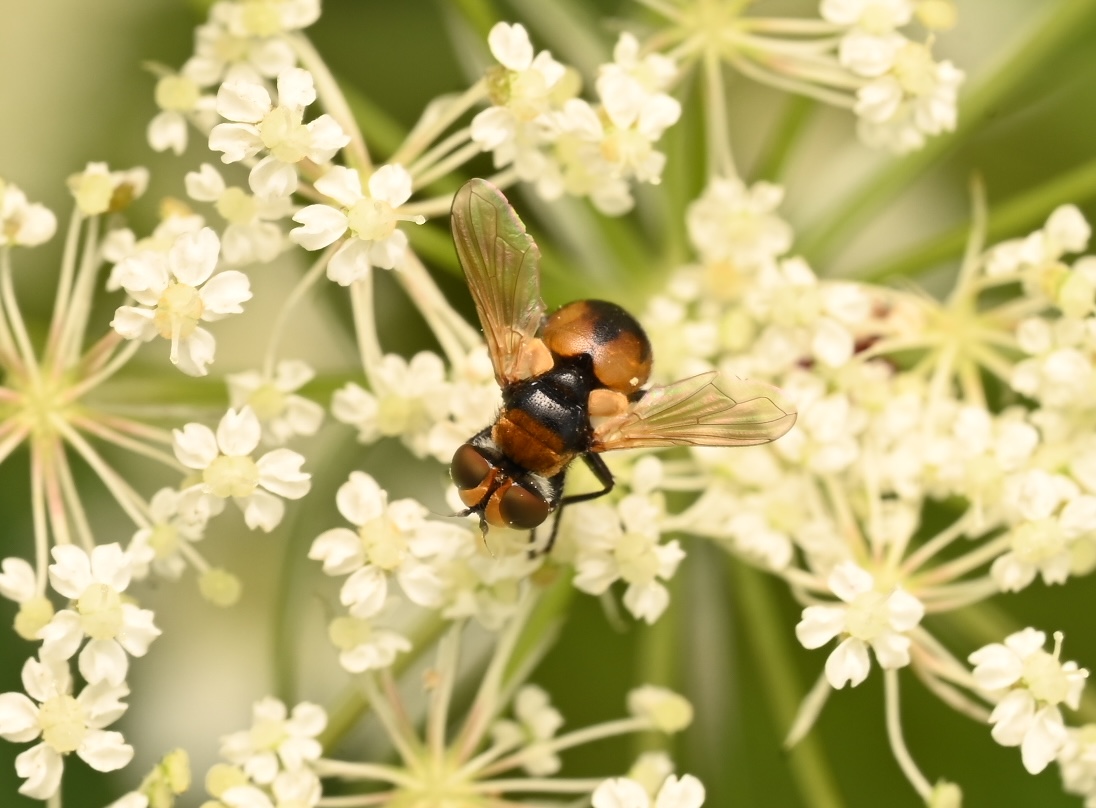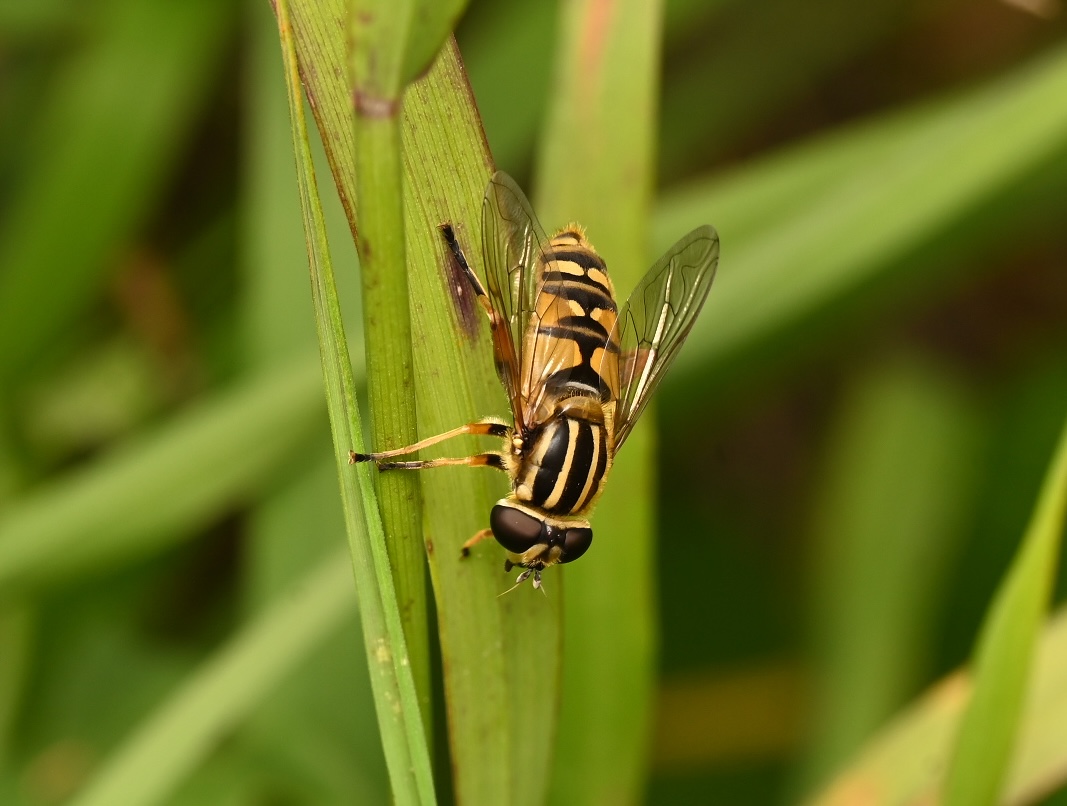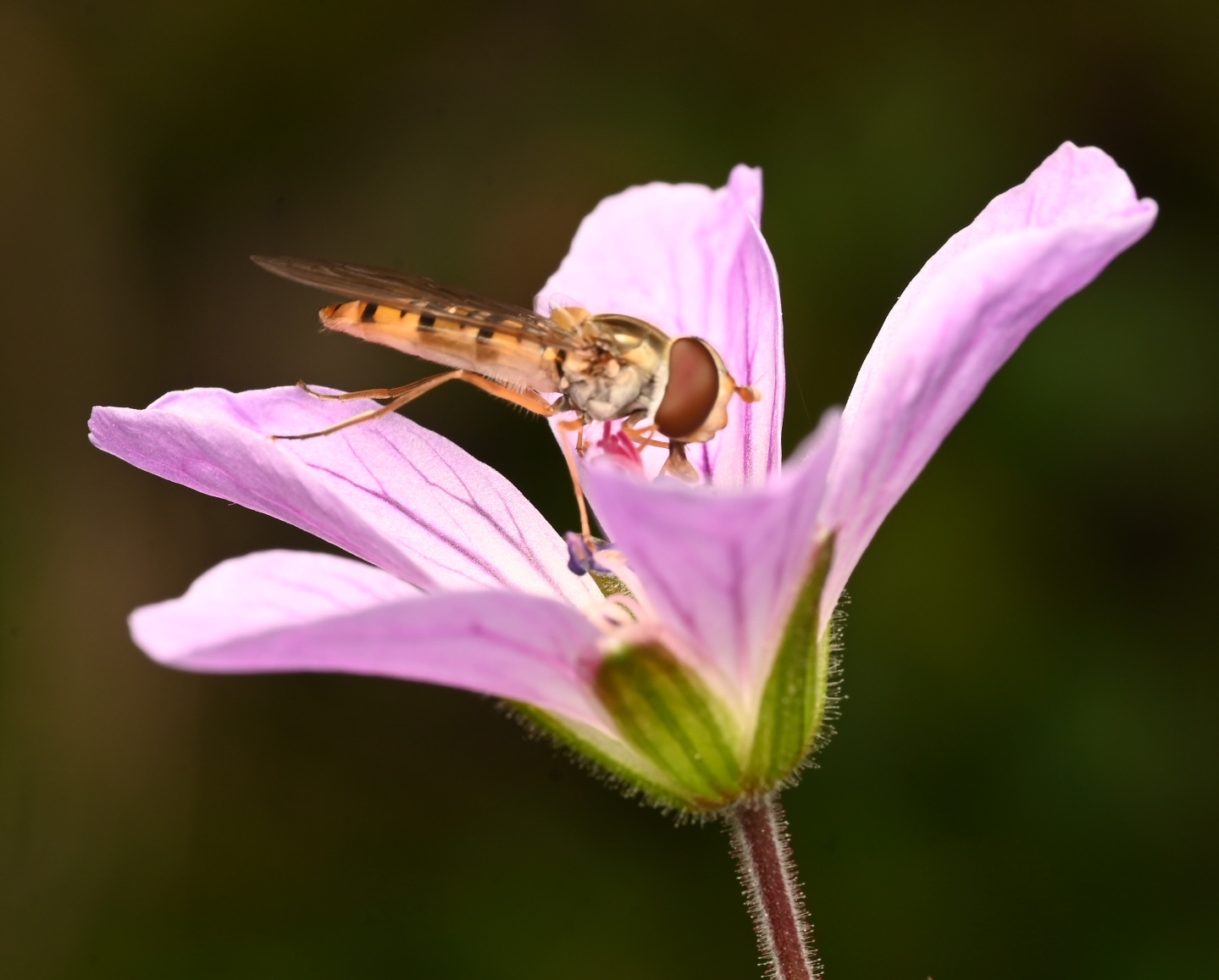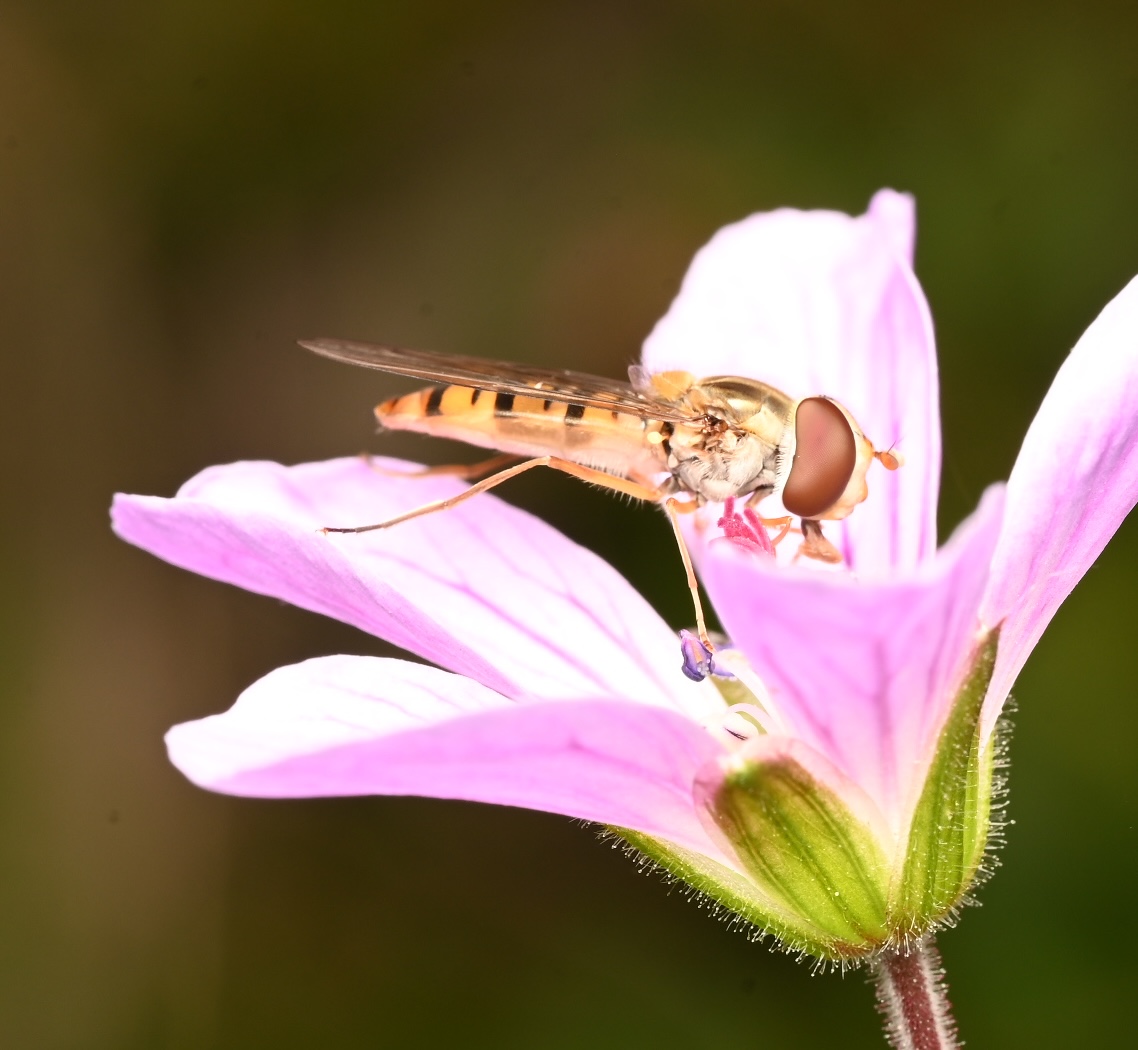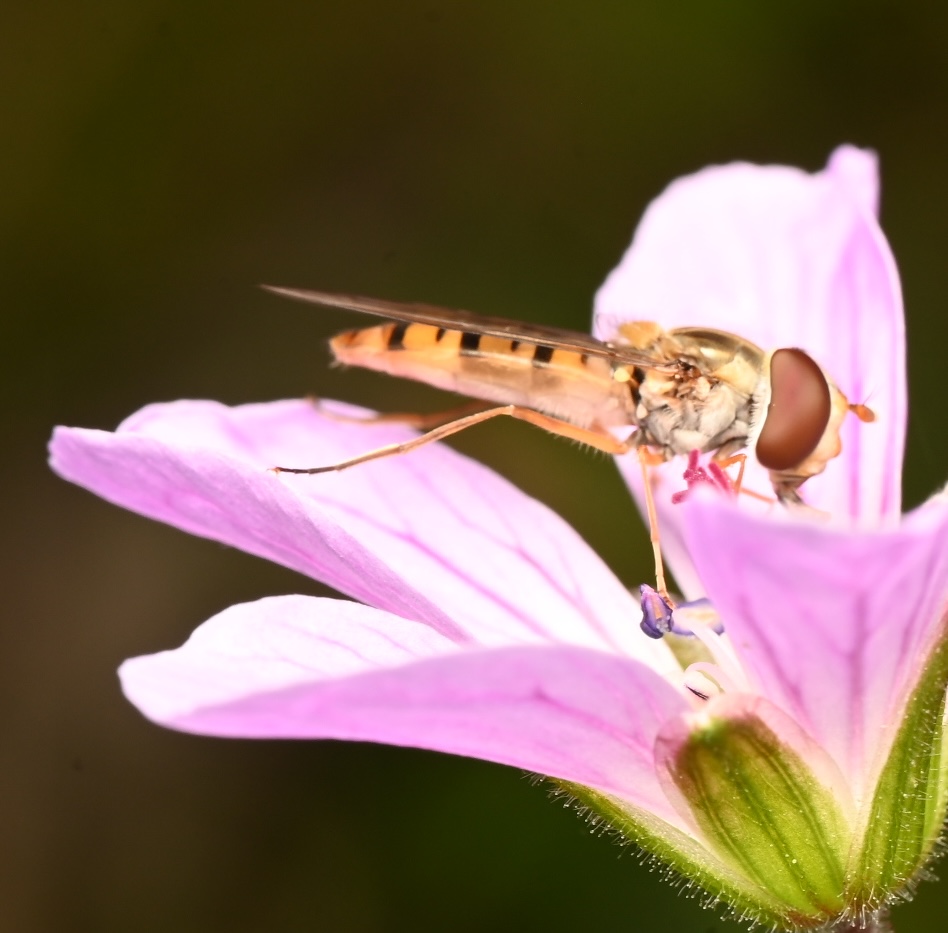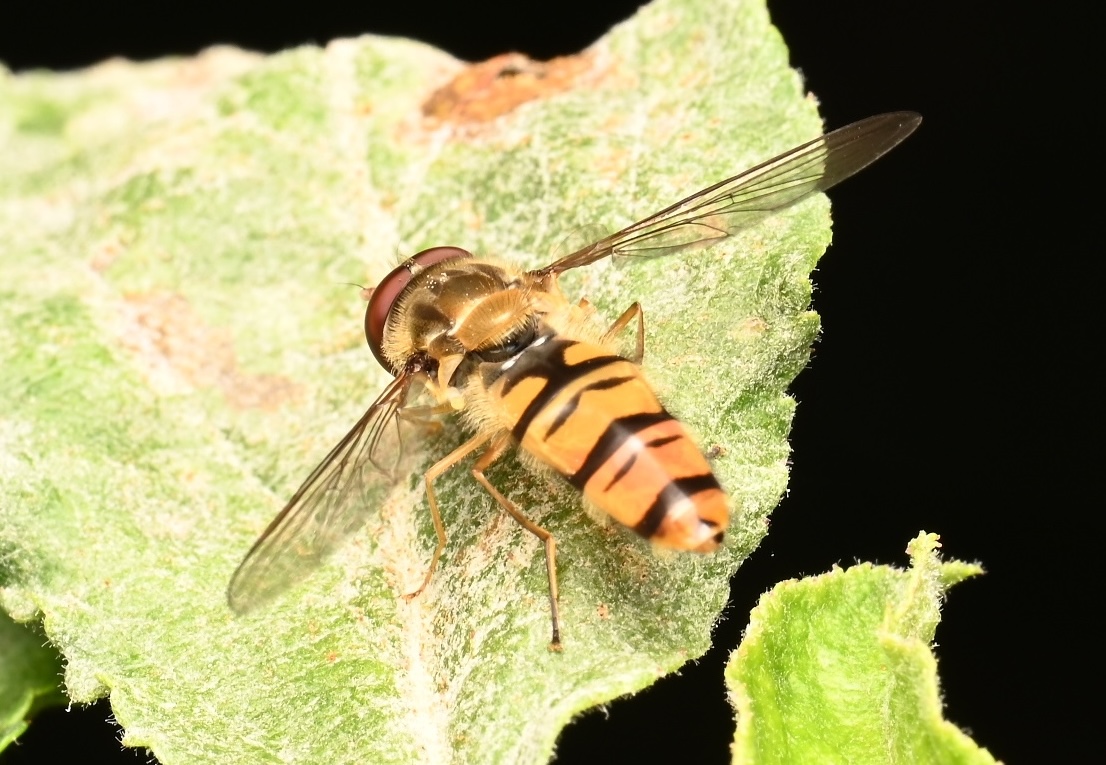
Meet the marmalade hoverfly (Episyrphus balteatus), a small, vibrantly striped insect that is a familiar and welcome sight in European gardens. It earns its delightful common name from the alternating thick and thin orange-and-black bands on its abdomen, which look remarkably like cuts of orange marmalade. These flies are absolute masters of the air, capable of hovering perfectly still in mid-winter or summer breezes like a miniature helicopter, and shifting into reverse or flying sideways in the blink of an eye to dodge oncoming threats. While the adults are vital pollinators that spend their days sipping nectar from flowers and crops, their larvae are ruthless, insatiable predators—a single larva can devour hundreds of plant-damaging aphids. Remarkably, billions of these tiny insects undertake massive seasonal migrations across Europe every year, even crossing the English Channel in vast, shimmering swarms. I crossed paths with this beautiful hoverfly multiple times during my travels through Poland and Sweden, initially mistaking it for other closely related lookalikes until a closer look revealed its signature marmalade patterns.