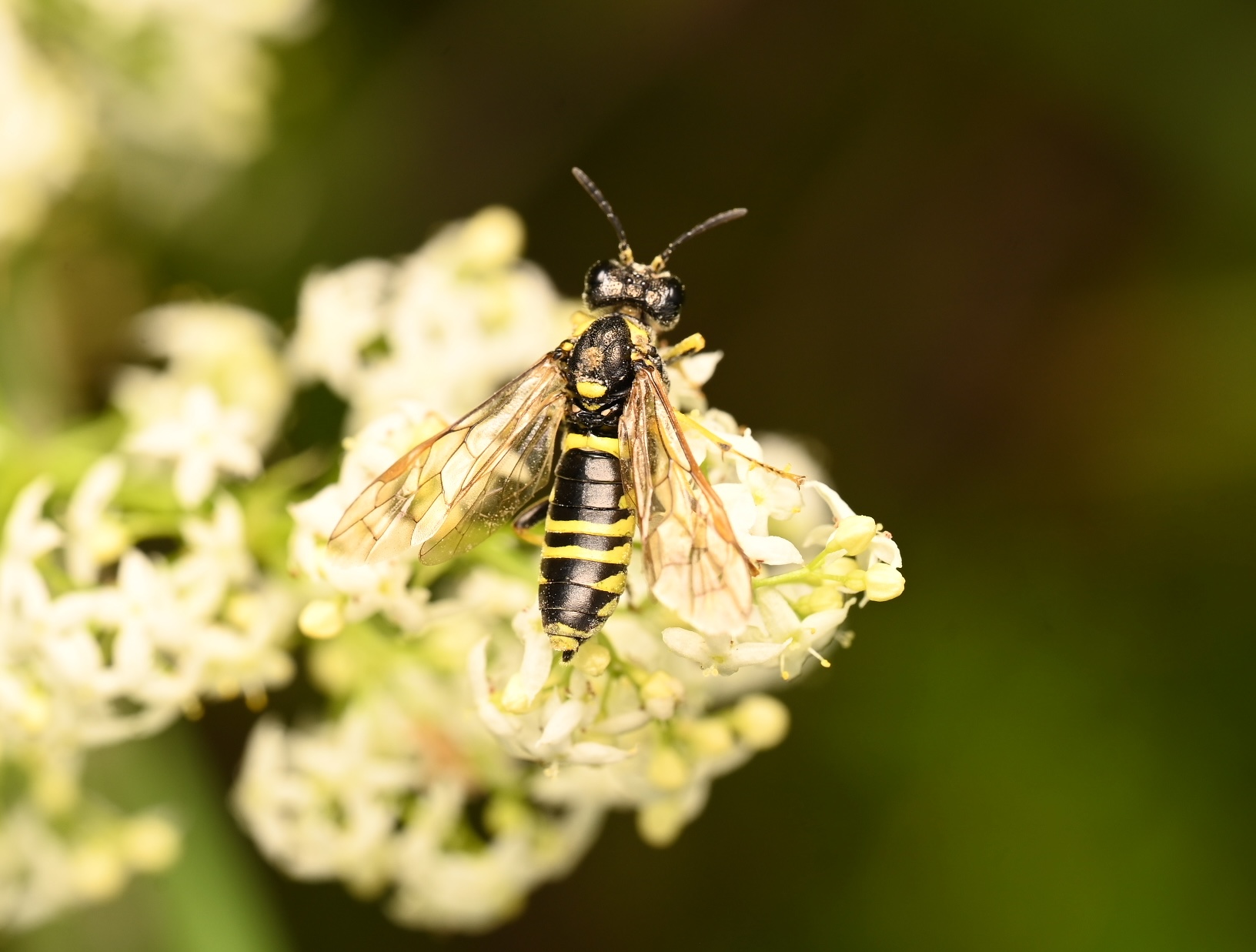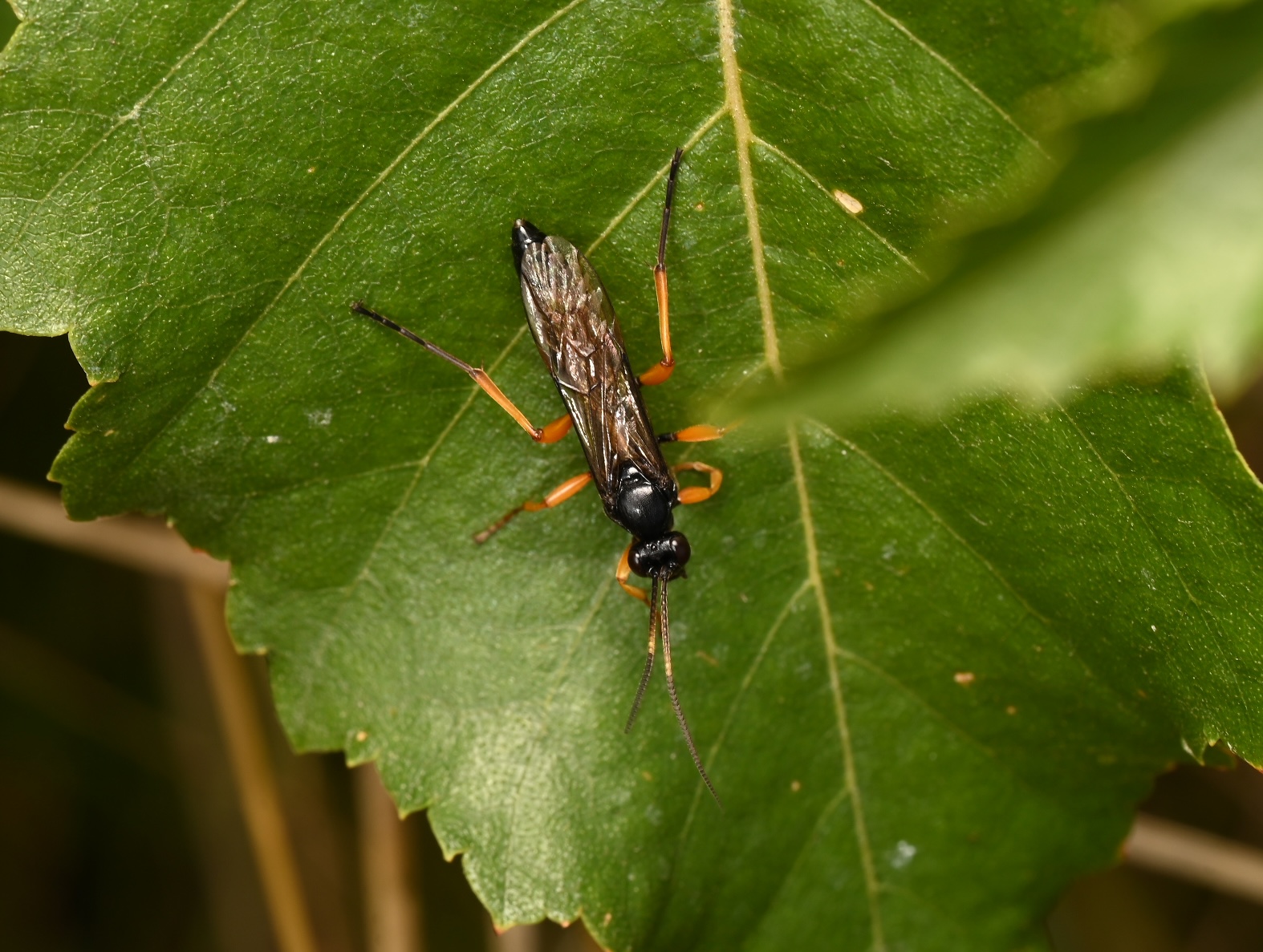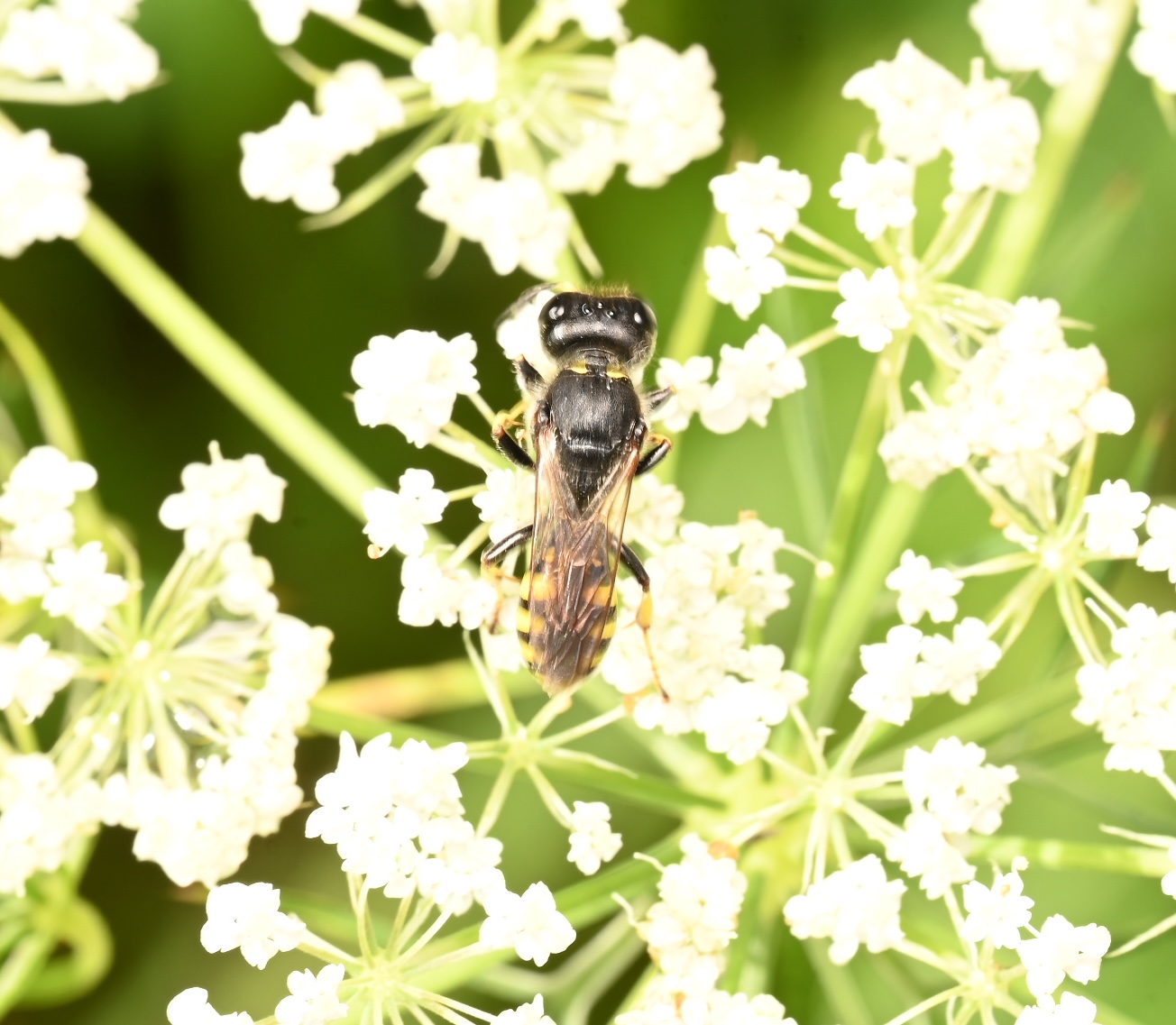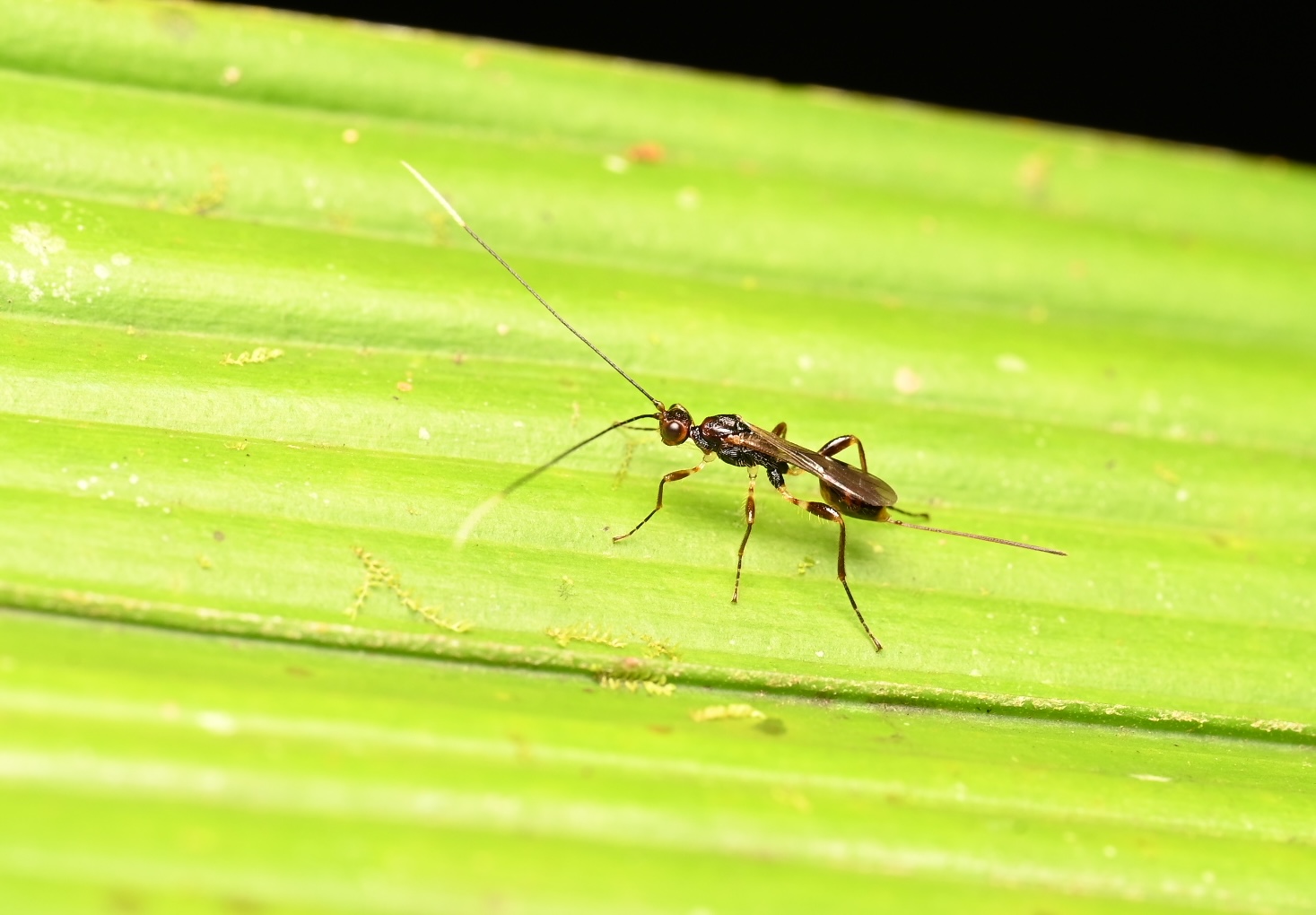
Spathius is a massive group of nearly 400 species of tiny braconid wasps (family: Braconidae) that play a huge role in protecting forests and gardens. Measuring less than a centimeter long, these gentle insects are famous for having an amazingly long, needle-like drill extending from their tail end, which they use to hunt down destructive beetle larvae hidden deep inside tree bark. To find their prey, the mother wasp walks over tree trunks, listening for faint vibrations and sniffing out chemical clues. Once she pinpoints a hidden beetle larva, she uses her long drill to pierce right through the wood, paralyzing the pest and leaving her eggs behind. Amazingly, this species looks almost identical to an ant! This clever disguise—called ant mimicry—tricks hungry birds into thinking she’s a tough, biting ant rather than a defenseless wasp. Because they naturally wipe out garden pests, organic farmers love having them around. I crossed paths with this delicate beauty while shooting on the edge of the Amazon rainforest in Puyo, Ecuador, where she paused just long enough for me to capture her intricate details.